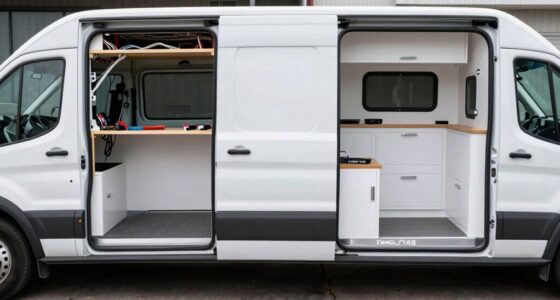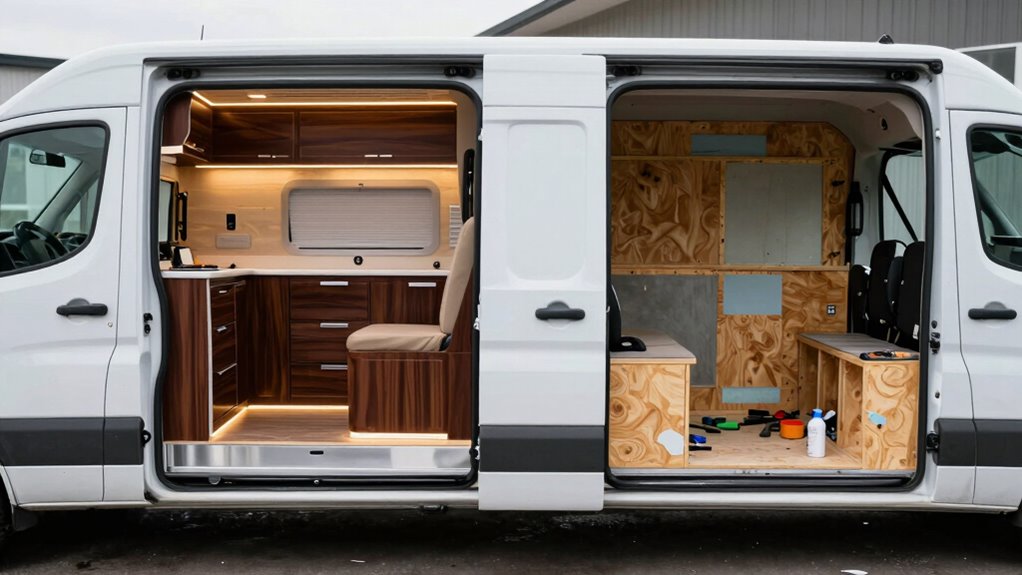

Deciding between a DIY or professional conversion for your transit depends on your budget, skills, and desired level of customization. DIY projects save money and let you control every detail, but they can take longer and might cost more if mistakes happen. Professional conversions are faster and often come with warranties, but they’re more expensive upfront. Keep in mind your priorities, and if you want more insights on making the best choice, explore further options below.

Get business pricing on garage and car supplies
- Business-only prices and quantity discounts
- Tax-exempt purchasing
- Multiple users, one account, clear invoices
Key Takeaways
- DIY conversions offer cost savings and full control over design, but may require time, skills, and risk of unforeseen expenses.
- Professional upfits ensure faster completion, adherence to safety standards, and include warranties, but come at a higher initial cost.
- Personalization is easier with DIY projects, allowing customization to specific preferences and ongoing adjustments throughout the build.
- Choosing DIY suits budget-conscious and skill-building enthusiasts, while professionals cater to those seeking quality, speed, and peace of mind.
- Consider your budget, timeline, skill level, and long-term satisfaction when deciding between DIY or professional van conversions.
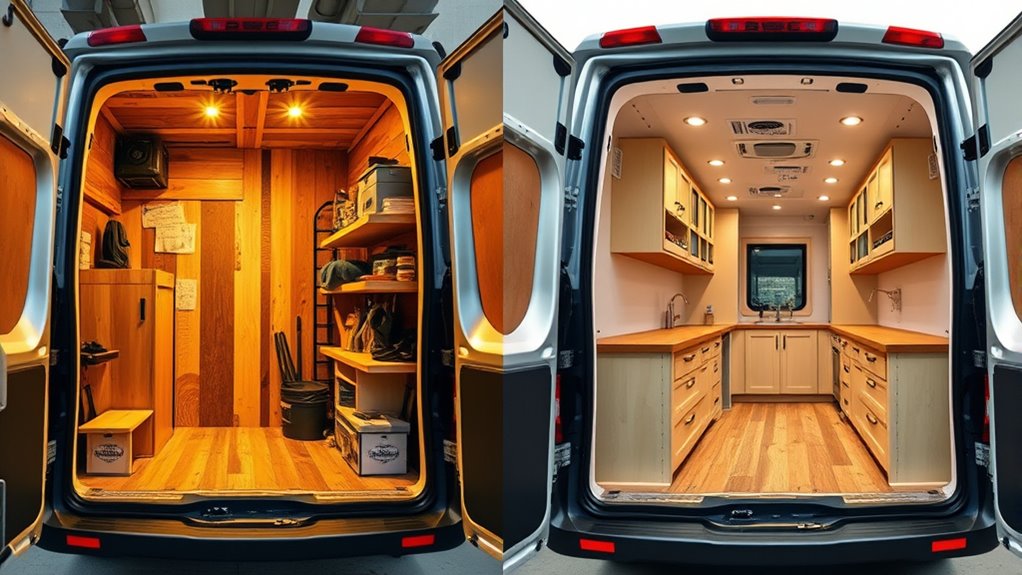
When deciding between a DIY and a professional conversion, you need to weigh the costs, skills, and time involved. Budget considerations are often at the forefront of this decision. Doing it yourself can save you a significant amount of money upfront, as labor costs are eliminated. However, you might face unexpected expenses if mistakes occur or if you need specialized tools and materials. On the other hand, professional conversions come with a higher price tag, but they often include warranties and expertise that can prevent costly errors. You should also consider your financial flexibility and what level of investment makes sense for your long-term plans. Additionally, understanding the importance of building skills can help you evaluate whether a DIY approach aligns with your personal growth goals. Design flexibility is another key factor. When you tackle a DIY project, you have full control over the layout, materials, and features. This allows you to personalize every inch of your van to match your specific needs and style, creating a truly unique space. You can customize as you go, making adjustments based on your preferences or new ideas that develop during the build. Incorporating personalized design elements can make your van feel more like home. Conversely, professional converters may offer a range of pre-designed options or work with you to develop a custom plan. While this can limit your hands-on control, it often results in a more polished, cohesive look and ensures that the build adheres to safety standards and regulations. Time is also a vital consideration. If you have ample free time and enjoy hands-on projects, a DIY conversion can be a rewarding challenge. It allows you to work at your own pace and learn along the way, but it might take months to complete depending on your schedule and skill level. Professionals, however, can often finish the job more quickly due to their experience and resources, which means you get your van ready sooner. If your timeline is tight—perhaps for an upcoming trip or move—you might prefer to hire experts who can expedite the process. Moreover, choosing the right approach can influence your long-term satisfaction with the completed build. Ultimately, choosing between DIY and professional conversion hinges on your budget, desired level of control, and time constraints. If you’re budget-conscious, enthusiastic to personalize every detail, and comfortable with a challenge, doing it yourself could be the right choice. But if you prioritize quality, speed, and peace of mind, investing in a professional conversion makes sense. Carefully evaluating these factors helps you make an informed decision, ensuring your van upfit aligns with your goals and resources. Additionally, considering air purifier maintenance can enhance your overall living experience by ensuring a clean and healthy environment inside your van. Incorporating proper planning can also help mitigate unforeseen issues and streamline the building process.
As an affiliate, we earn on qualifying purchases.
Frequently Asked Questions
What Tools Are Essential for DIY Van Conversions?
You’ll need basic tools like screwdrivers, hammers, and wrenches to start your DIY van conversion. Power equipment such as drills, saws, and impact drivers make tasks faster and easier. A level, tape measure, and utility knife are also essential for accurate measurements and cuts. With these tools, you can confidently handle the common tasks involved in upfitting your transit, ensuring a smooth and efficient conversion process.
How Long Does a Professional Conversion Typically Take?
A professional conversion usually takes about 4 to 8 weeks, depending on the scope and complexity. You’ll find that the conversion timeline is carefully managed through professional scheduling, ensuring timely progress. While you might expect some delays, pros stay on track with their detailed project plans. This structured approach helps you get your van ready faster than DIY efforts, giving you a reliable timeline to plan your adventures.
What Are the Hidden Costs of DIY Versus Professional Work?
You might overlook hidden expenses like specialized tools, materials, or extended labor due to skill gaps in DIY projects. These costs can add up quickly, sometimes surpassing professional rates. When you DIY, you also risk mistakes that require costly fixes later. In contrast, pros include these costs upfront, but their expertise minimizes errors and saves you money and time. Consider your skill level and budget to avoid unexpected expenses.
Can I Upgrade My Van’s Insulation After Conversion?
Think of your van as a cozy cabin; upgrading insulation is like adding a fresh quilt. Yes, you can upgrade your van’s insulation after conversion. The upgrade process involves selecting the right insulation materials, carefully removing sections of the existing insulation, and installing the new layers. It’s a manageable project if you have patience and some basic tools, allowing you to improve comfort and energy efficiency whenever you choose.
How Do Warranties Differ Between DIY and Professional Conversions?
Your warranty coverage typically differs between DIY and professional conversions. When you do it yourself, you’re responsible for repair costs if issues arise, and the warranty may only cover certain parts or installation defects. Professional conversions often come with a more extensive warranty, covering repairs and addressing defects, but you should verify whether the coverage includes custom work or modifications. Always read the warranty details to understand your repair responsibility fully.
professional transit conversion services
As an affiliate, we earn on qualifying purchases.
As an affiliate, we earn on qualifying purchases.
Conclusion
Ultimately, whether you choose a DIY or professional conversion depends on your skills, budget, and timeline. If you’re comfortable getting your hands dirty and have the time, a DIY project can save you money and give you a sense of pride. But if you want a polished finish and peace of mind, going pro might be the smarter move. Remember, sometimes it’s better to call in the experts than to bite off more than you can chew.
As an affiliate, we earn on qualifying purchases.
As an affiliate, we earn on qualifying purchases.
Halloween Picks
halloween
As an affiliate, we earn on qualifying purchases.