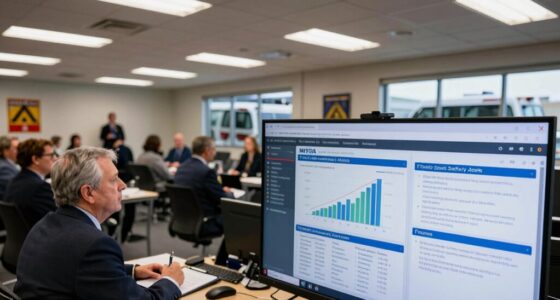
To check Ford Transit recalls by VIN and region, start by locating your VIN on the driver’s side dashboard or door frame. Visit official sites like the Ford recall website or NHTSA, and enter your VIN for accurate information. Make certain to select your region if prompted, as some recalls vary by location. If you keep exploring, you’ll find ways to ensure your vehicle stays safe and up-to-date.
Listen free for 30 days with Audible
Thousands of audiobooks and originals — cancel anytime.
As an affiliate, we earn on qualifying purchases.
Key Takeaways
- Locate your Ford Transit’s VIN on the dashboard or door frame for accurate recall checking.
- Visit the official Ford recall website or NHTSA website to input your VIN for recall verification.
- Ensure you select your specific region on online tools to access region-relevant recall information.
- Use the VIN to get real-time recall data, including issues, risks, and recommended repairs.
- Contact an authorized Ford dealership promptly if a recall is identified, regardless of region.

If you own a Ford Transit, it’s important to stay informed about any recalls that may affect your vehicle. Recalls can address safety issues, manufacturing defects, or compliance concerns, and acting quickly can help protect you and your passengers. The best way to stay updated is by checking your vehicle’s VIN—Vehicle Identification Number—which uniquely identifies your Transit. Your VIN is typically found on the driver’s side dashboard, visible through the windshield, or on the driver’s side door frame.
Once you have your VIN, you can easily verify if your vehicle is part of any open recalls. Start by visiting the official Ford recall website or the National Highway Traffic Safety Administration (NHTSA) website. These platforms allow you to input your VIN and instantly see if there are any recalls associated with your Transit.
When you enter your VIN, the system cross-references it against a detailed database of recalls, ensuring you get accurate and up-to-date information. If there’s an active recall, the site will specify the issue, the potential risks involved, and the recommended course of action, which usually involves scheduling a repair or replacement at an authorized dealership.
Region plays a vital role because recall campaigns can vary based on geographic location. Some recalls are specific to certain countries or regions, often due to differing manufacturing standards, climate conditions, or regulatory requirements. For example, a recall related to corrosion might be more relevant in areas with heavy winter salt use, while other recalls might be targeted at vehicles sold in specific markets. Understanding regional differences can help you better interpret recall notices and ensure your vehicle receives the appropriate service.
To guarantee you’re checking the most relevant information, always select your region or country when using online tools or official resources. Many automaker websites and government portals allow you to filter recall data by region or provide region-specific guidance.
If you find that your Ford Transit has been recalled, don’t delay in contacting your local dealership. Manufacturers typically offer free repair or replacement services for recalled parts, and dealerships are equipped to handle these repairs efficiently. They might also provide you with additional safety information or updates about your vehicle.

USANOOKS Microfiber Cleaning Cloth Grey - 12 Pcs (12.5"x12.5") - High Performance - 1200 Washes, Ultra Absorbent Microfiber Towel Weave Grime & Liquid for Streak-Free Mirror Shine - Car Washing Cloth
- High Absorbency Grip Root Weave: Locks in 8-10x weight in liquids
- Lint-Free and Scratch-Resistant: Prevents streaks, swirls, and damage
- Durable for 1200+ Washes: Long-lasting reuse with overlock stitching
As an affiliate, we earn on qualifying purchases.
Frequently Asked Questions
Can I Check Recalls Without My VIN?
Yes, you can check recalls without your VIN, but it might be less accurate.
You can visit the manufacturer’s website or trusted third-party sites that offer recall information based on your vehicle’s make, model, and year.
However, using your VIN provides the most precise recall info specific to your vehicle.
For best results, find your VIN and check directly through official sources to guarantee you get all relevant recall notices.
Are Regional Recalls Different From Nationwide Recalls?
Regional recalls can differ from nationwide recalls because they target specific areas based on local conditions or manufacturing issues.
You might find a recall affecting your region that doesn’t apply nationwide, or vice versa.
It’s essential to verify both regional and nationwide recall notices for your Ford Transit.
How Often Are Recall Databases Updated?
Recall databases are typically updated monthly, sometimes more frequently during active recall campaigns. For example, if Ford issues a recall for faulty airbags, you’ll find updates within days on official sites.
You should check regularly—ideally monthly—to stay informed. This way, you catch any new recalls early, ensuring your vehicle stays safe and compliant.
Frequent updates help you respond promptly to safety notices, protecting you and your passengers.
What Should I Do if My VIN Isn’t Recognized?
If your VIN isn’t recognized, first double-check the number for any typos or errors.
If it’s correct and still not found, contact your Ford dealership or the manufacturer directly for assistance. They can verify your vehicle’s status and help you understand if there are any recalls or ongoing issues.
Keep your VIN handy and be patient; sometimes databases need time to update or may have limited coverage.
Do Recall Statuses Vary by Model Year?
Yes, recall statuses can vary by model year because manufacturers update safety features and address specific issues over time. For your Ford Transit, check the recall status regularly, especially if your vehicle is older or has recent updates.
Keep in mind that newer models may have fewer recalls, but it’s crucial to verify using your VIN to stay informed about any safety notices or recalls applicable to your vehicle’s specific year.

HOMEXCEL Microfiber Cleaning Cloth 12 Pack, 12.5 x 12.5 inch Microfiber Towels for Cars, Ultra Absorbent Washing Cloth, Lint Free Streak Free Cleaning Rags for Car, Kitchen, and Window (Grey)
- High Water Absorption: Excellent at absorbing dirt and liquids
- Scratch-Free Material: Soft fabric protects car paint
- Fast Drying: Quickly absorbs water for streak-free finish
As an affiliate, we earn on qualifying purchases.
Conclusion
By checking your Ford Transit’s VIN and region, you’re shining a flashlight into the dark corners of potential recalls. It’s like having a trusted map guiding you safely through unknown terrain, ensuring your vehicle’s health stays on track. Don’t let hidden issues lurk like shadows—stay informed, stay protected. Remember, your VIN is the golden key that grants peace of mind, keeping your journey smooth and worry-free.

Amazon Basics Microfiber Car Drying Towels, Highly Absorbent, Lint Free, Scratch Free, Ultra-Soft, Car Detailing, Buffing and Polishing, 16" x 16", Yellow, 12-Pack
- Pack Size: 12 towels per pack
- Towel Dimensions: 16 x 16 inches
- Design: Double-sided microfiber
As an affiliate, we earn on qualifying purchases.

HUYINPJ Floor Organizer Compatible with 2021-2026 Ford Transit Center Console Storage Organizer Under Seat Box Bin Cup Holder for Transit Accessories(Not for Transit Connect)
- Compatibility: Fits 2021-2026 Ford Transit
- Maximized Storage: Utilizes under-seat space efficiently
- Organized Storage: Stores phones, umbrellas, cables, snacks
As an affiliate, we earn on qualifying purchases.
Back to school Picks
back to school
As an affiliate, we earn on qualifying purchases.