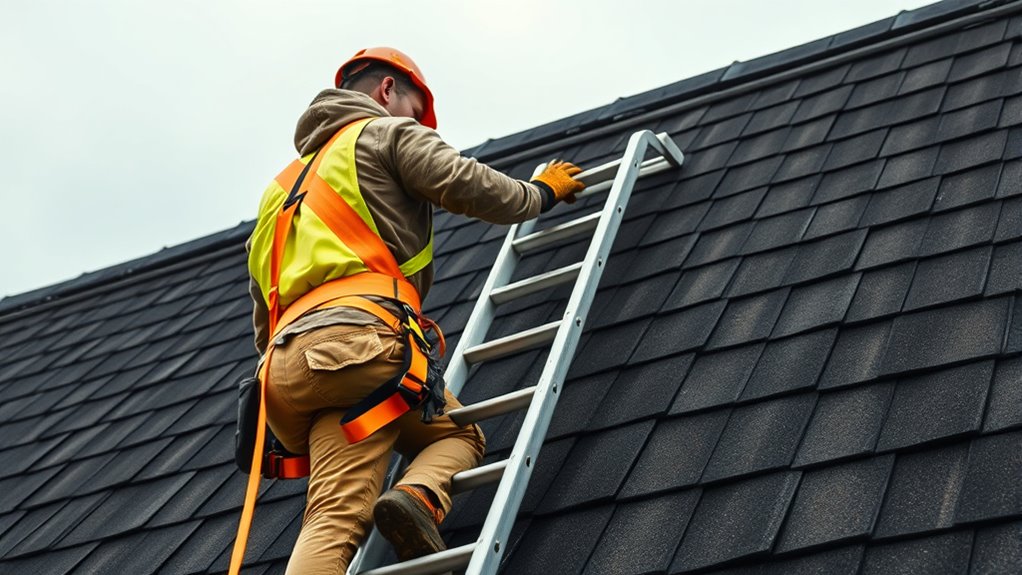

When working on a roof, you must always wear a properly fitted harness attached to a secure anchor point to prevent falls. Set up ladders on stable ground, extend them at least three feet above the roof edge, and climb facing the ladder with three points of contact. Stay alert to edge proximity and use safety rails or fall protection systems when possible. Keep safety at the forefront—continue to learn how to stay safe while working atop roofs.
Key Takeaways
- Always wear a properly fitted harness attached to a secure, rated anchor point before working on the roof.
- Place and inspect ladders on stable, level ground, extending at least three feet above the roof edge.
- Maintain three points of contact when climbing ladders and avoid overreaching or leaning.
- Be aware of edges, avoid leaning near them, and use safety rails or fall protection systems when possible.
- Regularly inspect all safety equipment and follow established safety protocols to prevent falls and injuries.

Have you ever wondered what it takes to work safely and efficiently on a roof? It’s not just about balancing on a narrow surface; it’s about understanding and properly using the right equipment. Your safety depends on your awareness of harnesses, ladders, and edge safety. Each element plays a crucial role in protecting you from falls and accidents.
Before you even step onto the roof, make sure your harness is correctly fitted and inspected. A fall arrest harness should fit snugly around your body, with all buckles secure and straps tight enough to prevent slipping but not so tight as to cause discomfort. Attach it to a secure anchor point before you start working. This connection is vital because, in the event of a slip, your harness will absorb the shock and prevent a dangerous fall.
Always double-check that your anchor points are rated for the load and properly installed. Using the right harnesses and anchors isn’t just a recommendation; it’s a legal requirement in many workplaces. As you move around the roof, keep your harness attached at all times to avoid a fall from unexpected slips or trips.
Ladders are another critical component. When setting up your ladder, ensure it’s placed on stable, level ground, away from loose debris or unstable surfaces. Extend the ladder at least three feet above the roof edge so you have a secure handhold when transitioning onto the roof.
Climb facing the ladder, maintaining three points of contact—two hands and one foot, or two feet and one hand—to ensure stability. Never lean too far to one side or overreach; instead, reposition the ladder as needed. Always inspect your ladder before use for any defects, such as cracks or missing rungs.
When working near edges, be aware of your proximity to the edge and avoid leaning or placing unnecessary weight close to the edge. Use safety rails or edge protection whenever possible. If the roof height or the work nature makes edge safety a concern, consider installing temporary guardrails or using fall protection systems like horizontal lifelines.
Remember, your goal is to prevent falls before they happen, not just to catch yourself afterward. Working on a roof requires vigilance, proper equipment, and good habits. Harnesses, ladders, and edge safety are your primary tools for preventing injuries.
Taking the time to inspect, set up correctly, and use them properly makes all the difference. A comprehensive safety plan and adherence to safety protocols are essential for minimizing risk. When you respect these safety measures, you not only protect yourself but also set a standard for safe work practices. Ultimately, a cautious approach keeps you on the roof and out of the emergency room.
roof harness fall protection
As an affiliate, we earn on qualifying purchases.
As an affiliate, we earn on qualifying purchases.
Frequently Asked Questions
What Are the Latest Safety Regulations for Roof Work?
The latest safety regulations require you to use fall protection systems, like harnesses and guardrails, when working at heights above six feet. You must also guarantee ladders are stable, properly secured, and inspected regularly.
Additionally, you need to conduct risk assessments before starting work, wear appropriate personal protective equipment, and follow manufacturer instructions. Staying compliant helps prevent accidents and keeps you safe on the job.
How Do I Choose the Right Harness for Roofing?
To select the right harness for roofing, you need to take into account safety, comfort, and fit. Look for a harness with adjustable straps, reinforced connections, and sufficient padding.
Make sure it meets OSHA or relevant safety standards.
Opt for a harness with a dorsal D-ring for fall arrest and side D-rings for positioning.
Try it on to check for snug fit without restricting movement, and select a model suited for your specific roofing tasks.
What Are Common Ladder Safety Mistakes to Avoid?
Did you know that falls from ladders account for nearly 300 deaths annually?
To stay safe, always maintain three points of contact, avoid overreaching, and confirm your ladder is stable before climbing.
Never skip inspecting your ladder for damage or missing parts, and avoid leaning too far to the side.
Following these simple rules can prevent serious accidents, keeping you safe while working at heights.
How Do I Assess Roof Edge Stability?
You should check the roof edge for signs of damage, such as crumbling materials or loose shingles, which can indicate instability. Use a level or measuring tools to verify the edge is even and stable.
Avoid working near weak or sagging sections, and consider consulting a structural engineer if you’re unsure about the integrity. Always test the edge gently before relying on it to support your weight.
What Personal Protective Equipment Is Essential for Roof Work?
You need to wear a harness, helmet, and non-slip footwear for roof work. These protect you from falls, head injuries, and slips.
Always use a harness attached to a secure anchor point to prevent falls, and don’t forget gloves for grip and eye protection from debris.
Staying alert and properly equipped keeps you safe, and it’s your best defense against accidents while working at heights.

Startingtool Ladder Stabilizer, Extension Ladder Stabilizer for Roof, Adjustable Ladder Standoff Attachment for Gutters, Windows, Heavy-Duty Steel Ladder Stabilizers Support
【Safe and Reliable Ladder Stabilizer】Our ladder stabilizer significantly enhances stability and safety during extension work, providing reliable support…
As an affiliate, we earn on qualifying purchases.
As an affiliate, we earn on qualifying purchases.
Conclusion
Working safely on the roof means respecting harnesses, ladders, and edges. Imagine you’re fixing a leak, and your harness saves you from a fall. That quick connection keeps you secure and confident. Always double-check your gear and be mindful of your surroundings. Remember, a small mistake can have big consequences. Stay cautious, follow safety protocols, and your roof work will be both productive and safe—protecting you and your loved ones at home.

Hymula 72" L x 42" H Yellow Steel Pipe Safety Railing–Industrial Guardrail & Handrail, Powder-Coated, Surface Mount, Fall Protection for Warehouse, Construction, Rooftop
✅Compliant Safety Guardrail: Stands 42" tall with a 21" midrail height, Ideal for safeguarding walkways, mezzanine edges, and…
As an affiliate, we earn on qualifying purchases.
As an affiliate, we earn on qualifying purchases.

Frontline Combat™ Complete Roofers Kit | Includes Combat Harness, Roof Anchor, Vertical Lifeline with Rope Grab, & Duffel Bag | High-Visibility Orange | Universal Fit | ANSI & OSHA Compliant.
✅Made up of high strength galvanized steel ✅Features a finished powder coating
As an affiliate, we earn on qualifying purchases.
As an affiliate, we earn on qualifying purchases.