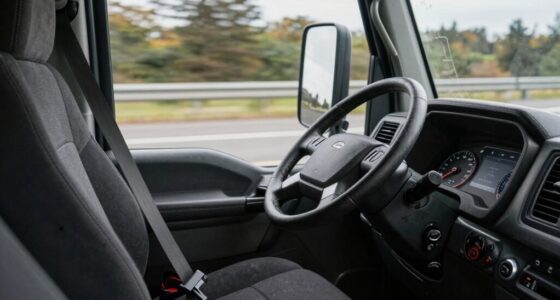
When your heavy van’s brakes overheat, you’ll notice reduced effectiveness, a burning smell, or increased pedal travel. To prevent brake fade, avoid sudden stops, brake early and gradually on descents, and keep vents and cooling ducts clean for better airflow. Using high-quality brake pads suited for high heat and inspecting components regularly also help. Proper cooling strategies can protect your brakes from overheating; explore more ways to stay safe during demanding drives.

Get garage and car supplies delivered free — and shop member deals
- Fast, free delivery on millions of items
- Access to Prime Big Deal Days deals on October 6–7
- Prime Video, Amazon Music and more included
Key Takeaways
- Recognize signs of overheating like brake fade, smell, or increased pedal travel to address issues promptly.
- Use high-temperature brake pads such as semi-metallics for better heat resistance and durability.
- Improve cooling by keeping wheels and vents clean, and consider vented or slotted rotors for better heat dissipation.
- Employ auxiliary cooling aids like brake ducts and fans during heavy loads or steep descents.
- Regularly inspect and maintain brake components to ensure optimal cooling and prevent overheating damage.

Have you ever noticed your brakes feeling unusually hot or smelling of burnt toast after a long drive or steep descent? If so, you’re experiencing a common issue that can lead to brake fade, especially when driving heavy vans. Overheating brakes occur when the heat generated by friction exceeds the system’s ability to dissipate it quickly enough. This problem isn’t just uncomfortable; it can compromise your safety, reduce stopping power, and cause long-term damage to your braking components.
Overheated brakes can reduce safety and cause long-term damage.
One critical factor influencing brake overheating is the choice of brake pad materials. Different materials have varying heat tolerance and performance characteristics. For heavy vans, using brake pads made from high-temperature compounds like semi-metallic or ceramic materials can make a significant difference. Semi-metallic brake pads, for example, are known for their durability and ability to withstand higher temperatures without fading. Ceramic pads, on the other hand, offer excellent heat resistance and produce less brake dust, maintaining more consistent braking performance under heavy loads. Selecting the right brake pad material tailored for your vehicle’s weight and driving conditions is essential for preventing overheating and ensuring reliable stopping power.
Alongside the right materials, employing effective cooling techniques is crucial. Many drivers overlook the importance of cooling, but simple strategies can help you manage brake temperature. One effective approach is to increase airflow around the brakes by ensuring your wheels and vents are clean and unobstructed. Installing vented or slotted rotors can also improve heat dissipation by allowing air to flow through the rotor surface, reducing the risk of overheating. Additionally, adopting driving habits that minimize sudden, aggressive braking can drastically decrease heat buildup. For instance, braking early and gradually on downhill slopes helps prevent the brakes from reaching critical temperatures.
You might also consider using auxiliary cooling aids, such as brake cooling ducts or fans, especially if you frequently drive with heavy loads or on steep terrain. These devices direct cool air directly onto the brake components, helping to lower temperatures during prolonged descents. Regularly inspecting and maintaining your brake system ensures everything functions efficiently. Worn or damaged brake pads and rotors can increase heat generation and reduce cooling effectiveness, so stay vigilant with routine checks.
Frequently Asked Questions
How Often Should I Replace Brake Fluid on a Heavy Van?
You should replace brake fluid every 2 years to maintain essential brake performance. Regular brake fluid maintenance is vital, especially on heavy vans, as it prevents moisture buildup that can cause brake fade. During hydraulic system checks, inspect the fluid for contamination or low levels. If you notice spongy brakes or reduced responsiveness, it’s time for a fluid change. Consistent maintenance guarantees your brakes stay reliable and safe.
Can Overloading the Van Cause Brake Overheating?
Pushing your van’s parameters, overloading definitely causes brake overheating. When weight piles improperly, it strains brake capacity and disrupts weight distribution, making brakes work harder. This added stress heats up brake components faster, risking fade and failure. To keep control, always respect the van’s load limits, balance weight evenly, and understand that exceeding capacity turns simple braking into a blazing, boiling battle.
What Are Signs of Brake Fade During Driving?
You’ll notice brake fade if your brake pedal feels soft or sinks further when pressed, indicating reduced braking efficiency. You might also hear unusual engine noises like squealing or grinding, which signal excessive heat buildup. During this, your vehicle may take longer to stop or require more effort on the brake pedal. Pay attention to these signs, and ease off the brakes to prevent further overheating or damage.
Are Ceramic Brake Pads Better for Heavy Vans?
Think of ceramic brake pads like well-trained athletes—they handle heat better than traditional options. For heavy vans, ceramic brake pad materials are often ideal because they resist fade and maintain consistent performance under heavy vehicle weight impact. I once drove a loaded van with ceramic pads, and the brakes stayed cool even after a long descent. So, yes, ceramic brake pads are a smart choice for heavy vans to enhance safety and durability.
How Does Driving Terrain Affect Brake Overheating?
Driving terrain directly impacts brake overheating. When you encounter steep road inclines, your brakes work harder, increasing heat buildup and risking fade. Similarly, traffic congestion forces frequent stops and starts, causing repeated brake application and overheating. To prevent brake fade, you should use engine braking on inclines and avoid excessive brake use in traffic. Keeping an eye on terrain and adjusting your driving style helps maintain brake performance and safety.
Conclusion
To prevent brake fade on heavy vans, always monitor your brake temperature and avoid prolonged use on steep declines. Think of your brakes like a sponge—when they overheat, they can’t absorb anymore, reducing their effectiveness. By understanding this, you can visualize how heat builds up and causes fade. Keep your brakes cool with proper driving techniques, like easing off the pedal and using engine braking. This way, you maintain control and ensure your brakes perform when you need them most.
Halloween Picks
halloween
As an affiliate, we earn on qualifying purchases.