Vehicle wraps are a smart investment for your branding, offering a cost-effective way to generate leads over time. Costs range from $2,500 to $10,000+ depending on vehicle size, but their long lifespan and ongoing exposure make them worth it. As your fleet becomes mobile billboards, you’ll reach local audiences constantly, increasing brand recognition and trust. Curious how this approach can boost your business? Keep exploring to discover more about maximizing your marketing impact.
Key Takeaways
- Vehicle wraps are a cost-effective marketing tool with low ongoing expenses, offering long-term lead generation.
- Initial costs range from $2,500 to $10,000+, but they provide sustained brand visibility for 3-5 years.
- Wraps turn vehicles into mobile billboards, increasing brand awareness and generating leads across targeted geographic areas.
- The continuous exposure from vehicle wraps enhances brand recognition and trust, leading to higher customer inquiries.
- The high ROI of vehicle wraps justifies the initial investment through increased lead generation and market reach.
Effective branding is essential for standing out in today’s competitive market, and vehicle wraps offer a powerful way to do just that. When you consider the costs versus the potential for lead generation, it’s clear that investing in vehicle wraps can deliver significant value.
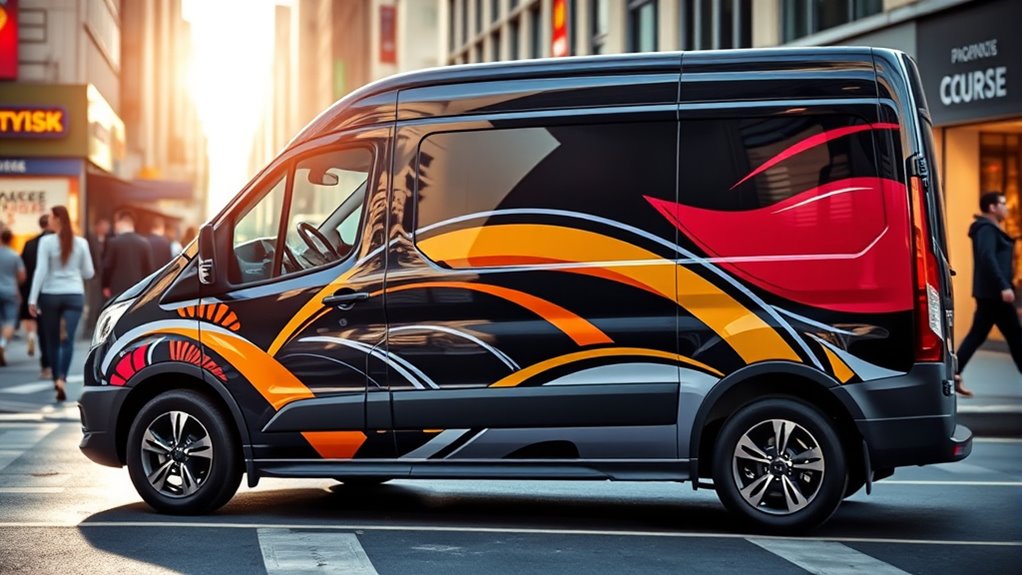
While the initial expense might seem high compared to traditional advertising methods, the long-term benefits often outweigh those costs. Vehicle wraps turn your fleet into mobile billboards, constantly exposing your brand to a broad audience without ongoing expenses like printing or media buys. This constant visibility can generate more leads over time, especially in busy areas where your wrapped vehicles frequent.
Vehicle wraps provide ongoing exposure, turning your fleet into mobile billboards that generate leads over time.
You might wonder how much it costs to wrap a vehicle and whether the investment is justified. The price varies depending on the vehicle size, design complexity, and quality of materials used. Typically, a full wrap for a standard car can range from $2,500 to $5,000, while larger trucks or vans might cost $5,000 to $10,000 or more. Although these numbers seem steep upfront, think about the exposure you get daily.
Unlike a billboard that might cost thousands per month, a vehicle wrap’s cost is a one-time investment that can last three to five years with proper maintenance. During that period, your vehicle is working tirelessly to bring in new customers, making the initial expense more palatable when you consider the potential return on investment.
From a lead generation perspective, vehicle wraps are incredibly effective because they reach people in real-world environments—traffic, parking lots, neighborhoods—that traditional advertising can’t match. Every time your vehicle hits the road, it’s advertising your business to countless people.
This saturation can lead to increased brand recognition and trust, which naturally converts into inquiries and sales. Plus, a well-designed wrap that clearly communicates your message can stand out amid the clutter, making your brand memorable. When potential customers see your vehicle regularly, it reinforces familiarity and credibility, making them more likely to choose your services or products.
Furthermore, vehicle wraps have the advantage of targeting specific geographic areas, especially if your business operates locally. You can customize your message for particular neighborhoods or routes, maximizing your marketing efforts.
The cost per impression remains low because you’re not paying for each view—your vehicle is constantly working for you without ongoing costs. Over time, the cumulative exposure can lead to a steady stream of new leads, making your initial spend a smart investment.
Research shows that visionary quotes can inspire personal transformation and encourage self-reflection, which can also be applied to strategic marketing decisions like investing in vehicle wraps. In the end, while the upfront costs might give you pause, the potential for increased visibility and lead generation makes vehicle wraps one of the most cost-effective marketing tools available today.
Frequently Asked Questions
How Long Does a Vehicle Wrap Typically Last?
A vehicle wrap typically lasts between 5 to 7 years with proper care.
You should regularly wash your vehicle and avoid harsh chemicals to extend its lifespan.
Keep in mind that exposure to sunlight, weather, and road debris can cause the wrap to fade or peel over time.
If you notice any damage, get it repaired promptly to guarantee your branding stays vibrant and effective longer.
Can Vehicle Wraps Be Removed Easily Without Damage?
Think of removing a vehicle wrap like peeling off a sticker carefully—you can do it without damage if you’re gentle. Yes, vehicle wraps can be removed easily if done correctly, usually by professionals.
In my experience, a skilled technician can remove a wrap in a few hours, leaving your paint intact. Just avoid aggressive scraping or using harsh chemicals, and you’ll preserve your vehicle’s surface perfectly.
What Are the Best Design Elements for Effective Wraps?
You should focus on bold, high-contrast colors that grab attention quickly.
Incorporate clear, concise messaging with a strong call-to-action, making it easy for viewers to understand your offer.
Use large, easy-to-read fonts and striking visuals that reflect your brand identity.
Keep the design uncluttered, ensuring key elements stand out.
Are There Any Legal Restrictions on Vehicle Wrap Advertising?
Yes, there are legal restrictions on vehicle wrap advertising. You need to make certain your wrap doesn’t obscure license plates or windows, as many states have laws against obstructing visibility.
Additionally, avoid using false or misleading information, and adhere to local advertising regulations.
It’s wise to check with your local Department of Motor Vehicles or legal advisor before applying your wrap to ensure compliance and avoid potential fines.
How Does Vehicle Wrap Maintenance Affect Costs?
Vehicle wrap maintenance directly affects your costs by ensuring the wrap stays vibrant and damage-free. Regular cleaning prevents dirt and debris from causing wear. Prompt repairs to scratches or tears prevent further damage.
Neglecting maintenance can lead to costly replacements or diminished advertising impact. By keeping your wrap in good condition, you extend its lifespan and maximize your investment’s return, ultimately saving you money over time.
Conclusion
Investing in branding and vehicle wraps is like planting a seed that grows into a billboard-sized tree of visibility. While the costs might seem steep, the potential lead generation is unstoppable—like a tidal wave crashing over your competition. Remember, a well-designed wrap isn’t just a vehicle covering; it’s a mobile billboard that turns every drive into a powerful marketing opportunity. So, gear up and let your brand cruise to new heights!