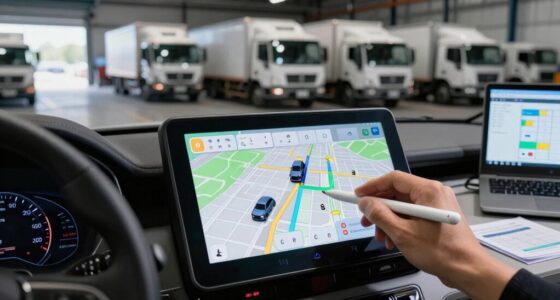
By harnessing accurate, real-time data from telematics, fuel consumption, and maintenance records, you can make smarter decisions to optimize your fleet. Use advanced management software to analyze patterns, identify inefficiencies, and forecast future needs. Adjust routes based on traffic and delivery windows, while encouraging a culture of continuous improvement. Staying data-driven helps you reduce costs, improve safety, and enhance service levels — explore how further insights can transform your operations.
Key Takeaways
- Collect accurate real-time data from GPS, fuel, maintenance, and driver behavior to identify inefficiencies and optimize operations.
- Utilize advanced fleet management software to analyze data, detect patterns, and generate actionable insights for improvements.
- Optimize routes based on traffic, delivery windows, and historical data to reduce travel time and fuel consumption.
- Adjust fleet size and deployment dynamically according to demand fluctuations and predictive analytics.
- Foster a culture of continuous improvement by reviewing data insights regularly and training drivers on best practices.

In today’s competitive logistics landscape, leveraging data has become essential for optimizing fleet operations. You need to harness the power of data to make smarter decisions, improve efficiency, and reduce costs. With the right data, you can gain real-time insights into your fleet’s performance, identify bottlenecks, and respond swiftly to changing conditions.
This approach allows you to stay ahead of competitors by streamlining routes, minimizing downtime, and enhancing customer satisfaction.
To start, you should focus on collecting accurate and thorough data from your vehicles. This includes GPS location, fuel consumption, maintenance records, and driver behavior.
Telematics devices can provide real-time tracking, giving you a clear picture of where your vehicles are at any moment. Monitoring fuel usage helps you identify inefficiencies, such as unnecessary idling or inefficient routing.
Maintenance data alerts you to upcoming repairs, preventing costly breakdowns and reducing vehicle downtime. Driver behavior analytics highlight risky practices like harsh braking or speeding, enabling targeted training to improve safety and fuel economy.
Once you gather data, you must analyze it effectively. Advanced fleet management software can automate this process, offering dashboards and reports that reveal patterns and trends.
For example, you might discover certain routes consistently cause delays or that specific vehicles incur higher fuel costs. By identifying these issues, you can implement targeted improvements.
Optimizing routes based on traffic patterns and delivery windows reduces travel time and fuel consumption. Predictive analytics can forecast maintenance needs, helping you schedule repairs proactively rather than reactively.
Data also empowers you to make informed decisions about your fleet size and composition. If data shows overcapacity during certain periods, you can adjust the number of vehicles or shift resources accordingly.
Conversely, if demand spikes unexpectedly, you can allocate additional assets quickly. This agility helps you avoid unnecessary expenses and better meet customer expectations.
Additionally, analyzing historical data enables you to plan for future growth, ensuring your fleet scales efficiently and sustainably.
Effective data utilization also involves fostering a culture of continuous improvement. Encourage your team to regularly review reports and share insights.
Training drivers to understand how their habits impact data metrics can lead to safer, more efficient driving. Regularly updating your data collection methods and analytics tools ensures you stay aligned with industry advancements.
By integrating data-driven insights into your daily operations, you create a proactive environment where decisions are based on facts, not assumptions.
Ultimately, leveraging data transforms your fleet management from reactive to strategic. It provides you with the clarity needed to optimize routes, reduce costs, and enhance service levels.
In a highly competitive environment, this data-driven approach will be your key to maintaining efficiency, safety, and profitability.

Fleet Telematics: Real-time management and planning of commercial vehicle operations (Operations Research/Computer Science Interfaces Series, 40)
As an affiliate, we earn on qualifying purchases.
As an affiliate, we earn on qualifying purchases.
Frequently Asked Questions
How Can Data Improve Driver Safety and Behavior?
You can improve driver safety and behavior by analyzing data from telematics and GPS systems. These tools reveal patterns like speeding, harsh braking, or idling, allowing you to identify risky habits.
Sharing this information with drivers encourages safer driving. Additionally, setting benchmarks and providing targeted training based on data insights helps reinforce good habits.
Ultimately, this approach reduces accidents and promotes a safer fleet environment.
What Are the Costs Associated With Implementing Data Analytics Tools?
Implementing data analytics tools is like planting a garden—you may face upfront costs, but the long-term rewards are worth it. You’ll spend on hardware, software licenses, and training, which can add up quickly.
Additionally, ongoing costs include maintenance and updates. While these expenses might seem steep initially, they help you reduce operational costs, improve safety, and boost efficiency, making your investment worthwhile over time.
How Does Real-Time Data Impact Fleet Maintenance Scheduling?
Real-time data helps you catch maintenance issues early, preventing costly breakdowns. By constantly monitoring vehicle performance, you can schedule repairs precisely when needed, avoiding unnecessary downtime.
This proactive approach keeps your fleet running smoothly and extends vehicle lifespan. With timely insights, you can optimize maintenance schedules, reduce emergency repairs, and improve overall efficiency, saving you money and ensuring your fleet stays reliable and ready for your operations.
What Privacy Concerns Arise From Fleet Data Collection?
You might feel like your fleet’s data is a double-edged sword, offering insights but risking privacy breaches. Privacy concerns arise when sensitive information, like driver behavior or location, is collected without proper safeguards.
This data can be misused or exposed, eroding trust. To protect yourself, implement strict access controls, anonymize data where possible, and stay transparent with your team about what’s collected and why.
How Can Small Fleets Leverage Data Analytics Effectively?
You can leverage data analytics effectively by focusing on key metrics like fuel efficiency, maintenance schedules, and driver behavior.
Use affordable analytics tools to identify patterns and areas for improvement.
Regularly review this data to make informed decisions, optimize routes, and reduce costs.
Train your team on data insights, ensuring everyone understands its value.

Building a Dedicated GSM GPS Module Tracking System for Fleet Management
As an affiliate, we earn on qualifying purchases.
As an affiliate, we earn on qualifying purchases.
Conclusion
By harnessing data, you turn your fleet into a well-oiled machine, where every move is precise and purposeful. Think of data as your navigational star, guiding you through the complexities of fleet management with clarity. When you leverage insights effectively, you’re not just keeping up—you’re staying ahead. Embrace data-driven decisions, and watch your fleet operate smoother than ever, transforming challenges into opportunities like a master conductor leading a symphony.

LandAirSea 54 GPS Tracker – Made in the USA from Domestic & Imported Parts. Long Battery, Magnetic, Waterproof, Global Tracking. Subscription Required
Premium GPS Tracker — The LandAirSea 54 GPS tracker provides accurate global location, real-time alerts, and geofencing. Easily…
As an affiliate, we earn on qualifying purchases.
As an affiliate, we earn on qualifying purchases.

Car Fuel Saver 2pcs, 2026 New Upgrade Fuelshark Fuel Sync Device, Gas Saver for Car & Truck, Automotive Spill Saver Auto Save 10-30% on Gas Economizer (2 Pcs)
Plug and Play Installation: This automotive gauge is easy to install, requiring no complicated wiring or professional installation;…
As an affiliate, we earn on qualifying purchases.
As an affiliate, we earn on qualifying purchases.