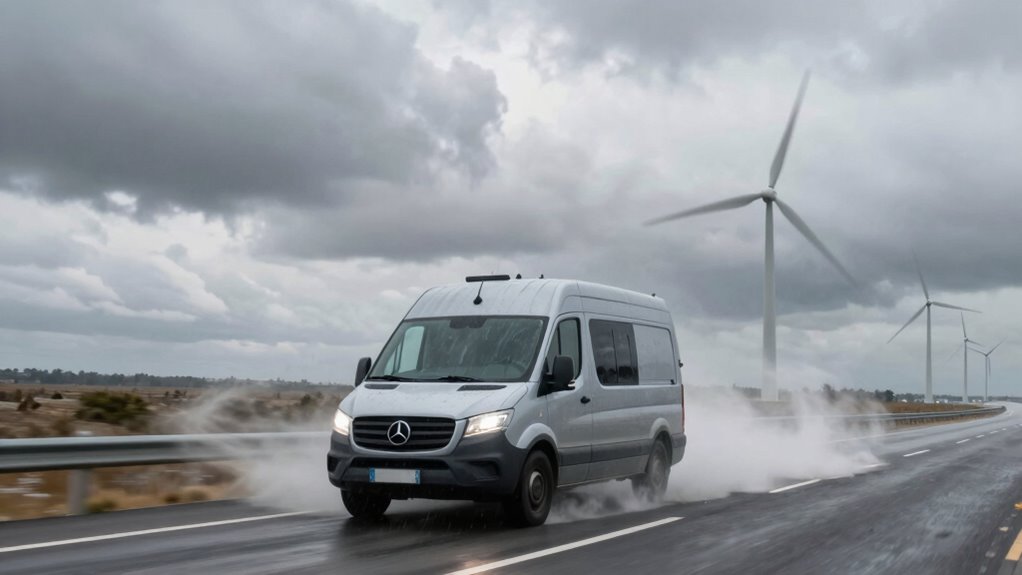

When driving high-roof transit vehicles in strong winds, stay alert and prepare for gusts that can push your vehicle sideways or into other lanes. Keep both hands firmly on the wheel, reduce your speed, and increase your following distance to react smoothly to sudden movements. Avoid open areas and high wind zones if possible. Staying cautious and adjusting your driving can help you stay safe, and you’ll find more tips on handling gusty conditions ahead.

Get garage and car supplies delivered free — and shop member deals
- Fast, free delivery on millions of items
- Access to Prime Big Deal Days deals on October 6–7
- Prime Video, Amazon Music and more included
Key Takeaways
- Reduce speed and increase following distance before entering areas prone to strong gusts.
- Keep both hands firmly on the wheel and steer gently into crosswinds to maintain control.
- Be aware of signs like swaying trees or flying debris indicating increasing wind intensity.
- Consider pulling over safely if wind gusts become severe or unpredictable.
- Stay calm and focused, adjusting driving techniques to compensate for the challenges posed by high winds.
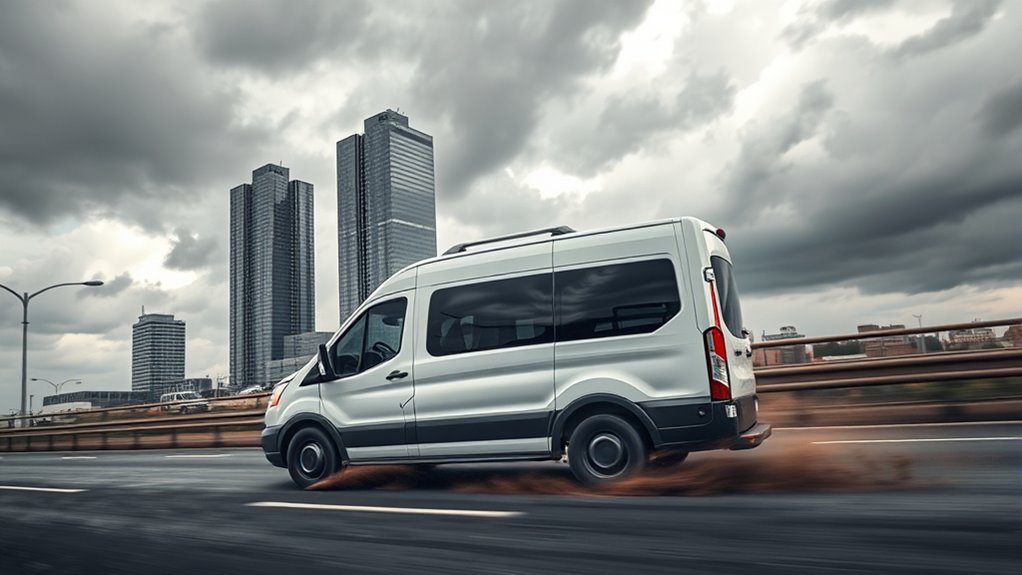
Strong winds can suddenly make driving hazardous, especially if you’re unprepared. When wind gusts pick up unexpectedly, they can push against your vehicle, challenging your control and threatening your safety. High-profile vehicles, such as transit vans or buses, are particularly vulnerable because their larger surface area catches more wind, making vehicle stability harder to maintain. As you navigate through areas prone to gusty conditions, it’s essential to stay alert and adapt your driving accordingly. Wind gusts can hit in bursts, causing sudden shifts in your vehicle’s position. This unpredictability requires you to be proactive, not reactive. Keep both hands firmly on the wheel, and stay alert for sudden gusts that might push you towards the shoulder or into oncoming traffic.
Maintaining a safe distance from other vehicles becomes even more important in these conditions. When wind gusts are strong, your vehicle may sway or drift unexpectedly. If you’re too close to the vehicle ahead, you might find it difficult to react in time to sudden movements, increasing the risk of collision. Always keep a safe following distance, especially when driving a high roof or tall vehicle, as these are more susceptible to being affected by gusts. Reducing your speed is another key step; it gives you better control and more time to respond if the wind suddenly shifts your vehicle’s trajectory. Gradually slowing down before entering open areas or bridges, where wind speeds tend to be higher and gusts more intense, can help you stay in control. Additionally, understanding vehicle dynamics can help you anticipate how your vehicle might respond in gusty conditions, allowing for more effective driving adjustments.
In addition to adjusting your speed and distance, pay close attention to your surroundings. Watch for signs of increasing wind intensity, such as trees swaying or debris flying through the air. If you notice wind gusts becoming stronger or more frequent, consider pulling over safely and waiting for conditions to improve. Staying calm and focused during gusty conditions can significantly enhance your ability to respond effectively. It is also helpful to know your vehicle’s capabilities so you can better anticipate how it will react in gusty weather. Do not attempt to drive through areas with visible signs of severe wind activity or when wind gusts are strong enough to visibly sway high structures. Remember, your safety comes first, and sometimes the best decision is to delay your trip until the wind subsides.
Finally, be aware that high winds can cause instability even on relatively calm-looking roads. Crosswinds can push your vehicle off course, especially if you’re driving a high roof vehicle. Keep a firm grip on the wheel, steer gently into the wind, and avoid sudden movements. Staying calm and focused helps you maintain control and navigate safely through gusty conditions. Additionally, understanding that vehicle stability can be compromised in gusty weather can help you prepare better by adjusting your driving style accordingly. Adjusting your driving technique to account for wind conditions can make a significant difference in maintaining control. By understanding how wind gusts impact your vehicle stability and taking proactive steps, you can protect yourself and others on the road, turning a potentially dangerous situation into a manageable challenge.
Frequently Asked Questions
How Do High Winds Affect Vehicle Aerodynamics and Fuel Efficiency?
Gentle breezes can subtly challenge your vehicle’s aerodynamic harmony, increasing aerodynamic drag and causing your transit to work harder. As a result, fuel consumption rises because your engine must compensate for the additional resistance. When winds grow stronger, this effect intensifies, leading to decreased fuel efficiency. To mitigate this, you can reduce speed, stay alert, and make sure your vehicle is well-maintained, helping you navigate windy conditions more smoothly and economically.
What Should I Do if I Encounter a Sudden Gust While Driving?
If you encounter a sudden gust while driving, stay calm and grip the steering wheel firmly. Use emergency maneuvers by gently steering into the wind gust to maintain control, avoiding sharp turns. Respond to the wind gust by slowing down if necessary, and keep your vehicle steady. Focus on your wind gust response to prevent skidding or rollover. Once the gust passes, gradually resume your speed and stay alert.
Are Certain Times of Day Safer for Driving in High Winds?
You should avoid driving during the most dangerous times of day, like early mornings or late evenings when high winds often hit hardest. Weather forecasts usually predict wind patterns, so check them before setting out. Wind speeds tend to be calmer around midday, making it safer to drive. Plan your trips accordingly, and always stay alert to changing conditions to guarantee your safety on the road.
How Can Vehicle Design Minimize Wind Resistance and Instability?
To minimize wind resistance and instability, you should focus on aerodynamic modifications like smooth, streamlined surfaces and fairings that reduce drag. Stability enhancement can be achieved by adding weight low in the vehicle and installing aerodynamic side skirts and spoilers to improve grip and control. These design improvements help your transit cut through strong winds more efficiently, making your drive safer and more stable even in challenging weather conditions.
What Are the Legal Speed Limits During High Wind Conditions?
When wind speeds pick up, you need to follow wind speed regulations and legal driving limits. Typically, if winds reach 40 mph or more, you should reduce your speed and exercise extra caution. In some areas, authorities may impose specific speed restrictions during high wind conditions. Always stay alert, check local advisories, and adapt your driving to guarantee safety—your awareness helps you respond swiftly to changing wind conditions.
Conclusion
Stay alert, stay cautious, and stay safe. When strong winds threaten, remember your responsibility, your awareness, and your respect for nature’s power. Keep your speed steady, your grip firm, and your focus sharp. Embrace the challenge, respect the wind, and prioritize safety above all. Because in every gust, every gust, your careful driving can make the difference between danger and safety. Drive confidently, drive responsibly, and arrive safely.
Halloween Picks
halloween
As an affiliate, we earn on qualifying purchases.