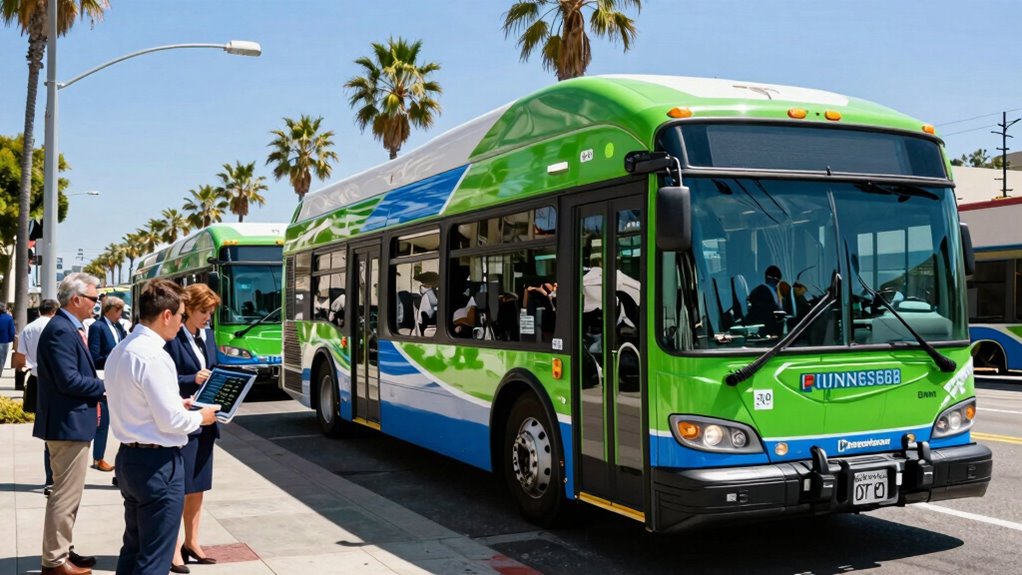

California’s new emission mandates will require you to upgrade your transit fleet to cleaner electric vehicles and improve infrastructure to stay compliant. Incentives, grants, and tax credits can help reduce costs, but planning is essential to meet deadlines and adapt operations. By proactively integrating these changes, you can achieve long-term savings and sustainability goals. To understand how these regulations specifically impact your fleet and what steps to take, explore the full details.
Key Takeaways
- Transit owners must transition to electric vehicles to comply with California’s stricter emission standards.
- Incentives like rebates and grants help offset the high costs of fleet electrification.
- Infrastructure upgrades are essential to support reliable EV charging and operational efficiency.
- Planning and staff training are critical for smooth adoption and adherence to new regulations.
- Proactive compliance strategies can reduce costs, improve sustainability, and future-proof transit operations.
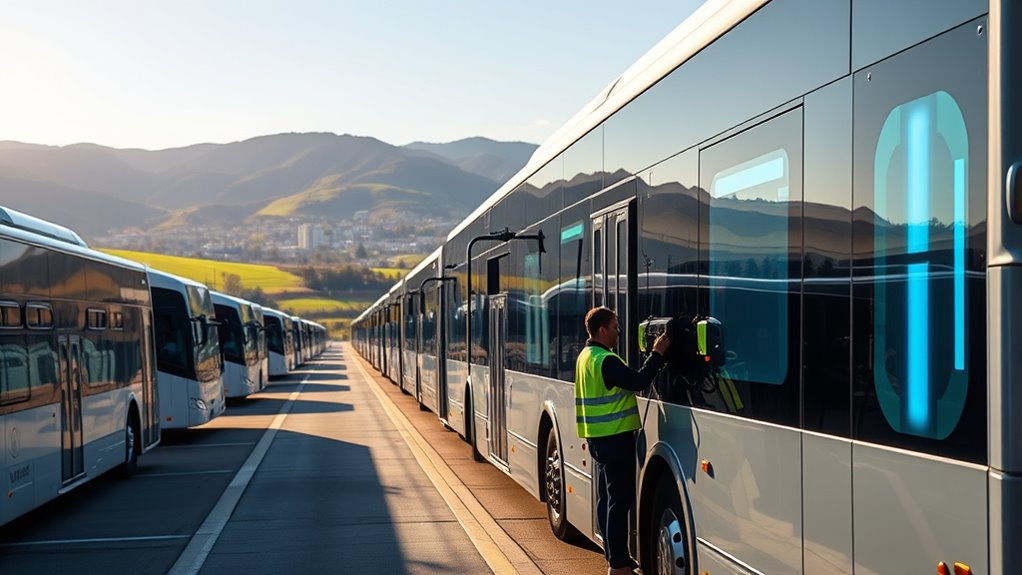
Have you heard about California’s new emission mandates? If you’re responsible for transit operations, these regulations could profoundly influence how you manage your fleet. The state is pushing aggressively toward cleaner transportation, and that means adopting electric vehicles (EVs) is more than just a trend—it’s a necessity. Fortunately, California offers a range of electric vehicle incentives designed to make this transition more affordable and appealing. These incentives include rebates, tax credits, and grants that can offset the costs of purchasing or leasing EVs. Taking advantage of these programs can help you accelerate your fleet’s electrification without draining your budget. But simply knowing about the incentives isn’t enough—you need a solid plan for integrating EVs into your operations. That’s where fleet compliance strategies come into play. Developing a thorough approach ensures your fleet meets the new standards while remaining efficient and cost-effective.
California’s new emission rules require strategic planning and incentives to transition your transit fleet to electric vehicles effectively.
Your first step should be evaluating your current fleet and understanding how these new mandates affect you. Are your vehicles compliant, or will you need to replace or retrofit existing units? With incentives in place, transitioning to electric becomes more feasible, but it requires careful planning. You’ll need to evaluate charging infrastructure needs, operational changes, and maintenance considerations. Creating a detailed fleet compliance strategy will help you identify which vehicles should be replaced first and how to phase in electric options over time. It’s also essential to consider total cost of ownership, including fuel savings, maintenance costs, and potential incentives, to justify the investment. Additionally, understanding high-quality projectors can support operational planning, especially if visual displays play a role in your transit services or public information campaigns. Incorporating reliable charging infrastructure is crucial to ensure smooth operations and prevent service disruptions. Moreover, staying informed about emerging electric vehicle technology advances can help you make smarter investment choices and future-proof your fleet. Tracking emerging trends in the EV market can also help you anticipate future regulations and technological developments. Maintaining awareness of regulatory changes enables you to adapt your strategies proactively.
Additionally, consider partnerships and grants that can further support your transition. Many local and state programs aim to assist transit agencies in meeting emission goals, and leveraging these resources can ease financial burdens. As you craft your fleet compliance strategies, factor in training for drivers and staff to ensure smooth operation of electric vehicles. Proper training can maximize efficiency and lifespan of the EVs, helping you meet regulatory deadlines without operational hiccups. Remember, the goal isn’t just to comply but to do so in a way that enhances your service quality and sustainability efforts.
Ultimately, staying ahead of these mandates means being proactive. The incentives are there to help, but you need a clear plan to capitalize on them. By integrating electric vehicle incentives into your fleet planning and developing strategic compliance measures, you’ll position your transit operations for success in a rapidly evolving regulatory landscape. The shift to electric isn’t just a compliance issue; it’s a chance to improve your fleet’s sustainability, reduce costs, and meet California’s ambitious environmental goals.

Seat Swivel Base Heavy Duty Adjustable Rotating Seat Base with Sliding Track for RV Commercial Vehicle Engineering Vehicles Convenient and Versatile Seat Adjustment Solution
Advanced Material: Rotating seat base is made of high class Stainless steel, carbon steel, hot tie steel, to...
As an affiliate, we earn on qualifying purchases.
Frequently Asked Questions
How Will These Mandates Affect Transit Fleet Maintenance Costs?
These mandates will likely increase your fleet upgrade costs, as you’ll need to invest in cleaner technology and more advanced parts. Maintenance costs could rise initially because new systems may require specialized service and training. However, over time, you might see some savings due to improved efficiency and fewer emissions-related repairs. Prepare for higher short-term expenses, but consider the long-term benefits of compliance and sustainability for your transit operations.
Are There Exemptions for Certain Types of Transit Vehicles?
Did you know that approximately 10% of transit vehicles may qualify for exemptions? Vehicle exemptions and regulatory flexibility are available for certain transit vehicles, such as those built before specific emission standards or used in specialized roles. These provisions aim to ease compliance burdens while promoting cleaner transportation. If your fleet meets specific criteria, you might be eligible, reducing costs and making changeover smoother. Always check the latest regulations for your vehicle type.
What Funding Options Are Available for Compliance Upgrades?
You can access retrofit incentives and green grants to fund your compliance upgrades. These programs provide financial support for installing cleaner emissions technology on your transit vehicles. By applying for these incentives, you reduce your upgrade costs and meet new regulations more easily. Be sure to check with local agencies or state programs that offer these grants, as they often have specific eligibility criteria and application periods to maximize your chances of securing funding.
How Do These Policies Compare to Other States’ Emission Standards?
Did you know California’s emissions standards are among the strictest nationwide? Compared to other states, California enforces more rigorous regional standards, often leading the way in environmental policies. While some states adopt federal guidelines, California’s policies push for advanced emission reductions, making it a leader in state compliance efforts. If you operate transit services outside California, you’ll find that regional standards vary markedly, influencing your upgrade and maintenance strategies.
What Timeline Will Transit Owners Need to Meet the New Requirements?
You’ll need to meet compliance deadlines set by California’s emission mandates, which typically require transit owners to upgrade or replace vehicles within specific timeframes. Regular emission testing is essential to guarantee your fleet stays compliant. Keep an eye on deadlines, as they often vary by vehicle type and age. Staying proactive helps avoid penalties, so plan for updates and testing well before the deadlines approach.

ASDJAKZP Swivel Seat Mount, 360° Rotation Driver Side Seat Swivel, Heavy Duty Rust Proof Seat Swivel Base Mount Plate Fit for Transit Sprinter Promaster, Enhance Your Seating Comfort
【Full Range of Motion】This seat swivel base offers 360° rotation, allowing for a full range of motion. Easily...
As an affiliate, we earn on qualifying purchases.
Conclusion
As you navigate California’s roads, these new emission mandates feel like a gust of fresh air, clearing the smog of doubt and dust. You see the future shimmering on the horizon—a cleaner, greener landscape where transit owners steer toward sustainability. With every mile, you’re part of a movement that sparks change, like the gentle hum of engines transforming into a symphony of progress. Embrace this shift, and watch your journey flourish amid the promise of clearer skies ahead.

RV passenger Side Seat Base 360° Rotation Heavy Duty Rust Proof Seat Swivel Base Mount Plate Fit for Mercedes-Benz Sprinter Ford Transit Promaster
Attention: The product installation is difficult, it is recommended to seek the assistance of a professional engineer for...
As an affiliate, we earn on qualifying purchases.

Weonefit Right Passenger Seat Swivel Base Replacement for Ford Transit 150 250 350 RV Swivel丨FTP004
【Attention】- Connect different holes to adapt to different cars(See picture 2). Incorrect installation may lead to mismatches. Professional...
As an affiliate, we earn on qualifying purchases.