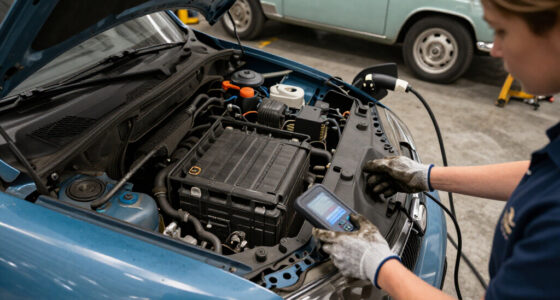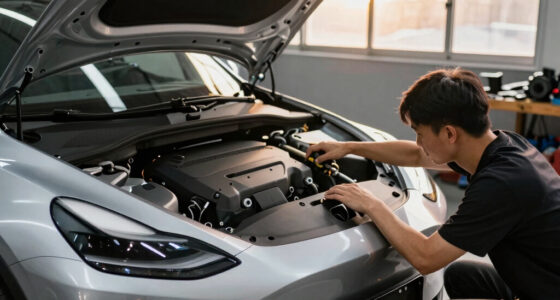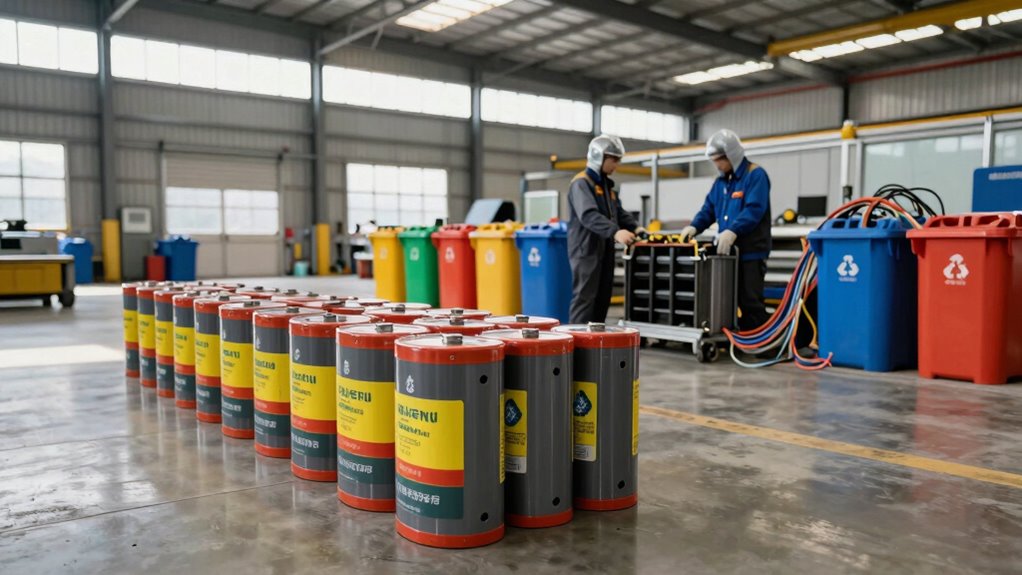

When an e-transit battery reaches the end of its primary use, it’s often repurposed for second-life applications like stationary energy storage, which extends its useful life. Batteries with residual capacity are tested to guarantee reliability before reuse, reducing waste and environmental impact. If it’s no longer suitable, the battery is recycled to recover valuable materials, minimizing mining and waste. Want to see how these processes help create a more sustainable future? Keep exploring to find out more.

Get business pricing on garage and car supplies
- Business-only prices and quantity discounts
- Tax-exempt purchasing
- Multiple users, one account, clear invoices
Key Takeaways
- Retired e-Transit batteries are tested to assess residual capacity for potential second-life applications.
- Batteries with sufficient capacity are repurposed for stationary energy storage, extending their usability.
- Batteries with low capacity are sent for recycling to recover valuable materials like lithium and cobalt.
- Recycling reduces environmental impact and supports a circular economy by reclaiming raw materials.
- Second-life reuse delays full recycling, decreasing waste and minimizing the environmental footprint of battery disposal.

As battery use continues to grow worldwide, recycling and repurposing them has become more essential than ever. When electric transit batteries reach the end of their primary life, you might wonder what happens next. The concept of battery reuse becomes a key part of extending their usefulness and reducing waste. Instead of simply discarding these batteries, they often find a second life in less demanding applications, such as energy storage for solar power systems or backup power supplies. This approach helps maximize the value of the materials inside the batteries and minimizes environmental impact, which is fundamental as the number of used batteries surges globally.
Repurposing these batteries involves carefully testing their capacity and health. You’re likely to see some batteries that still have significant residual capacity, making them suitable for stationary energy storage, where weight and size are less critical than reliability. This second life not only delays the need for full recycling but also reduces the environmental footprint associated with manufacturing new batteries. It’s a smart way to leverage existing resources, decreasing the demand for raw materials like lithium, cobalt, and nickel, which are often mined under environmentally sensitive conditions.
Testing used batteries reveals residual capacity, enabling their reuse in energy storage and reducing environmental impact.
When you think about the environmental impact, repurposing used batteries plays an essential role. Manufacturing new batteries consumes substantial energy and resources, and improper disposal can lead to toxic chemicals leaching into the environment. By extending the lifespan of batteries through reuse, you’re helping to lessen the burden on landfills and decrease harmful emissions linked to raw material extraction and processing. This process contributes to a more sustainable approach to energy storage, aligning with global efforts to reduce carbon footprints.
Additionally, the recycling process itself becomes more efficient when batteries are reused first. Instead of treating all used batteries as waste, recycling facilities can focus on recovering valuable materials from batteries that have reached the end of their second life. This reduces the need for mining new raw materials, which is often energy-intensive and environmentally disruptive. As you participate in or support these efforts, you’re actively contributing to a circular economy—where resources are kept in use for as long as possible—ultimately fostering a cleaner, greener future.
Frequently Asked Questions
How Long Do E-Transit Batteries Typically Last Before Retiring?
You can expect your e-transit battery to last around 8 to 10 years before retirement, depending on usage and maintenance. The battery lifespan varies based on factors like charging habits and climate conditions. Typically, retirement timing occurs once the battery’s capacity drops below a certain threshold, usually around 70-80%. Proper care can extend its service life, but eventually, it will need replacement or repurposing as its performance declines.
What Are the Environmental Impacts of Battery Recycling?
Imagine you’re recycling an EV battery, and it helps recover valuable materials like lithium and cobalt. This process reduces pollution by preventing hazardous waste from entering ecosystems. Recycling promotes materials recovery, minimizing the need for new resource extraction, which lowers environmental impact. Overall, battery recycling considerably contributes to pollution reduction, conserving resources, and supporting a sustainable future. Your actions make a real difference in protecting our planet.
Can Retired Batteries Be Repurposed for Home Energy Storage?
Yes, you can repurpose retired batteries for home energy storage. By integrating these batteries into your home, you gain greater energy independence and reduce reliance on the grid. They serve as a reliable backup during outages and help optimize renewable energy use. Properly repurposed, retired batteries offer an eco-friendly, cost-effective way to enhance your home’s energy system while extending their life cycle.
Who Manages the Logistics of Battery Collection and Recycling?
You rely on specialized companies and certified recyclers to manage battery collection and recycling. They handle logistics, guaranteeing batteries meet strict recycling regulations and obtain necessary battery certification. These organizations coordinate pickup, transportation, and processing, following safety standards to prevent environmental harm. They also work closely with manufacturers and regulatory bodies to ensure compliance, keeping the process efficient and environmentally responsible from collection through final recycling or second-life usage.
What Advancements Are Being Made to Extend Battery Second Life?
Did you know that extending a battery’s second life can reduce waste by up to 50%? You can maximize your battery’s lifespan by repurposing used batteries for stationary energy storage or less demanding applications. This innovation not only prolongs the second life of batteries but also diminishes environmental impact. By focusing on second-life applications, you help guarantee batteries serve longer, making your electric vehicle more sustainable and cost-effective over time.
Conclusion
As you consider the future of e-transit batteries, it’s exciting to know that over 95% of lithium-ion batteries can be recycled, reducing environmental impact. When these batteries retire from vehicles, many find a second life in energy storage, extending their usefulness. This not only conserves resources but also keeps valuable materials in circulation. Embracing battery recycling and second-life applications helps you contribute to a cleaner, more sustainable world—one battery at a time.
Halloween Picks
halloween
As an affiliate, we earn on qualifying purchases.