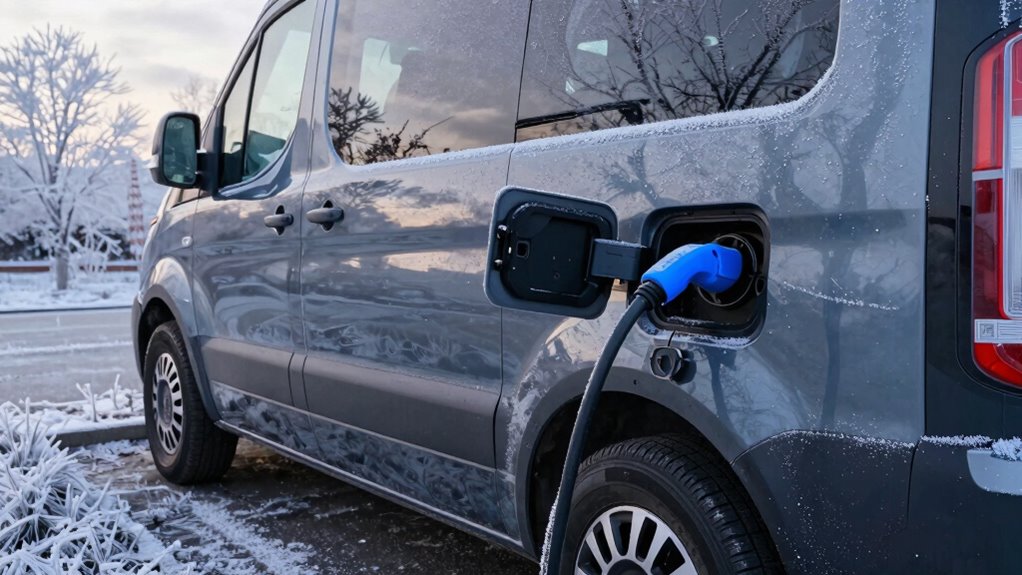

In cold weather, heated batteries are really beneficial when charging your E-Transit. They help maintain ideal temperature, preventing rapid cooling that reduces efficiency and range. Heated batteries ensure your vehicle charges reliably and preserves battery health during winter months. Without proper thermal management, you might find your range dropping and charging taking longer. To get the most out of your E-Transit in the cold, understanding how thermal systems work is key—keep going to learn more.
Key Takeaways
- Heated batteries help maintain optimal temperature, reducing energy drain during cold charging and improving overall efficiency.
- Thermal management systems activate to warm the battery, minimizing range loss and charging time in cold weather.
- Without heated batteries, cold air causes rapid cooling, increasing energy consumption for warming and decreasing charge speed.
- Pre-conditioning and insulation are essential to keep the battery warm, ensuring better performance and charging in winter conditions.
- Using heated batteries and thermal management features enhances reliability, safety, and range when charging in low temperatures.

Have you ever wondered why your electric vehicle’s battery seems to drain faster on cold mornings? Cold weather impacts your E-Transit’s battery performance more than you might realize. One key factor is how effectively the battery is insulated and managed thermally. Proper battery insulation helps retain heat, preventing the battery from freezing or cooling down excessively, which can considerably reduce its efficiency. Without adequate insulation, the cold air quickly cools the battery, making it harder for it to deliver power efficiently and increasing energy consumption for heating and warming functions.
Proper thermal insulation boosts EV battery performance in cold weather.
Thermal management plays an essential role in maintaining your battery’s health and performance during winter. Modern electric vehicles, including the E-Transit, often come equipped with thermal management systems that regulate temperature by warming or cooling the battery as needed. When temperatures drop, these systems activate to keep the battery within an ideal range, ensuring smooth operation and extending battery life. Effective thermal management can significantly improve your vehicle’s winter performance and extend battery lifespan. Additionally, some vehicles utilize battery heating systems that warm the battery directly to improve cold-weather operation.
If your vehicle lacks heated batteries, you might notice that the range drops more sharply in cold weather. To counteract this, many EV owners use pre-conditioning features, which warm the battery before driving, often while still plugged in. This process relies heavily on effective thermal management and insulation, so the battery starts off at a more favorable temperature, reducing the energy needed to warm it during your trip. Proper battery insulation helps conserve heat and maintain optimal performance. Moreover, understanding how thermal management systems operate can help you better optimize your vehicle’s winter performance. If your E-Transit doesn’t have heated batteries or advanced thermal management, you’ll need to be more mindful of charging habits and route planning, especially in winter.
Investing in additional insulation can also help improve battery performance in cold conditions. Some owners install aftermarket insulation kits or use heated blankets designed for batteries, which provide extra warmth during parking or overnight storage. These measures help conserve the battery’s stored heat, minimizing the energy drain caused by cold temperatures. Remember, the goal isn’t just to keep the battery warm for comfort but to maximize its chemistry and efficiency, ensuring you get the most out of each charge.
In essence, whether or not your E-Transit has heated batteries, prioritizing good thermal management and insulation is essential for winter driving. These features aren’t just about comfort; they’re about maintaining your vehicle’s range, performance, and longevity in cold weather. Properly managing the battery’s temperature ensures you won’t be caught off guard by unexpected range drops or longer charging times, making winter driving safer and more predictable.

USANOOKS Microfiber Cleaning Cloth Grey - 12 Pcs (12.5"x12.5") - High Performance - 1200 Washes, Ultra Absorbent Microfiber Towel Weave Grime & Liquid for Streak-Free Mirror Shine - Car Washing Cloth
- High Absorbency Grip Root Weave: Locks in 8-10x weight in liquids
- Lint-Free and Scratch-Resistant: Prevents streaks, swirls, and damage
- Durable for 1200+ Washes: Long-lasting reuse with overlock stitching
As an affiliate, we earn on qualifying purchases.
Frequently Asked Questions
How Long Does Cold Weather Typically Reduce Battery Range?
Cold weather can reduce your E-Transit’s battery range by about 20-40%, depending on conditions. When temperatures drop, your battery insulation and thermal management systems work harder to keep the battery warm, which consumes extra energy. This increased energy use shortens your driving distance, sometimes markedly. To minimize this impact, pre-condition your vehicle and consider heated batteries if you frequently drive in very cold environments.
Can Heated Batteries Fully Restore Range in Freezing Temperatures?
Absolutely, heated batteries can fully restore your range in freezing temps—if only they had a magic switch! In reality, battery insulation and thermal management systems help keep your E-Transit warm, but they can’t turn back the clock on cold-induced range loss. While they improve performance, don’t expect them to fully negate the chill’s effects. Think of it more as a cozy blanket, not a time machine.
Are Heated Batteries More Expensive to Replace or Maintain?
Heated batteries generally cost more to replace because of their additional components and complexity, but maintenance costs aren’t considerably higher unless you frequently operate in extreme cold. You might spend extra on battery replacement over time, especially if cold weather accelerates battery wear. However, proper maintenance, like keeping batteries warm and avoiding extreme temperatures, helps extend their lifespan and minimizes overall maintenance expenses.
Do All Electric Vehicle Models Come With Heated Battery Options?
Not all electric vehicle models come with heated battery options. Many EVs feature battery insulation and thermal management systems to protect against cold weather, but heated batteries are typically an available upgrade or feature on higher-end models. If you plan to drive in cold climates, check whether the vehicle has active thermal management or heated battery packs, as these help maintain performance and extend battery life during colder temperatures.
What Safety Features Protect Batteries in Extremely Cold Conditions?
You might think batteries are vulnerable in extreme cold, but safety features like thermal insulation and advanced battery management systems safeguard them effectively. Thermal insulation minimizes heat loss, keeping batteries warmer, while battery management optimizes charging and discharging, preventing damage from cold temperatures. These features work together to ensure your vehicle remains safe and reliable, even in freezing conditions, giving you peace of mind on chilly drives.

HOMEXCEL Microfiber Cleaning Cloth 12 Pack, 12.5 x 12.5 inch Microfiber Towels for Cars, Ultra Absorbent Washing Cloth, Lint Free Streak Free Cleaning Rags for Car, Kitchen, and Window (Grey)
- High Water Absorption: Excellent at absorbing dirt and liquids
- Scratch-Free Material: Soft fabric protects car paint
- Fast Drying: Quickly absorbs water for streak-free finish
As an affiliate, we earn on qualifying purchases.
Conclusion
When the cold bites, your e-Transit’s batteries can feel like frozen rivers, slowing your flow. Heated batteries act like a warm sun, melting away the icy grip and keeping your journey smooth. Don’t let winter’s chill turn your drive into a frozen pond—embrace heating solutions and keep your electric adventure alive and vibrant, no matter how frosty the day. Stay warm, stay powered, and let your vehicle dance freely through winter’s icy embrace.

Chemical Guys, Workhorse Plush Microfiber Towels, 16 x 16 in, Black, 3 Pack
- Size: 16 x 16 inches
- Material: Premium microfiber blend
- Use: Washing, drying, detailing
As an affiliate, we earn on qualifying purchases.

AIDEA Microfiber Cleaning Cloth-50PK, Microfiber Towels for Cars, 12×12"
- Super Absorbent Material: Quickly wicks away water and dirt
- Soft and Lint-Free: Scratch-free cleaning on various surfaces
- Reusable and Durable: Washes and reuses hundreds of times
As an affiliate, we earn on qualifying purchases.