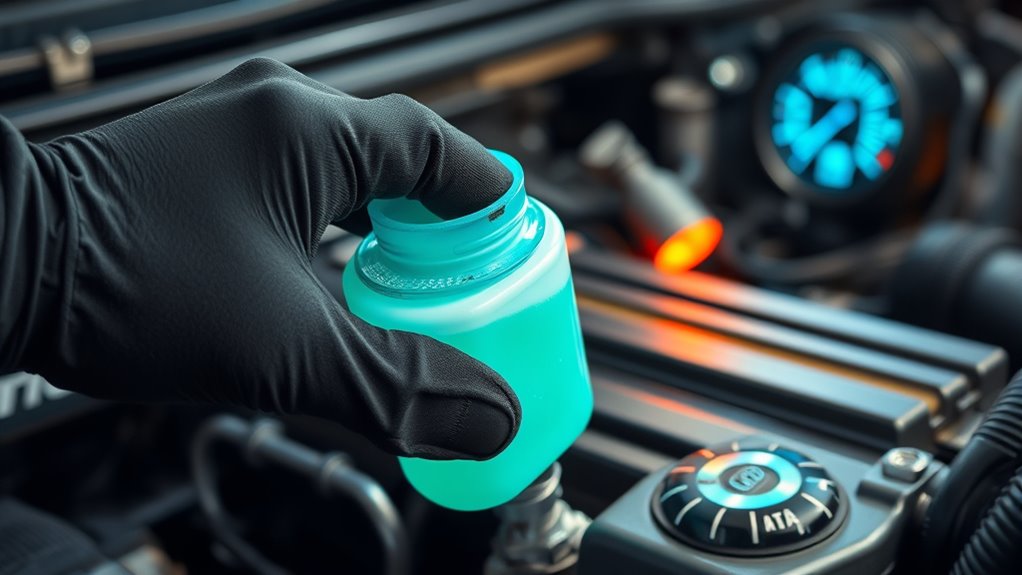

To maintain your Ford Transit’s cooling system, use the recommended coolant types like Motorcraft® Orange (WSS-M97B44-D/D2), Yellow, or Green, guaranteeing compatibility to prevent damage. To bleed the system, slowly fill the expansion tank, run the engine at 1500-3500 RPM until warm, then turn off and top up the coolant. Continuing with these steps helps ensure proper cooling; more details can guide you through each stage effectively.

Get business pricing on garage and car supplies
- Business-only prices and quantity discounts
- Tax-exempt purchasing
- Multiple users, one account, clear invoices
Key Takeaways
- Ford Transit typically uses orange coolant (WSS-M97B44-D/D2), but verify with vehicle labels or specifications.
- Use Motorcraft® coolant, ensuring it meets Ford’s standards for compatibility and system protection.
- Fill the cooling system slowly, above the max line, then run the engine to circulate coolant and release trapped air.
- Run the engine at 1500-3500 RPM, then idle for 5-10 minutes, to help bleed air from the system effectively.
- Check coolant levels after cooling, top off as needed, and inspect for leaks or air pockets to maintain proper cooling performance.
Ford Transit coolant replacement kit
As an affiliate, we earn on qualifying purchases.
As an affiliate, we earn on qualifying purchases.
Understanding the Coolant Types Suitable for Ford Transit

To make certain your Ford Transit runs smoothly, it’s essential to use the right coolant type. Ford specifies certain coolant standards like WSS-M97B44-D, WSS-M97B44-D2, WSS-M97B51-A1, and WSS-M97B55-A, depending on your model year and engine. Motorcraft offers approved coolants in different colors: green for older models, orange for newer engines, and yellow for specific applications. These coolants meet Ford’s specifications, ensuring compatibility and protection. You can choose from ready-mixed 50/50 antifreeze or concentrated types, but always dilute concentrates with distilled water. Ford Transit engines generally recommend coolants classified as G11, G12, G12+, or G13, with G13 providing longer-lasting and environmentally friendly options. Using the correct coolant prevents corrosion and system damage, keeping your vehicle in ideal condition. Additionally, selecting a coolant with the appropriate coolant type is vital for maintaining optimal engine performance and longevity. Proper coolant maintenance supports the longevity of your cooling system and prevents costly repairs. Incorporating regular inspections into your maintenance routine can further help in early detection of potential issues, such as coolant leaks or contamination, ensuring your vehicle remains reliable over time.
Motorcraft orange antifreeze 50/50
As an affiliate, we earn on qualifying purchases.
As an affiliate, we earn on qualifying purchases.
Identifying the Correct Coolant Color and Composition
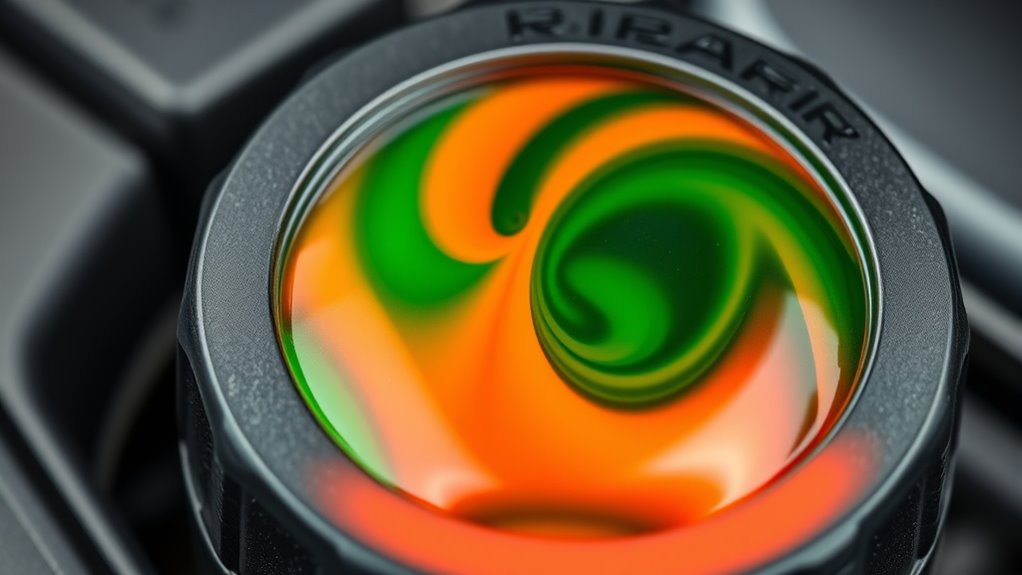
Identifying the correct coolant color and composition on your Ford Transit helps guarantee you’re using the right product and maintaining ideal performance. Typically, recent models come with orange coolant, approved under Ford specifications WSS-M97B44-D or D2, known as Motorcraft® Orange Antifreeze/Coolant. Yellow coolant, like Motorcraft® Gold, meets WSS-M97B51-A1 and is sometimes used in specific Transits. Dark green coolant aligns with Ford’s WSS-M97B55-A, labeled as Motorcraft® Specialty Green. Be cautious when mixing coolant colors; incompatible combinations can cause chemical reactions and reduce effectiveness. Always verify the coolant color visually through the radiator or reservoir, but remember, color alone isn’t enough—checking the product specifications and Ford-approved labels guarantees proper compatibility and performance. Container Size is also an important consideration when purchasing coolant, ensuring you have enough for ongoing maintenance without excess.
coolant bleeding kit for Ford Transit
As an affiliate, we earn on qualifying purchases.
As an affiliate, we earn on qualifying purchases.
Step-by-Step Guide to Properly Bleed the Cooling System
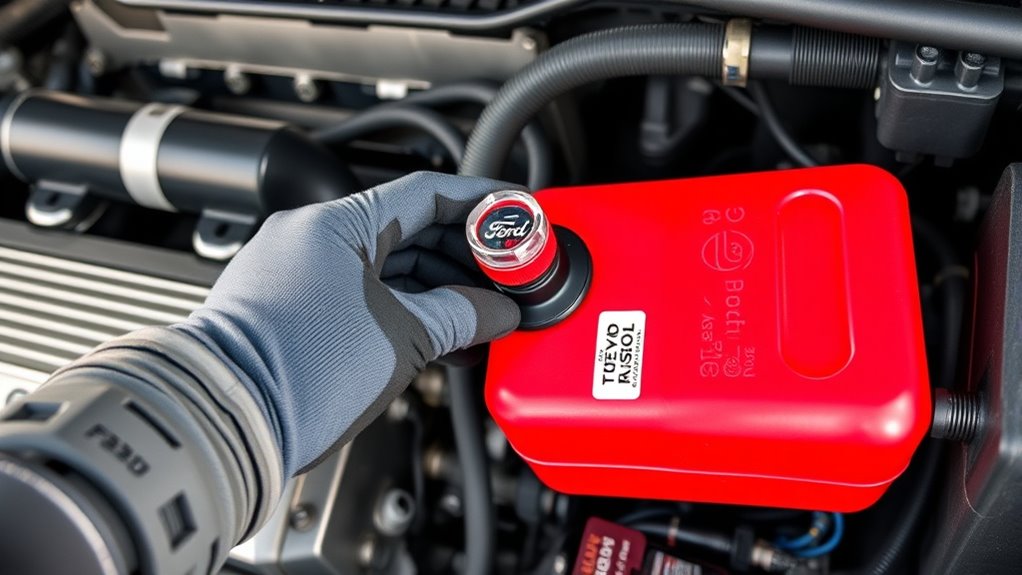
Properly bleeding the cooling system is essential for preventing air pockets that can cause overheating and inefficient heater performance. Begin by filling the expansion tank slowly with the correct coolant mixture, slightly above the maximum line to displace trapped air. Start the engine and run it at 1500-3500 RPM until it reaches normal temperature. Let it idle for 5-10 minutes to allow air bubbles to rise. Turn off the engine and let it cool before checking and topping off the coolant. Regularly monitoring coolant levels during operation is crucial, as slight drops are acceptable but persistent loss indicates a leak or incomplete bleeding process. To aid in the removal of trapped air, squeezing hoses can be effective, and using bleed screws if available can help release air more efficiently. Additionally, ensuring the correct coolant mixture is used helps maintain proper system pressure and prevents air entrapment. Properly bleeding the system also reduces the risk of coolant contamination that can impair cooling efficiency and damage components. Afterward, ensure the coolant level is topped off, caps are secured, and the system is free of air pockets.
Ford Transit radiator coolant tester
As an affiliate, we earn on qualifying purchases.
As an affiliate, we earn on qualifying purchases.
Important Maintenance Tips for Optimal Cooling Performance

Maintaining your Ford Transit’s cooling system is key to ensuring reliable engine performance and avoiding costly repairs. Regularly check the coolant level, making sure it stays between the minimum and maximum marks on the reservoir. Inspect hoses and clamps for cracks, leaks, or softness, replacing damaged parts immediately. Keep an eye on radiator and fan operation to maintain proper engine temperature. Flush the system and replace antifreeze according to the schedule or when coolant looks dirty. Use a proper 50/50 mix of ethylene glycol antifreeze and distilled water, ideally Ford’s specific coolant, to prevent corrosion and overheating. Ensure the coolant concentration is correct, and replace the expansion tank cap seals if needed. Proper handling, disposal, and safety precautions are essential when working with coolant. Regular maintenance checks can also help identify airflow problems early, preventing overheating issues and ensuring optimal cooling performance. Additionally, conducting a coolant system pressure test periodically can help detect hidden leaks before they cause engine damage. Incorporating coolant flow analysis can further optimize the cooling system’s efficiency and longevity.
Troubleshooting Common Cooling System Issues

When your Ford Transit starts overheating or coolant levels drop unexpectedly, troubleshooting the cooling system becomes necessary. Begin with a visual inspection for leaks, noting wet spots or pooling near hoses, radiator, or water pump. Check for cracked, corroded, or damaged radiators and faulty radiator caps, as these can cause coolant loss. Inspect hoses and clamps for cracks, brittleness, or looseness, tightening or replacing as needed. Perform a pressure test to identify hidden leaks and monitor coolant levels regularly for gradual drops. Verify the radiator fan runs properly and activates at the correct temperature, preventing overheating. If internal leaks are suspected, consider advanced diagnostics like a block test. Additionally, understanding the coolant type suitable for your Ford Transit is crucial to maintain optimal engine temperature and prevent overheating issues. Ensuring proper ventilation of the cooling system can help prevent dangerous build-up of gases and maintain efficient operation. Be aware that Self Watering Plant Pots utilize a reservoir system that maintains consistent moisture, which can help prevent overheating issues in certain engine cooling components. Addressing these issues promptly helps prevent engine damage and keeps your Transit running smoothly.
Frequently Asked Questions
Can I Use Non-Ford Coolants in My Transit Without Voiding the Warranty?
You can’t use non-Ford coolants in your Transit without risking warranty issues. Ford specifies Motorcraft® or approved coolants to keep your warranty valid. Using anything else might lead to engine or cooling system damage that isn’t covered. Always check the coolant’s specifications and color to ensure compatibility. If you do choose an aftermarket product, verify it meets Ford’s standards to avoid potential warranty voidance and costly repairs later.
How Often Should I Perform a Coolant System Flush on My Ford Transit?
Think of your Ford Transit’s cooling system like a garden that needs regular pruning to stay healthy. You should perform a coolant flush every 30,000 miles or every 2 years for older coolant types. If your vehicle has newer OAT coolant, extend this to about 100,000 miles or 5 years. Regular inspections and following the manufacturer’s schedule keep your engine running smoothly and prevent costly damage.
What Signs Indicate My Cooling System Needs Immediate Attention?
If your dashboard shows a red coolant warning light, your engine is overheating, or you notice a sweet smell near the engine, your cooling system needs immediate attention. Other signs include steam or hissing sounds, coolant leaks under the vehicle, or if the engine temperature gauge rises unexpectedly. Reduced performance, frequent overheating, or persistent warning lights despite topping up coolant also indicate urgent issues that require prompt inspection and repair.
Is It Necessary to Replace the Thermostat When Changing Coolant?
Yes, you should replace the thermostat when changing coolant, especially if it shows signs of malfunction or if overheating happened before. Even if it seems fine, replacing it during coolant service helps prevent future failures that could damage your engine. Inspect the thermostat for corrosion or sticking, use a new gasket, and ensure proper installation. This proactive step keeps your cooling system running smoothly and protects your engine from costly repairs.
Can I Mix Different Coolant Colors if I Can’t Find the Specified Type?
You shouldn’t mix different coolant colors—they’re like oil and water, destined to separate and cause chaos. Coolant color isn’t a reliable guide to chemistry, so mixing different types risks damaging your engine, causing corrosion, or creating gelling nightmares. If you can’t find the exact Ford-recommended coolant, flush the system thoroughly first. Use a compatible, approved coolant to keep your engine running smoothly and avoid costly repairs down the road.
Conclusion
Keeping your Ford Transit’s cooling system in top shape guarantees smooth journeys and peace of mind. By choosing the right coolant and mastering the bleeding process, you’re gently guiding your vehicle toward reliable performance. Regular maintenance and attentive troubleshooting help prevent minor hiccups from becoming major setbacks. Think of it as nurturing a well-tended garden—your Transit will thank you with consistent, worry-free miles, making every trip a pleasant chapter in your driving story.
Columbus Day / Indigenous Peoples' Day Picks
long weekend sales
As an affiliate, we earn on qualifying purchases.