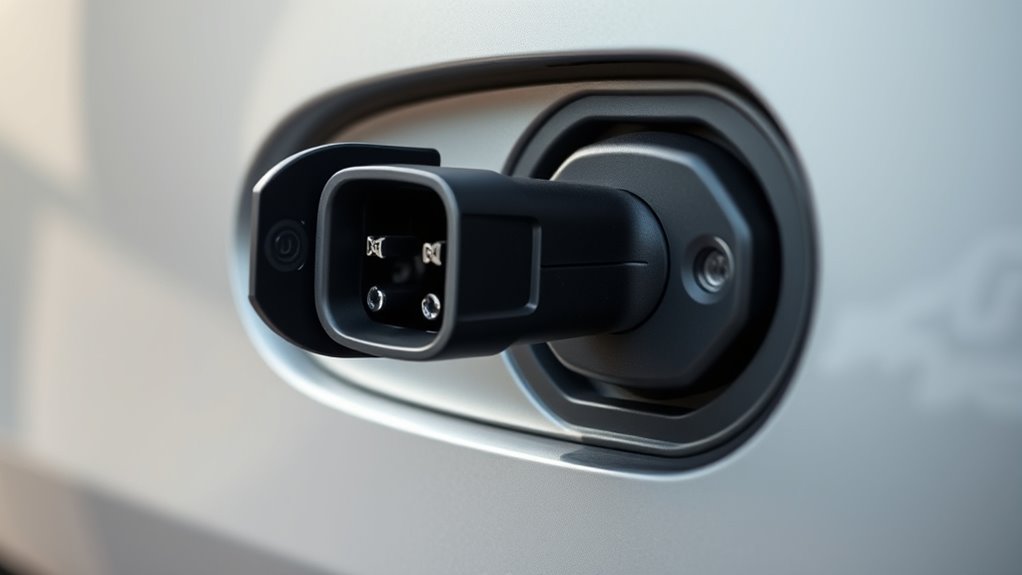

CCS connectors are the standard for fast and versatile EV charging, combining AC and DC options for quick power delivery to your E‑Transit. They feature a distinctive shape with a secure locking mechanism, making connection easy and safe. The charge port is usually located on the vehicle’s front or side, clearly marked for CCS use. Knowing how these work helps you plug in confidently and maximize charging efficiency—keep going to learn more about making the most of your charging experience.
Key Takeaways
- CCS connectors combine AC and DC charging capabilities, supporting rapid charging sessions for EVs like the E‑Transit.
- The charge port is typically located on the front or side of the vehicle and clearly marked for CCS compatibility.
- CCS connectors feature a distinctive shape with high-voltage DC pins and secure locking for safe, fast connections.
- During charging, the vehicle communicates with the station to negotiate speed, with indicator lights showing status.
- Proper alignment and secure locking of the CCS connector ensure safe, efficient, and reliable charging for the E‑Transit.

Ever wondered how electric vehicles charge so quickly and efficiently? The secret lies partly in the connectors and charge ports that facilitate high-speed charging. If you’re driving an E-Transit, understanding CCS connectors and charge port basics can help you make the most of your charging experience.
These components are designed to guarantee compatibility with fast-charging stations, allowing you to get back on the road faster with minimal fuss. The Combined Charging System (CCS) connector is becoming the industry standard for DC fast charging, offering a versatile solution that supports both AC and DC charging. It combines the traditional Type 1 or Type 2 AC connector with two additional pins for high-voltage DC power, enabling rapid charging sessions that can add significant range in just 30 minutes.
CCS connectors ensure fast, versatile charging by supporting both AC and DC power for quick charging sessions.
When you approach a CCS-compatible fast charger, you’ll notice the connector’s distinctive shape—it’s designed for easy grip and secure locking, which helps prevent accidental disconnection during charging. Your E-Transit’s charge port is typically located on the front or side of the vehicle, marked clearly to indicate its compatibility.
The port itself is built to withstand various environmental conditions, with a weatherproof cover that protects the internal contacts from dirt, water, and debris. To charge, you align the CCS connector with your vehicle’s port, assuring it clicks into place securely.
Once connected, the vehicle communicates with the charger to negotiate the charging rate, ensuring safety and superior performance. You don’t need to worry about matching the charger type; CCS connectors are designed to be universal, so if the station is equipped with a CCS port, your E-Transit can utilize its fast-charging capabilities.
As the charging session begins, you might see indicator lights or a display showing charging status and estimated time remaining. It’s important to note that the charging speed depends on both the station’s capacity and your vehicle’s maximum charging rate.
Throughout the process, the vehicle and charger exchange data to monitor temperature and prevent overheating, guaranteeing safe and efficient charging. Research supports that reliable charging infrastructure is essential for widespread EV adoption, and understanding how your vehicle connects to fast chargers ensures you get the most out of your electric driving experience.
When your E-Transit reaches the desired charge level or the station stops automatically, you simply release the connector and close your vehicle’s charge port.
Knowing the basics of CCS connectors and charge ports helps you navigate the charging process confidently, saving time and reducing frustration. Whether you’re on a quick stop or a longer trip, understanding how your vehicle connects to fast chargers ensures you get the most out of your electric driving experience.
Frequently Asked Questions
Can CCS Connectors Be Used With All Electric Vehicle Brands?
No, CCS connectors can’t be used with all electric vehicle brands. While many newer models support CCS, some EVs, especially older or specific brands like Tesla, use different charging standards.
You need to verify your vehicle’s compatibility before using a CCS charger. If your EV supports CCS, then you can use it.
Otherwise, you might need an adapter or alternative charging options to ensure proper and safe charging.
Are CCS Charge Ports Compatible With Fast Charging Stations Worldwide?
Yes, CCS charge ports are compatible with fast charging stations worldwide that support CCS standards. You can quickly recharge your electric vehicle at most major fast charging networks in North America and Europe.
However, compatibility depends on the station’s connector type and charging capabilities. Always check the station’s specifications before charging to verify it supports CCS fast charging, so you can enjoy faster, more convenient charging experiences wherever you go.
How Do I Identify the Correct CCS Connector Type for My Vehicle?
You can identify the correct CCS connector type for your vehicle by checking the label on your charge port, which typically indicates the connector standard. Look for the CCS or Combined Charging System label, and verify the shape and pin configuration.
Consult your vehicle’s manual or contact the manufacturer if you’re unsure. Ensuring compatibility helps you find the right charging stations and speeds up your charging experience.
What Maintenance Is Required for CCS Charge Ports Over Time?
Think of your CCS charge port like a well-loved tool that needs occasional care. You should regularly inspect it for dirt, debris, or corrosion, and clean it gently with a dry cloth.
Keep the port dry and free from moisture, especially after rain or washing.
Check for any damage or loose parts, and if you notice issues, have a professional inspect and service it promptly.
This keeps your charging port reliable and safe over time.
Are There Safety Features Integrated Into CCS Connectors?
Yes, CCS connectors have safety features integrated to safeguard you. They include locking mechanisms that prevent accidental disconnection, thermal sensors that monitor for overheating, and shielding to prevent electrical shocks.
These features ensure safe charging by automatically disconnecting if issues are detected. Always follow manufacturer instructions and inspect connectors regularly to maintain safety and proper functioning during each charge session.
Conclusion
Now that you’re familiar with CCS connectors and charge ports, think of them as the gateways to your e‑Transit’s energy oasis. With a little confidence, you’ll navigate charging stations like a seasoned explorer discovering hidden treasures. These connections are your vehicle’s lifelines, turning simple plugs into powerful portals of possibility. Embrace the knowledge, and let your e‑Transit charge ahead smoothly—ready to conquer new roads and adventures like a true pioneer.