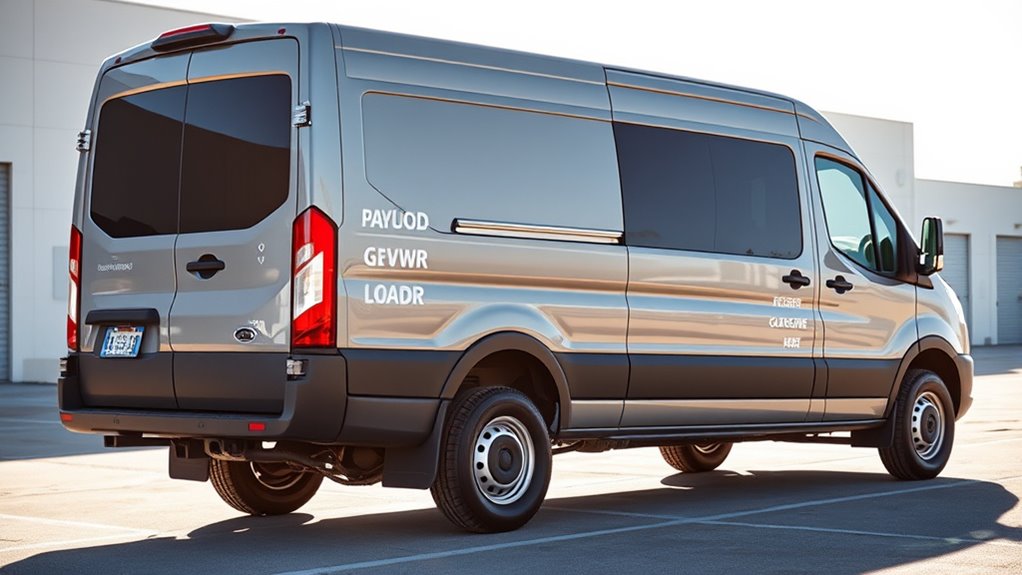

Understanding your E‑Transit’s payload capacity, GVWR, and weight distribution is key for safe and efficient use. Your vehicle’s payload includes passengers and cargo, but it must stay within the maximum limit specified by the manufacturer. GVWR indicates the total weight the vehicle can handle fully loaded. Proper weight distribution ensures stability and better handling. If you want to maximize safety and performance, it’s important to adhere to these guidelines closely; more details await you.

Get business pricing on garage and car supplies
- Business-only prices and quantity discounts
- Tax-exempt purchasing
- Multiple users, one account, clear invoices
Key Takeaways
- Check the E-Transit’s specified payload capacity and GVWR to ensure safe loading limits.
- Maintain proper weight distribution across axles to optimize handling and prevent uneven tire wear.
- Avoid exceeding the GVWR to prevent suspension damage, brake failure, and safety risks.
- Secure heavy items near the vehicle’s center and towards the front for balanced weight distribution.
- Regularly verify total loaded weight with scales to stay within manufacturer-specified limits.
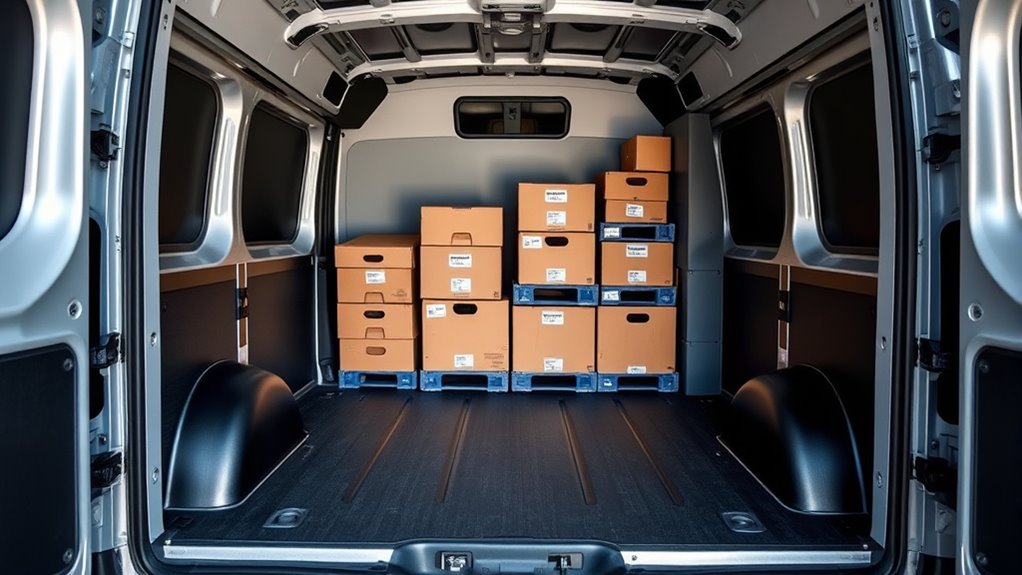
Understanding payload capacity, GVWR (Gross Vehicle Weight Rating), and weight distribution is vital when choosing or operating an E‑Transit. These factors directly influence how much cargo you can carry safely and how the vehicle handles on the road. Payload capacity refers to the maximum weight your van can carry, including passengers, cargo, and any added equipment. Exceeding this limit can compromise vehicle safety, reduce performance, and increase wear and tear. To avoid these issues, you need to know the exact payload capacity of your E-Transit model, which varies based on configurations like wheelbase, roof height, and battery options. Always check the manufacturer’s specifications and confirm your load stays within the recommended limits. Studies indicate that proper weight management enhances vehicle efficiency and safety. GVWR, or Gross Vehicle Weight Rating, indicates the maximum total weight your vehicle can weigh when fully loaded, including the weight of the vehicle itself, passengers, cargo, and any accessories. This rating is vital because it provides a clear boundary for safe operation. If your vehicle exceeds this limit, you risk suspension damage, tire blowouts, or brake failure, which can lead to accidents or costly repairs. When planning your loads, consider the weight of all items you’ll be transporting and keep a scale or weighing method handy to verify your total weight regularly. Staying within the GVWR ensures that your E-Transit operates efficiently and safely, especially when you’re on longer routes or carrying heavier loads. Weight distribution plays an important role in maintaining vehicle stability and handling. Properly distributing weight across the front and rear axles helps prevent uneven tire wear, improves braking, and reduces the risk of skidding or loss of control. When loading your E-Transit, place heavy items on the floor of the cargo area, close to the centerline, and towards the front to keep the vehicle balanced. Avoid placing all the weight in the rear, as this can cause the front wheels to lift slightly, impair steering, and increase stopping distances. Use tie-downs and load straps to secure items firmly, preventing shifting during transit, which can affect your vehicle’s balance and safety. Proper weight distribution further supports optimal vehicle performance and safety during operation.
As an affiliate, we earn on qualifying purchases.
Frequently Asked Questions
How Does Payload Capacity Affect Vehicle Fuel Efficiency?
When your vehicle carries a heavier payload, it works harder, which can reduce fuel efficiency. You’ll notice increased engine strain, more rolling resistance, and higher energy consumption, all of which drain your fuel faster.
To optimize efficiency, try to avoid overloading and distribute weight evenly. Keeping payload within recommended limits helps your vehicle run smoothly, saving you money and reducing emissions over time.
Can I Modify the GVWR of My E-Transit?
Think of your E‑Transit as a delicate balancing act; you can’t simply change its GVWR like adjusting a knob. Modifying the GVWR isn’t straightforward and often isn’t allowed, because it’s set by the manufacturer based on safety and design limits.
If you need a higher capacity, consult your dealer or a certified professional. Pushing beyond these limits risks safety and could void warranties, so it’s best to stick with the original specifications.
What Are the Legal Weight Limits for Commercial Use?
For commercial use, you need to follow the legal weight limits set by your local authorities, which typically align with the vehicle’s Gross Vehicle Weight Rating (GVWR).
In the U.S., most vans like the E‑Transit are designed to stay within 10,000 to 14,000 pounds GVWR, but you should check your specific state or country regulations.
Exceeding these limits can lead to fines, safety issues, and insurance problems.
How Does Weight Distribution Impact Vehicle Handling?
Weight distribution greatly impacts your vehicle’s handling. When weight isn’t evenly spread, you may experience poor steering, increased tire wear, or instability, especially during turns or sudden stops.
Properly balanced loads ensure better control, reduce strain on suspension components, and improve safety. Always check that your cargo is evenly distributed to maintain ideal handling, making your driving experience smoother and safer.
Are There Specific Loading Techniques to Maximize Payload Safety?
You can’t afford to mess around when it comes to payload safety. Always load heavy items evenly across the floor and keep the center of gravity low.
Secure everything tightly to prevent shifting during transit, which could turn your vehicle into a dangerous rollercoaster. Use proper straps and distribute weight to avoid overloading one side.
Follow these techniques, and you’ll keep your cargo safe and your vehicle handling smooth as silk.
As an affiliate, we earn on qualifying purchases.
Conclusion
Remember, a well-balanced load is the key to safe driving and maximum efficiency. By understanding your e-Transit’s payload, GVWR, and proper weight distribution, you can avoid costly issues and keep your vehicle running smoothly. Don’t put all your eggs in one basket—distribute weight evenly and stay within limits. As the saying goes, “A stitch in time saves nine,” so invest in proper loading practices now to save trouble down the road.
As an affiliate, we earn on qualifying purchases.
vehicle weight distribution monitor
As an affiliate, we earn on qualifying purchases.
As an affiliate, we earn on qualifying purchases.
Halloween Picks
halloween
As an affiliate, we earn on qualifying purchases.