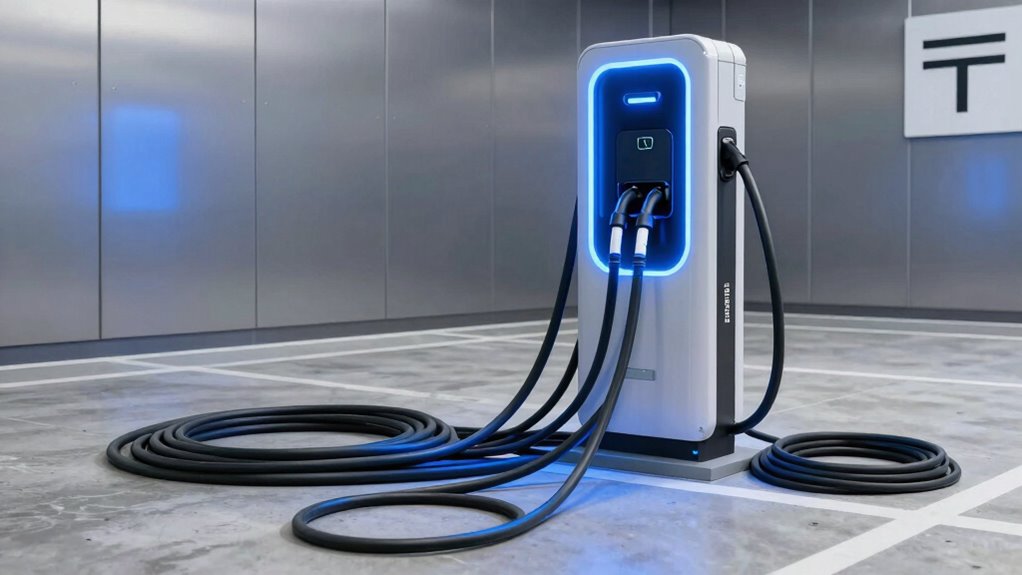

Cable management becomes a real EV fleet topic because it directly impacts safety, efficiency, and scalability of your charging stations. When cables are organized and secure, you reduce trip hazards, prevent damage, and guarantee quick access for charging. Good management also extends cable life and keeps your operations compliant with safety standards. As your fleet grows, maintaining order helps avoid chaos and supports future expansion. Keep exploring to learn how streamlined cable management can transform your EV operations.

Get business pricing on garage and car supplies
- Business-only prices and quantity discounts
- Tax-exempt purchasing
- Multiple users, one account, clear invoices
Key Takeaways
- Proper cable management enhances safety by reducing trip hazards and preventing electrical faults in EV fleet operations.
- Organized cables improve charging efficiency, minimizing delays and facilitating quicker vehicle turnaround times.
- Effective cable management simplifies maintenance, extends cable lifespan, and reduces replacement costs.
- As fleet size expands, standardized cable practices ensure scalable, manageable, and safe infrastructure growth.
- Good cable management supports sustainability by preventing environmental damage and promoting eco-friendly practices.
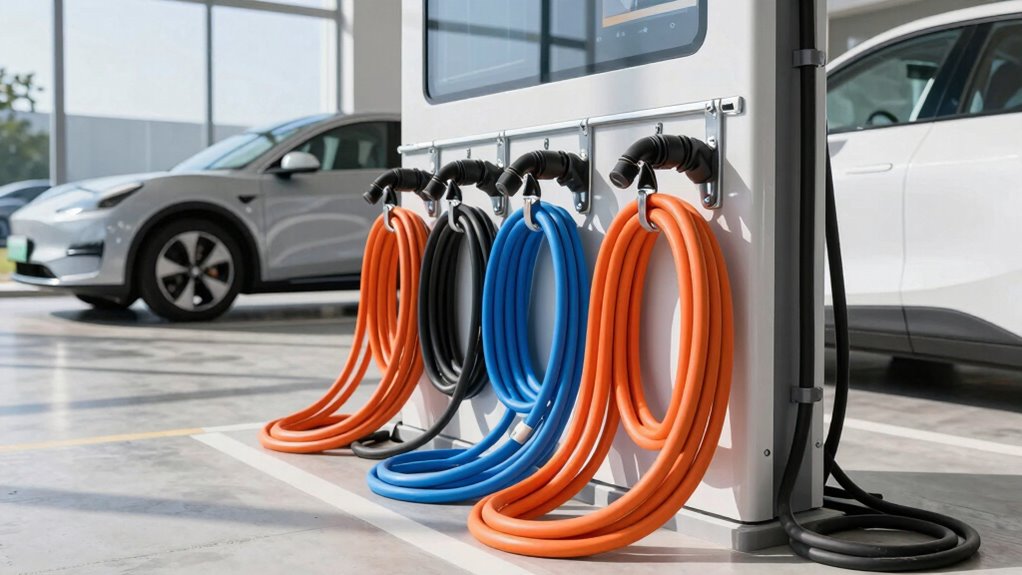
Effective cable management is essential for maintaining the safety, efficiency, and reliability of electric vehicle (EV) fleets. As you oversee or operate an EV fleet, you quickly realize that managing the cables used for charging isn’t just about neatness; it’s about guaranteeing safety and maximizing uptime. Proper cable management plays a critical role in supporting the charging infrastructure, which is the backbone of your fleet’s operation. When cables are tangled or poorly organized, it creates hazards that can lead to accidents, damage to equipment, or even fires. Keeping cables properly routed and secured minimizes these risks, helping you comply with safety protocols and prevent costly incidents.
You might not immediately see how cable management directly impacts safety protocols, but it’s fundamental. For example, loose or exposed cables can cause trips and falls, risking injury to personnel or damage to vehicles. Over time, exposed cables can wear down, increasing the risk of electrical faults or short circuits. By implementing effective cable management strategies—such as using cable trays, clips, or conduits—you create a safer environment for your staff and your vehicles. This proactive approach also helps you avoid downtime caused by damaged cables or safety violations that could result in fines or shutdowns. Additionally, proper cable management helps prevent cable wear and tear, which can be accelerated by improper handling or exposure to environmental elements. Recognizing the importance of biodiversity and sustainable practices in your operations can also promote environmentally responsible infrastructure choices.
Furthermore, good cable management enhances the efficiency of your charging process. When cables are organized, charging stations become easier to access, and vehicles can be charged more quickly without the delays caused by tangled cords or misplaced connectors. This efficiency extends to maintenance activities, as technicians can easily identify and replace faulty cables, reducing repair times and keeping your fleet operational. In addition, well-maintained cables help extend their lifespan, saving money on replacements and reducing waste. Proper cable management is also vital for scalability as your fleet expands, ensuring your infrastructure remains organized and manageable.
Another key reason cable management has become a major topic in EV fleet management is the scale of your charging infrastructure. As your fleet grows, so does the complexity of managing multiple charging stations and numerous cables. Without a systematic approach, chaos can ensue, leading to safety hazards and operational inefficiencies. Investing in proper cable management solutions now ensures your infrastructure remains scalable, safe, and reliable as your fleet expands. Additionally, implementing standardized cable management practices can streamline maintenance procedures and further improve safety throughout your EV operations.
EV charging cable management clips
As an affiliate, we earn on qualifying purchases.
As an affiliate, we earn on qualifying purchases.
Frequently Asked Questions
How Does Cable Management Impact EV Fleet Safety?
Cable management directly impacts your EV fleet safety by preventing trip hazards and electrical accidents. Proper cable organization guarantees cords are secured and out of the way, reducing the risk of damage or disconnection. Implementing safety protocols around cable handling minimizes electrical risks and keeps your drivers safe. Well-maintained cables also prevent potential fires or equipment failures, contributing to a safer, more reliable fleet operation.
What Are the Cost Implications of Poor Cable Management?
Poor cable management can lead to increased costs due to frequent repairs and replacements, especially when cables become damaged or tangled. You’ll spend more on maintenance protocols to keep everything functioning smoothly, and disorganized cables can cause downtime that affects fleet efficiency. Investing in proper cable organization upfront reduces these expenses, ensuring safer, more reliable operations and lowering long-term costs for your EV fleet.
How Often Should EV Cables Be Inspected or Replaced?
You should inspect your EV cables at least every six months to guarantee optimal cable durability and safety. Regular inspections help identify wear, cracks, or damage early, preventing costly failures. Replace cables immediately if you notice significant wear or damage. Maintaining a consistent inspection frequency keeps your cables in good condition, prolongs their lifespan, and ensures safe, reliable connections for your EV fleet.
Are There Industry Standards for EV Cable Management?
Yes, industry standards for EV cable management exist to guarantee safety, efficiency, and durability. You’ll find these standards address charging protocols, cable durability, and proper routing. They guide you in securing cables to prevent damage, reduce wear, and maintain peak performance. Following these protocols helps your fleet stay compliant, minimizes risks, and prolongs cable lifespan. Adhering to established standards ensures your EV charging setup remains safe, reliable, and efficient over time.
How Can Cable Management Improve EV Charging Efficiency?
Proper cable management enhances EV charging efficiency by optimizing Charging station design, making it easier for users to connect and disconnect cables quickly. It also guarantees cable durability, reducing wear and tear that can cause malfunctions or delays. When cables are neatly organized and protected, charging becomes faster and more reliable, minimizing downtime and improving overall fleet operations. Good cable management truly streamlines the charging process for your EV fleet.
cable trays for electric vehicle chargers
As an affiliate, we earn on qualifying purchases.
As an affiliate, we earn on qualifying purchases.
Conclusion
As you delve into managing your EV fleet, it’s surprising how often cable management slips under the radar—until a tangled mess causes unexpected downtime. Coincidentally, those small neglected details can lead to bigger issues, reminding you that organized cables aren’t just neat—they’re essential for efficiency and safety. So, don’t wait for a disruption to realize the importance of proper cable management. Start now, and keep your fleet running smoothly, just as you’d expect it to.
electric vehicle charging cable organizers
As an affiliate, we earn on qualifying purchases.
As an affiliate, we earn on qualifying purchases.
weatherproof cable conduits for EV charging stations
As an affiliate, we earn on qualifying purchases.
As an affiliate, we earn on qualifying purchases.
Fall Picks
fall essentials
As an affiliate, we earn on qualifying purchases.