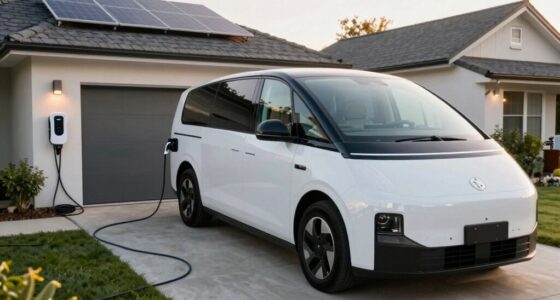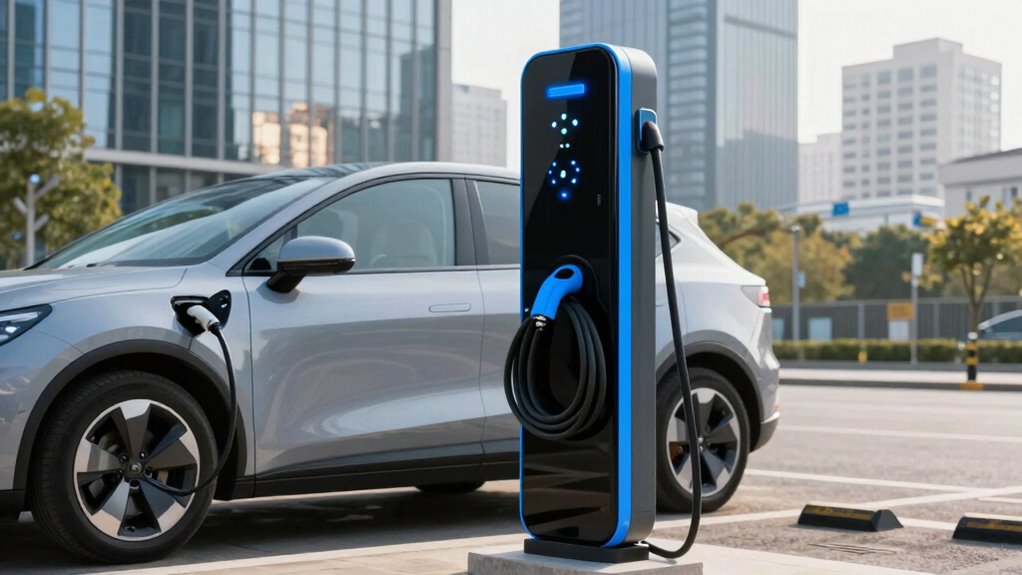

As a transit buyer, understanding EV charging vocabulary is key to making smart infrastructure choices. You should familiarize yourself with terms like Level 2 chargers for overnight charging, fast chargers for quick top-ups, and compatibility standards that guarantee your stations work seamlessly with your fleet. Power capacity and grid integration are also critical for managing energy and costs. Mastering these concepts now helps you plan more efficiently; explore further to get all the details you need.
Listen free for 30 days with Audible
Thousands of audiobooks and originals — cancel anytime.
As an affiliate, we earn on qualifying purchases.
Key Takeaways
- Charging Station Types: Understand the differences between Level 2 and fast chargers for appropriate operational needs.
- Charging Standards: Know standards like CCS, CHAdeMO, and Tesla to ensure equipment compatibility and future-proofing.
- Power Capacity: Recognize the importance of grid capacity and load management for scalable and reliable charging infrastructure.
- Placement Strategies: Learn optimal locations such as depots and on-route sites for efficient bus charging operations.
- Infrastructure Components: Familiarize with chargers, cables, power supplies, and network connections essential for effective EV charging.
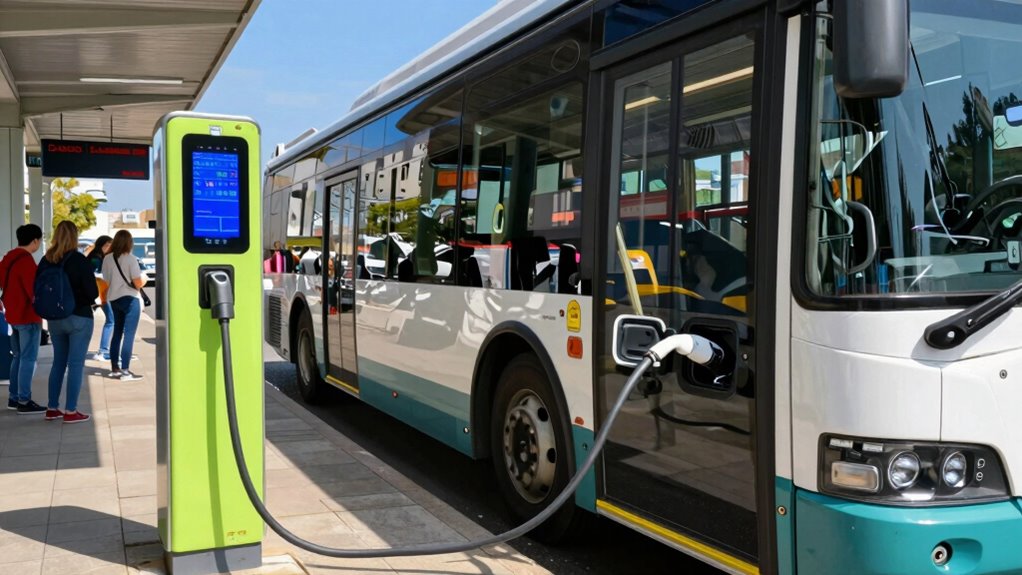
Understanding the key terms related to EV charging is vital for transit buyers looking to make informed decisions. When evaluating charging solutions for your fleet, you’ll need to familiarize yourself with concepts like charging infrastructure and battery management. Charging infrastructure refers to the physical setup required to support electric vehicle charging, including chargers, cables, power supplies, and the network that connects them. It’s the backbone that guarantees your buses can charge efficiently and reliably. Knowing the types of charging stations—such as Level 2 chargers for slower, overnight charging or fast chargers for quick top-ups—helps you determine what suits your operational needs best. You should also consider the placement of charging stations, whether they’re installed at depots or on-route, and how they integrate into your existing electrical systems. A well-planned charging infrastructure minimizes downtime and maximizes fleet availability, which is essential for transit agencies. Additionally, understanding the importance of charging standards ensures compatibility and future-proofing your investment. To optimize your fleet management, it’s also helpful to understand the role of power capacity in supporting your charging infrastructure and ensuring scalability. Furthermore, staying informed about grid integration can help you better manage energy consumption and reduce operational costs associated with charging. Proper planning involves assessing your energy needs, and understanding load management can help prevent overloading your electrical systems during peak usage times. Developing a comprehensive charging strategy is crucial to align your infrastructure with your operational goals and ensure efficient energy use. Properly managing these elements will contribute to a reliable and sustainable EV fleet.
As an affiliate, we earn on qualifying purchases.
Frequently Asked Questions
How Do Charging Station Locations Impact Transit Bus Scheduling?
Charging station placement directly impacts transit bus scheduling efficiency. When stations are strategically located along routes, buses can charge during scheduled breaks or layovers, minimizing downtime. Poor placement causes delays, forcing buses to detour or wait longer for charging, disrupting schedules. By optimizing charging station locations, you guarantee smoother operations, reduce idle time, and maintain reliable service, ultimately improving overall transit system efficiency and rider satisfaction.
What Safety Standards Apply to EV Charging Stations for Transit Agencies?
You need to guarantee your EV charging stations meet safety standards like wireless safety protocols to prevent electromagnetic interference and protect users. Additionally, adhere to battery standards that govern safe handling, charging, and disposal of batteries to avoid hazards. These standards help you minimize risks, ensure reliable operation, and comply with regulations, making your transit agency’s charging infrastructure safe and efficient for operators and passengers alike.
How Can Transit Agencies Optimize Charging Time During Peak Hours?
Think of your transit agency as a busy conductor orchestrating a symphony. To optimize charging during peak hours, you focus on efficient baton movements—managing battery health and energy use. Implement smart scheduling and dynamic charging to reduce downtime, ensuring buses recharge quickly without overloading the system. Prioritize energy efficiency and battery management, so your fleet’s energy flow remains smooth, minimizing delays and keeping service running seamlessly during those busy hours.
What Are the Common Maintenance Issues With Transit EV Chargers?
You’ll likely face maintenance issues like reduced charger durability and problems caused by power fluctuations. These issues can lead to charger malfunctions or downtime. Regular inspections help catch wear and tear early, while stabilizing power supplies minimizes fluctuations. Addressing these problems quickly guarantees your transit EV chargers stay reliable, prolonging their lifespan. Proper maintenance routines also prevent costly repairs and keep your charging stations operational during peak times.
How Does Charging Infrastructure Affect Transit Fleet Expansion Plans?
If your charging infrastructure isn’t up to par, your entire fleet expansion might come to a screeching halt! Poor infrastructure can massively limit your bus battery capacity and sabotage energy management efforts, making it impossible to keep buses running smoothly. You’ll struggle to meet schedules, and your plans for growth could be derailed. To grow efficiently, invest in robust charging stations that support your fleet’s energy needs and maximize battery capacity.
fast EV chargers for transit buses
As an affiliate, we earn on qualifying purchases.
As an affiliate, we earn on qualifying purchases.
Conclusion
Now that you’re armed with this slick EV charging vocabulary, you’re practically a transit tech whisperer. Who knew that understanding kilowatts and amperes could make you the star of the bus depot? So, go ahead—impress your colleagues, dazzle the board, or just nerd out at your next meeting. Remember, in the world of EV charging, knowledge is power—and a little satire keeps it fun. Happy charging, savvy transit buyer!
EV charging station compatibility standards
As an affiliate, we earn on qualifying purchases.
As an affiliate, we earn on qualifying purchases.
electric vehicle charging infrastructure components
As an affiliate, we earn on qualifying purchases.
As an affiliate, we earn on qualifying purchases.
NFL season / tailgating Picks
team gear
As an affiliate, we earn on qualifying purchases.