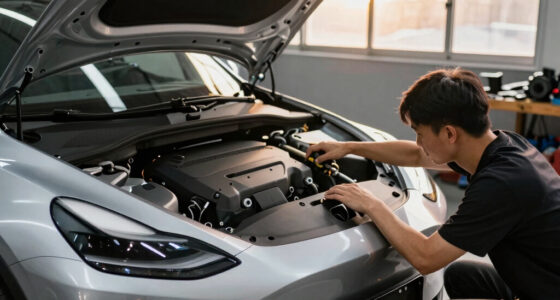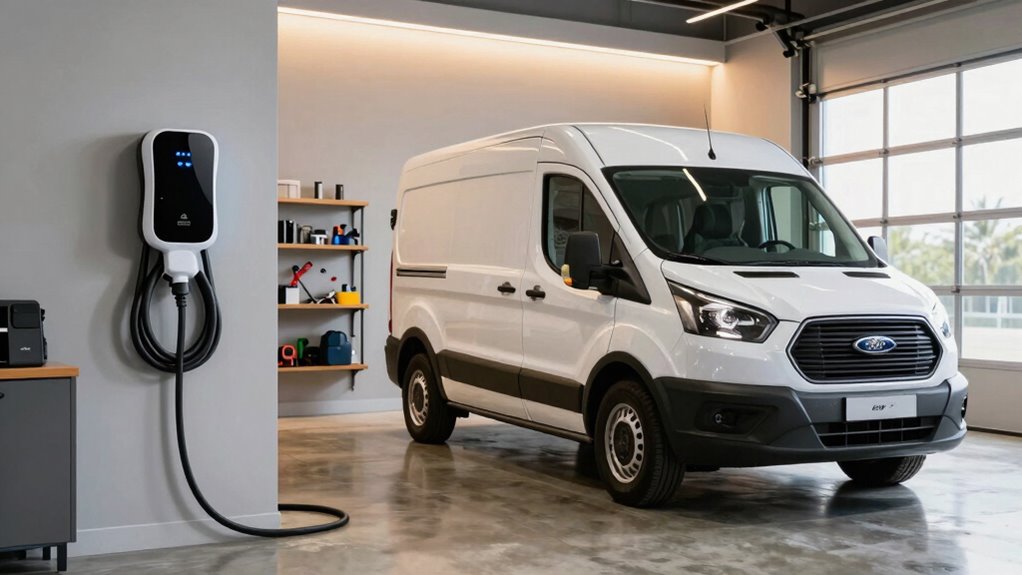

To set up your Ford E-Transit charger safely in your garage, first evaluate your home’s electrical capacity and upgrade your panel if needed. Hire a licensed electrician to guarantee proper installation and compliance with safety standards. Make sure your charging station has safety features like ground fault protection and automatic shutoff. Keep the garage tidy and cords well-managed to prevent hazards. Want to learn more about creating a safe and efficient EV charging space? Keep exploring!

Get business pricing on garage and car supplies
- Business-only prices and quantity discounts
- Tax-exempt purchasing
- Multiple users, one account, clear invoices
Key Takeaways
- Verify your garage’s electrical capacity and consult a licensed electrician for a dedicated charging circuit.
- Install the charger following local codes, ensuring proper wiring and safety features like ground fault protection.
- Use a compatible, weatherproof charging station with safety features such as automatic shutoff and temperature monitoring.
- Keep the garage organized and free of hazards, managing cables properly to prevent damage or tripping risks.
- Regularly inspect the charging setup for wear or damage and follow EV safety guidelines for safe operation.

Charging your electric vehicle at home is one of the most convenient ways to keep your car ready to go. With a Ford E-Transit, setting up a dedicated home charging station makes everyday charging simple and efficient. Before you start, it’s essential to understand the importance of electric vehicle safety and proper charging station installation. Ensuring your setup is safe prevents electrical hazards and prolongs the life of your vehicle and charging equipment.
First, assess your garage’s electrical capacity. You’ll likely need a dedicated circuit, especially if you plan to install a Level 2 charger, which charges faster than standard outlets. It’s a good idea to consult a licensed electrician early on—professional installation guarantees the station is set up correctly and safely. Electric vehicle safety is paramount, so never attempt to install a charger yourself unless you’re qualified. The electrician will evaluate your home’s wiring, upgrade your electrical panel if needed, and install the charging station in accordance with local codes. Proper installation minimizes risks like electrical fires or shocks, giving you peace of mind every time you plug in.
Once your charging station is installed, familiarize yourself with the operation and safety features. Most chargers come with safety features such as automatic shutoff, ground fault protection, and temperature monitoring. These features protect both you and your vehicle during charging sessions. When plugging in your Ford E-Transit, always ensure the connector is securely attached and that the charging port on the vehicle is clean and free of debris. Regularly inspect your charging station for signs of wear or damage, and never use damaged cords or connectors. Understanding home electrical capacity is crucial because it ensures your entire system can support the demands of EV charging without overloads or electrical issues.
In addition, think about safety in your garage environment. Keep the area clear of clutter and flammable materials, and ensure the charging cord is not a tripping hazard. Proper cable management also helps prevent accidental disconnections or damage to the cord. If your garage experiences extreme weather, ask your electrician about weatherproofing options for outdoor installations, even if your setup is indoors. This helps maintain the longevity and safety of your charging station. Additionally, understanding electric vehicle safety guidelines and best practices ensures you’re well-prepared to handle any potential issues during charging.
Frequently Asked Questions
What Safety Precautions Are Needed for Home EV Charging?
You should regularly inspect your electrical wiring and guarantee it’s up to code to prevent hazards. Use a dedicated outlet for your EV charger and avoid overloading circuits. Keep a fire extinguisher nearby, specifically one rated for electrical fires, and never leave charging unattended for long periods. Always follow manufacturer instructions and hire a licensed electrician for installation to ensure safety and compliance with fire safety standards.
How Long Does It Take to Fully Charge the Ford E-Transit?
Ever wonder how long you’ll wait to hit the road? The Ford E-Transit’s charging speed depends on your charger, but typically, it takes about 8-12 hours for a full charge with a standard Level 2 charger. Its battery capacity, around 68 kWh, influences this time. Faster chargers can cut this down to 4-6 hours, getting you back on the move sooner.
Can I Install a Charger Myself or Hire a Professional?
You can do a DIY installation if you’re comfortable with electrical work, but it’s highly recommended to hire a professional electrician. A professional ensures the charger is installed safely, meets local codes, and avoids potential hazards. While DIY might save money, a licensed electrician provides peace of mind and proper setup, especially for high-voltage equipment like a Ford E-Transit charger. Prioritize safety and conformity for ideal results.
What Is the Cost Difference Between Level 1 and Level 2 Chargers?
The cost comparison between Level 1 and Level 2 chargers shows that Level 1 chargers are typically cheaper, usually costing around $300 or less, but have higher installation expenses if upgrades are needed. Level 2 chargers cost between $500 and $2,000, with installation expenses often higher due to electrical work. While Level 2 chargers are more expensive upfront, they charge your vehicle faster, which can save you time and money in the long run.
Are There Government Incentives for Installing Home EV Chargers?
Yes, there are government incentives available for installing home EV chargers. You can take advantage of rebate programs and other incentive programs that help offset the installation costs. These government rebates often vary by state or region, so it’s worth checking local or federal programs to see what you qualify for. Taking advantage of these incentives can markedly reduce your overall expenses and make upgrading your home charging setup more affordable.
Conclusion
With a little effort, you’ll effortlessly establish an efficient, easy-to-use home charging setup. By balancing the basics, bypassing barriers, and embracing your new electric experience, you’ll enjoy endless energy on your terms. Setting up your Ford E-Transit charger isn’t stressful—it’s a straightforward step toward sustainable, seamless transportation. So start securing your space, simplify your setup, and savor the satisfaction of staying charged and in control. Your journey to electric excellence begins right at your doorstep!
Halloween Picks
halloween
As an affiliate, we earn on qualifying purchases.