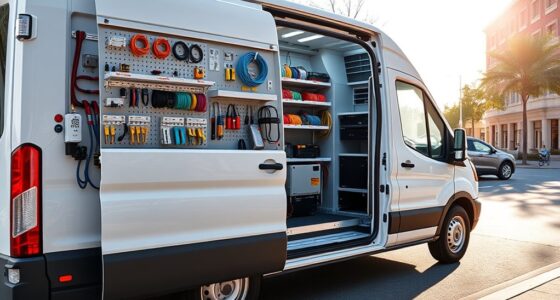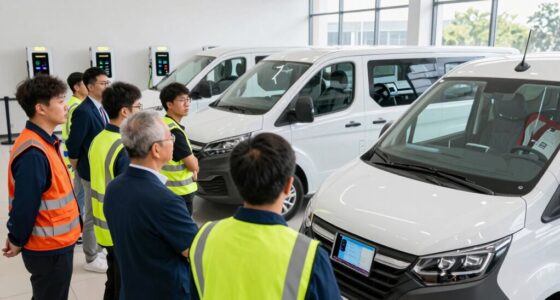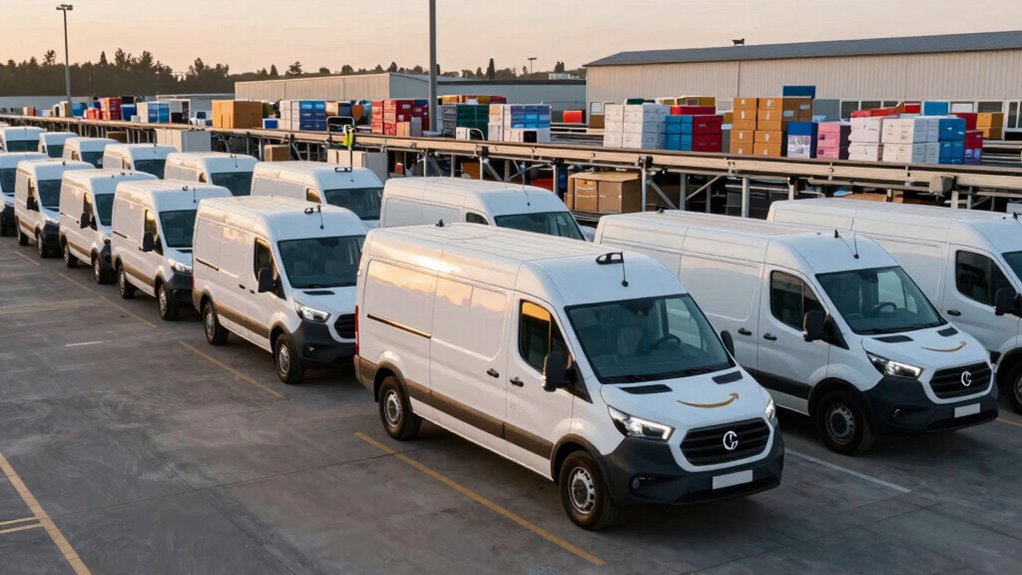

The Amazon Effect is pushing you to optimize van fleet operations by using route planning, real-time data, and inventory integration to meet rising customer expectations for fast delivery. You need to adapt by incorporating technology that responds quickly to traffic, demand fluctuations, and unforeseen issues, ensuring reliability and efficiency. As competitors and consumers demand more, mastering these strategies will help you stay ahead in the fast-changing e-commerce landscape. Keep exploring to discover more.
Key Takeaways
- E-commerce growth drives increased last mile delivery demands, prompting fleets to expand and optimize routes for faster, more reliable service.
- Advanced route optimization and data analytics enable fleets to handle higher volumes efficiently and meet tight delivery windows.
- Real-time inventory and tracking systems improve order accuracy, reducing delays and enhancing customer satisfaction.
- Fleet operations become more agile and responsive, with demand forecasting and vehicle rerouting to adapt to fluctuating order patterns.
- Integration of technology enhances delivery reliability, helping fleets compete with e-commerce giants through improved efficiency and customer experience.
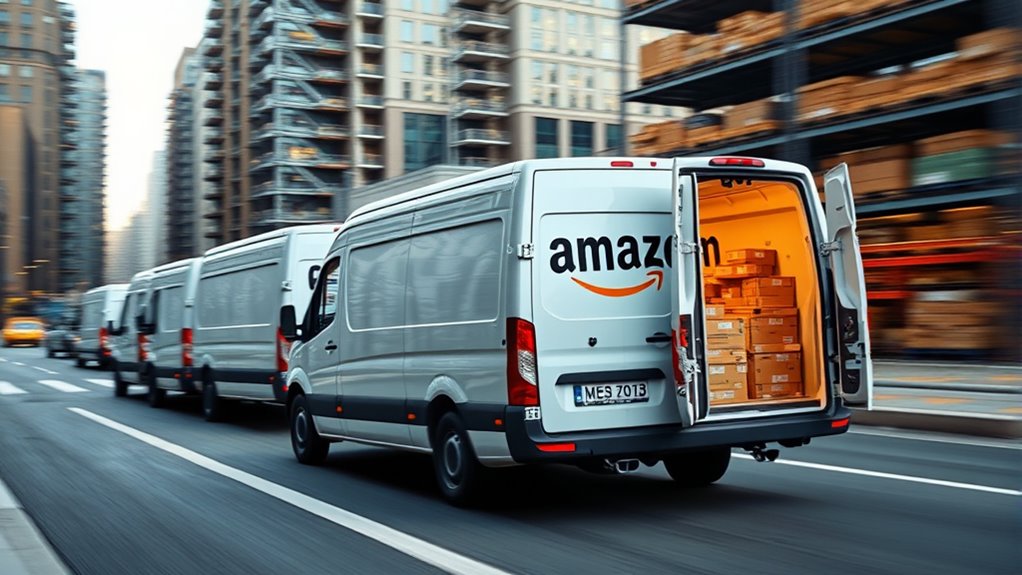
As e-commerce continues to grow rapidly, efficient van fleet operations have become vital for delivering goods quickly and reliably. You recognize that the last mile delivery process—the final leg from distribution centers to customers’ doorsteps—is the most complex and costly part of the supply chain. To stay competitive, you need to optimize this stage, guaranteeing that deliveries are timely and customer satisfaction remains high. This requires a finely tuned fleet, capable of handling fluctuating order volumes, diverse delivery locations, and tight schedules. You must also pay close attention to inventory management, integrating real-time data to keep track of stock levels, delivery routes, and vehicle capacity. Proper inventory management allows you to reduce delays, prevent stockouts, and streamline the entire delivery process. Incorporating evidence-backed guidance into your strategies ensures that your operations are grounded in proven practices. In the context of last mile delivery, your focus should be on maximizing efficiency. You can do this by adopting route optimization software that considers traffic patterns, delivery windows, and vehicle capacity. This technology helps you plan the most effective routes, reducing fuel consumption and transit times. It also allows you to handle multiple deliveries per trip, getting more packages to customers in less time. By leveraging data analytics, you can predict delivery volumes, adjust staffing levels, and allocate vehicles more effectively. This proactive approach minimizes delays and enhances your ability to meet customer expectations. Inventory management plays a vital role in supporting these efforts. When you have accurate, real-time data about stock levels and order statuses, you can plan deliveries more precisely. This reduces the risk of overselling or underselling, which can cause delays or customer dissatisfaction. Modern inventory systems integrated with your fleet management tools can automatically update stock information as orders are processed and shipped. This ensures your drivers have the right packages for each route, avoiding unnecessary trips or backtracking. Effective inventory management systems can also facilitate seamless communication between warehouse teams and drivers, further improving delivery accuracy. Additionally, adopting integrated data systems enhances coordination across all operational facets, leading to more cohesive and efficient delivery processes. Implementing real-time tracking technology also allows for immediate response to unforeseen issues, further increasing delivery reliability. Effective inventory management also helps you forecast demand more accurately, so you can adjust your fleet size accordingly, especially during peak shopping seasons. Furthermore, with the rise of same-day and next-day delivery promises, your van fleet must be agile and responsive. You need a system that can adapt quickly to changes, rerouting vehicles in real time when unforeseen circumstances arise. This agility depends heavily on seamless communication between your inventory data, order management, and fleet operations. When all these components work together smoothly, you deliver not just parcels but a reliable customer experience. Ultimately, mastering last mile delivery and inventory management together enables you to meet the increasing expectations set by e-commerce giants and to thrive in a fiercely competitive market.
Frequently Asked Questions
How Are Van Fleet Routes Optimized for Rapid Delivery?
You optimize van fleet routes for rapid delivery by using advanced route optimization software that considers traffic, delivery windows, and vehicle capacity. Customer tracking tools help monitor real-time locations, enabling dynamic rerouting if needed. This approach minimizes travel time and maximizes efficiency, ensuring customers receive their packages quickly. By continuously analyzing delivery data, you can improve routes, reduce fuel costs, and enhance overall customer satisfaction.
What Safety Measures Are Implemented in High-Volume Van Operations?
You implement strict safety measures like securing cargo properly to prevent shifting and accidents. You also monitor driver fatigue closely, encouraging regular breaks and limiting driving hours to keep drivers alert. Using GPS tracking helps oversee routes and guarantees safety protocols are adhered to. Regular vehicle inspections and safety training sessions further reduce risks. These steps help maintain safety in high-volume van operations, protecting drivers, cargo, and others on the road.
How Do Fleet Management Systems Adapt to E-Commerce Demand Spikes?
You adapt fleet management systems by leveraging real-time data to handle e-commerce demand spikes. Use inventory forecasting to anticipate high-volume periods, ensuring your fleet is prepared. Communicate proactively with customers about delivery times and updates, which builds trust. Automate route optimization and schedule adjustments to increase efficiency and reduce delays. This approach helps you stay responsive, meet customer expectations, and manage increased demand smoothly.
What Are the Environmental Impacts of Increased Van Deliveries?
You’ll notice increased van deliveries boost your carbon footprint and generate more packaging waste, impacting the environment. More deliveries mean more fuel consumption and emissions, contributing to air pollution. Packaging waste accumulates with each parcel, straining waste management systems. To minimize these impacts, you should adopt eco-friendly packaging and optimize delivery routes, reducing emissions and waste, and helping you operate sustainably in the growing e-commerce landscape.
How Is Driver Training Evolving With E-Commerce Delivery Requirements?
Driver training is evolving rapidly, focusing on safety, efficiency, and tech mastery. You’re now learning to manage delivery drone integration and execute contactless delivery confidently. Training emphasizes understanding new technologies, maneuvering complex routes, and maintaining professionalism in digital interactions. By mastering these skills, you ensure seamless service, strengthen customer trust, and stay ahead in the fast-paced world of e-commerce, where adaptability and awareness transform traditional delivery into a high-tech, hassle-free experience.
Conclusion
As you adapt to the Amazon effect, you’ll notice that e-commerce now accounts for over 20% of retail sales, transforming van fleet operations. This surge means faster deliveries and increased demand for efficient logistics. Embracing technology and optimizing routes will be key to staying competitive. Remember, those who adapt quickly will meet customer expectations and thrive in this evolving landscape. The future of van fleet operations depends on your ability to innovate and keep pace with e-commerce growth.