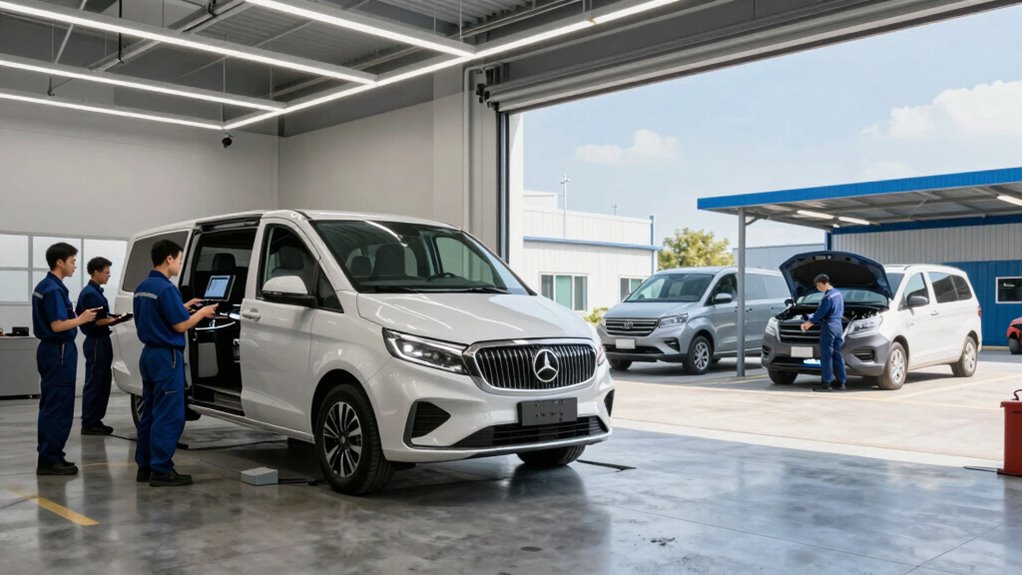

Choosing between in-house maintenance and outsourcing depends on your fleet size, budget, and safety goals. In-house teams give you direct control over repair quality, schedules, and safety standards, helping keep your vehicles in top condition. Outsourcing can save costs but may cause delays and less oversight. Consider your priorities: if safety and quick turnaround matter most, in-house might be better. Explore further to discover which option aligns best with your fleet’s needs.
Key Takeaways
- In-house maintenance offers greater control over schedules, quality, and safety, ensuring quick response times for urgent repairs.
- Outsourcing can reduce costs through economies of scale, especially for smaller fleets, while freeing internal resources.
- Internal teams improve safety compliance and vehicle reliability with immediate oversight and consistent maintenance records.
- Outsourcing may cause delays due to third-party scheduling, potentially impacting fleet availability and safety standards.
- Business size, budget, and operational priorities determine whether in-house or outsourced maintenance best aligns with fleet management goals.
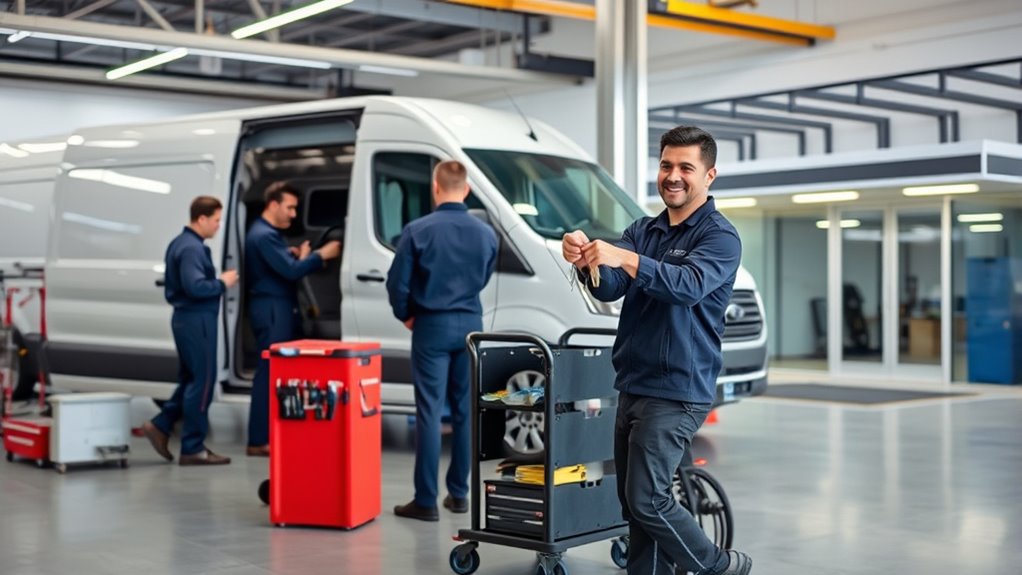
Have you ever wondered whether maintaining your equipment in-house or outsourcing the work is the better choice? When it comes to managing a van fleet, this decision can profoundly impact both fleet safety and cost efficiency. Keeping maintenance in-house gives you direct control over schedules, quality, and immediate response times. You can guarantee that inspections, repairs, and preventive maintenance are performed promptly, which ultimately enhances fleet safety. When your team handles repairs, you can set strict standards and closely monitor every step, reducing the risk of overlooked issues that could lead to accidents or breakdowns on the road. Additionally, having an in-house maintenance team can help you develop a thorough maintenance schedule tailored to your fleet’s unique needs, preventing costly repairs down the line.
In-house maintenance ensures safety through direct control, prompt repairs, and tailored schedules for your fleet.
On the other hand, outsourcing maintenance can sometimes be more cost-effective, especially if you don’t have the volume of vehicles to justify a full-time team. External repair shops often benefit from economies of scale, which can translate into lower parts and labor costs. These facilities typically have specialized equipment and trained technicians who keep up with the latest diagnostics and repair techniques, helping guarantee fleet safety through expert servicing. Outsourcing also means you avoid the expenses associated with hiring, training, and maintaining an internal team, which can add up quickly. This allows you to allocate resources more efficiently and focus on core business operations instead of managing repair facilities.
However, it’s important to take into account that outsourcing may introduce delays in repairs, especially if you rely on third-party shops that handle multiple clients. These delays can impact your fleet’s availability, leading to potential disruptions in service and increased downtime. If your fleet requires frequent repairs or urgent maintenance, in-house maintenance might be better suited to uphold high fleet safety standards and keep your vehicles on the road safely. Additionally, managing maintenance internally gives you better oversight over vehicle history, maintenance records, and compliance with safety regulations, which can be essential for avoiding costly penalties and ensuring your fleet remains roadworthy.
Ultimately, the decision hinges on your fleet size, budget, and operational priorities. If safety is your top concern and you want tight control over vehicle condition, building an in-house team could be the best move. Conversely, if cost efficiency and access to specialized skills are more critical, outsourcing might serve your needs better. Either way, understanding the trade-offs helps you make an informed choice that aligns with your business goals and keeps your fleet running smoothly and safely.
Frequently Asked Questions
How Do Costs Compare Over the Long Term?
Over the long term, outsourcing often proves more cost-effective as it reduces expenses related to staffing, equipment, and training. A thorough cost analysis helps you compare ongoing outsourcing costs against in-house maintenance, guiding your budget planning. While in-house might seem cheaper initially, unpredictable repair costs and downtime can add up. Ultimately, outsourcing can provide predictable costs and better resource allocation, helping you control expenses over time.
What Are the Risks of Outsourcing Maintenance?
Outsourcing maintenance is like trusting a stranger with your keys—you risk vendor reliability issues that could lead to delays or subpar repairs. You also lose control over scheduling, which might disrupt your fleet operations. If the vendor isn’t dependable, you could face unexpected downtime or hidden costs. Carefully vet potential partners and establish clear communication to mitigate these risks and keep your fleet running smoothly.
How Quickly Can Repairs Be Completed In-House?
You can expect a quick turnaround with in-house repairs, often completing fixes within a few hours to a day, depending on the issue. Having your team on-site allows for faster diagnosis and repair speed, minimizing downtime. This immediacy helps keep your van fleet running smoothly and reduces disruptions in your operations. With in-house maintenance, you’re in control of scheduling repairs, ensuring they’re completed promptly for maximum efficiency.
What Certifications Should In-House Technicians Have?
You should guarantee your in-house technicians have proper certifications like ASE (Automotive Service Excellence) or manufacturer-specific credentials. Technician qualifications are essential for maintaining high standards and safety. Certification requirements vary depending on your fleet’s needs, but generally, skilled technicians with relevant certifications can perform repairs efficiently and reliably. Regular training and certifications keep their skills current, ensuring your fleet remains in top condition and minimizes downtime.
How Does Maintenance Impact Fleet Safety Standards?
Maintenance directly impacts fleet reliability and driver safety. When you prioritize regular, thorough upkeep, you reduce breakdowns and guarantee vehicles operate safely, protecting your drivers and cargo. Proper maintenance helps identify potential issues early, preventing accidents and costly repairs. By maintaining high safety standards, you promote a reliable fleet that drivers trust, ultimately boosting overall efficiency and minimizing risks on the road.
Conclusion
Ultimately, choosing between in-house maintenance and outsourcing depends on your fleet’s needs and resources. Remember, “Don’t put all your eggs in one basket.” While in-house work offers control and immediate response, outsourcing can save costs and provide specialized expertise. Weigh your options carefully, knowing that the right choice can keep your fleet running smoothly and efficiently. Trust your judgment and adapt as your business grows—after all, a well-maintained fleet is the backbone of your success.