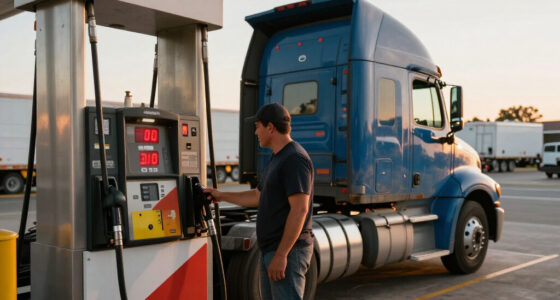
To lower your fleet premiums, focus on improving driver safety by offering regular training and establishing clear safety policies. Keep up with routine vehicle maintenance and equip your fleet with safety features like cameras and anti-lock brakes. Use telematics data to monitor driving habits and address risky behaviors promptly. Optimize routes to reduce unnecessary miles and exposure to danger. Implementing these proactive safety practices can lead to significant savings—discover more strategies that can protect your bottom line.

Get business pricing on garage and car supplies
- Business-only prices and quantity discounts
- Tax-exempt purchasing
- Multiple users, one account, clear invoices
Key Takeaways
- Prioritize driver safety through regular training and safety policies to reduce accident risk and qualify for insurance discounts.
- Maintain vehicles diligently with regular inspections and safety feature installations to lower claim frequency.
- Use telematics to monitor driving behavior, address risky habits, and improve safety, leading to premium reductions.
- Equip fleet with safety technology like collision avoidance systems to enhance safety and decrease insurance costs.
- Optimize routes and proactively manage fleet operations to minimize exposure to risks and lower premium premiums.

Are you prepared to protect your business on the road? Managing a fleet comes with its share of risks, but focusing on driver safety and effective fleet management can substantially lower your commercial auto insurance premiums. When you prioritize driver safety, you’re not just reducing the likelihood of accidents—you’re also demonstrating to insurers that your business is committed to minimizing risk. This can lead to better rates and fewer claims, saving you money in the long run. Implementing regular driver training programs and setting clear safety policies are essential steps. Encourage your drivers to stay alert, follow traffic laws, and avoid distractions. Many insurers reward companies that actively promote safe driving habits, so take advantage of these discounts by documenting safety initiatives.
Prioritizing driver safety and fleet management reduces insurance costs and enhances overall business protection on the road.
Fleet management plays an essential role in controlling costs. Keeping your vehicles well-maintained ensures they operate efficiently and reduces the chances of breakdowns or accidents caused by mechanical failure. Regular inspections, timely repairs, and keeping detailed maintenance records show insurers that your fleet is under control. Additionally, outfitting your vehicles with safety features like anti-lock brakes, backup cameras, and GPS tracking can further lower your premiums. These technologies not only improve driver safety but also provide valuable data that can help you monitor driving behaviors and address issues proactively. Moreover, adopting fleet safety policies can foster a safety-first mindset throughout your organization, contributing to lower insurance costs. Incorporating safety technology such as collision avoidance systems can further enhance your fleet’s safety profile and reduce premiums. Utilizing advanced telematics allows for more precise risk assessment and targeted safety improvements.
Investing in telematics systems can be a game-changer for fleet management. These systems provide real-time data on vehicle location, speed, and driving patterns, allowing you to identify risky behaviors such as speeding or abrupt braking. Addressing these behaviors promptly can reduce accident risks, leading to fewer claims and lower premiums. Furthermore, insurers often view fleets equipped with advanced telematics as lower risk, which can translate into discounts. An additional benefit is that driver behavior data can be used to tailor training and coaching programs to improve overall safety. Establishing a thorough safety culture within your organization, where good driving habits are recognized and encouraged, can make a noticeable difference in your insurance costs. Incorporating professional-grade safety equipment such as advanced sensors and monitoring tools can further enhance your fleet’s safety profile and reduce premiums. Regular training on telematics data interpretation can also improve driver accountability and safety.
Lastly, consider how your fleet’s routing can impact your premiums. Efficient route planning minimizes wear and tear on vehicles, reduces fuel costs, and limits exposure to high-risk areas. By optimizing routes, you can prevent unnecessary driving and potential accidents, making your fleet safer overall. Remember, proactive management—not just reactive measures—plays a critical role in keeping your insurance premiums affordable. When you combine driver safety initiatives with strategic fleet management, you’re creating a safer, more cost-effective operation, ultimately protecting your bottom line.
Frequently Asked Questions
How Does Driving History Affect Fleet Insurance Rates?
Your driving history directly impacts fleet insurance rates. If your drivers have clean records, it shows you prioritize safety, which can lower premiums. On the other hand, frequent accidents or a poor driving history increase risk, raising costs. Providing driver training helps improve driving skills and reduces accidents, potentially lowering rates. Regularly reviewing and addressing accident history makes certain you maintain favorable insurance premiums and demonstrate responsible fleet management.
Can Telematics Improve My Commercial Auto Insurance Premiums?
You’ll be pleased to know that telematics can markedly lower your premiums—studies show fleets using telematics see up to a 20% reduction. It tracks driver behavior and helps optimize routes, reducing risky driving and unnecessary miles. With better insights into driver habits and route efficiency, you can implement targeted training and improve safety, ultimately lowering your insurance costs and making your fleet more cost-effective.
What Impact Does Vehicle Type Have on Fleet Insurance Costs?
Vehicle type substantially impacts your fleet insurance costs because different vehicles have varying risks and maintenance needs. For example, trucks with vehicle customization or fuel efficiency features might lower premiums due to reduced operational costs and safety enhancements. Choosing the right vehicle type tailored to your business needs can also decrease risk exposure, which insurers consider when setting premiums. Prioritize fuel-efficient models and proper customization to help lower your overall fleet insurance expenses.
Are There Discounts for Fleet Safety Programs?
Yes, you can get discounts for fleet safety programs. By implementing all-encompassing fleet safety measures and driver training, you show insurers you’re proactive about risk management. This often leads to lower premiums because it reduces the likelihood of accidents and claims. Regular driver training sessions, safety audits, and monitoring systems demonstrate your commitment to safety, helping you qualify for discounts and ultimately save money on your fleet insurance costs.
How Does Vehicle Age Influence Premium Pricing?
Sure, older vehicles might seem like a bargain, but their higher vehicle depreciation and increased maintenance costs actually inflate your premiums. As these cars age, you face more frequent repairs, which insurers see as a risk. So, instead of saving, you may end up paying more over time. Keep your fleet updated; it’s the smart way to dodge those surprise costs and keep your premiums in check.
Conclusion
By implementing these tips, you can steer your fleet toward lower premiums and smoother roads ahead. Think of your insurance costs as a garden—you need to nurture good habits, prune unnecessary expenses, and stay vigilant to keep it thriving. When you actively manage your policies and safety measures, you’re not just saving money; you’re building a sturdy foundation for your business’s journey. With the right approach, your fleet’s future can be as bright as a sunrise on an open highway.
Fall Picks
fall essentials
As an affiliate, we earn on qualifying purchases.