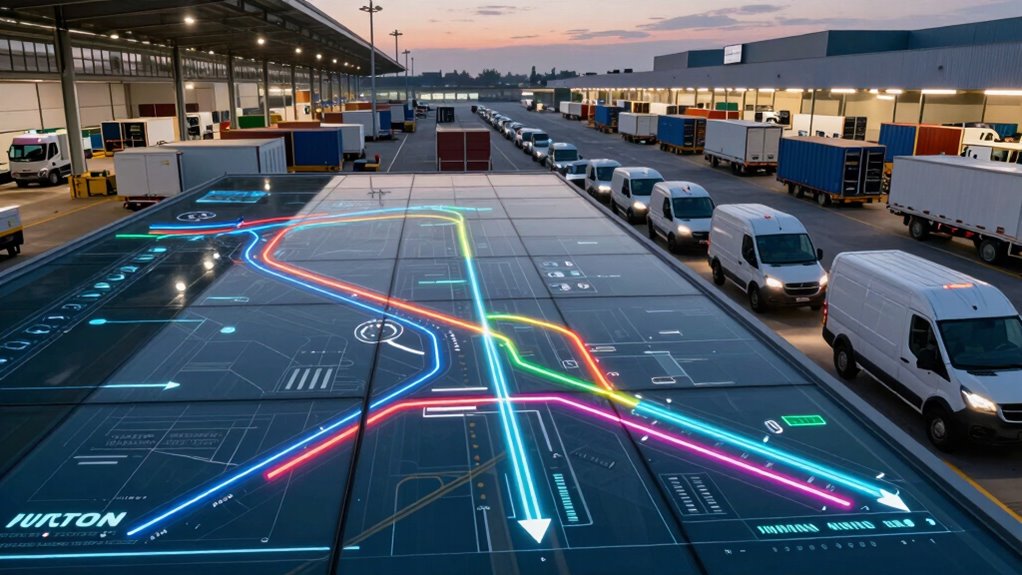

To cut delivery times and fuel costs, you should focus on route optimization strategies that leverage real-time tracking and advanced algorithms. These tools analyze factors like traffic, delivery windows, and vehicle capacities to generate the most efficient routes. By continuously monitoring vehicle locations, you can make quick adjustments to avoid delays and reduce unnecessary mileage. Implementing these strategies not only speeds up deliveries but also saves fuel, helping you run a more cost-effective operation—discover how to get the most out of your routes.
Key Takeaways
- Utilize advanced algorithms to generate the most efficient routes based on delivery windows, vehicle capacity, and road conditions.
- Implement real-time tracking to monitor vehicles and make instant rerouting adjustments during traffic delays or address changes.
- Prioritize route planning that minimizes mileage and fuel consumption, reducing overall costs and environmental impact.
- Continuously analyze traffic patterns and congestion data to optimize routes over time for faster deliveries.
- Streamline dispatch and driver communication with live updates and mobile apps for quicker response to route changes.
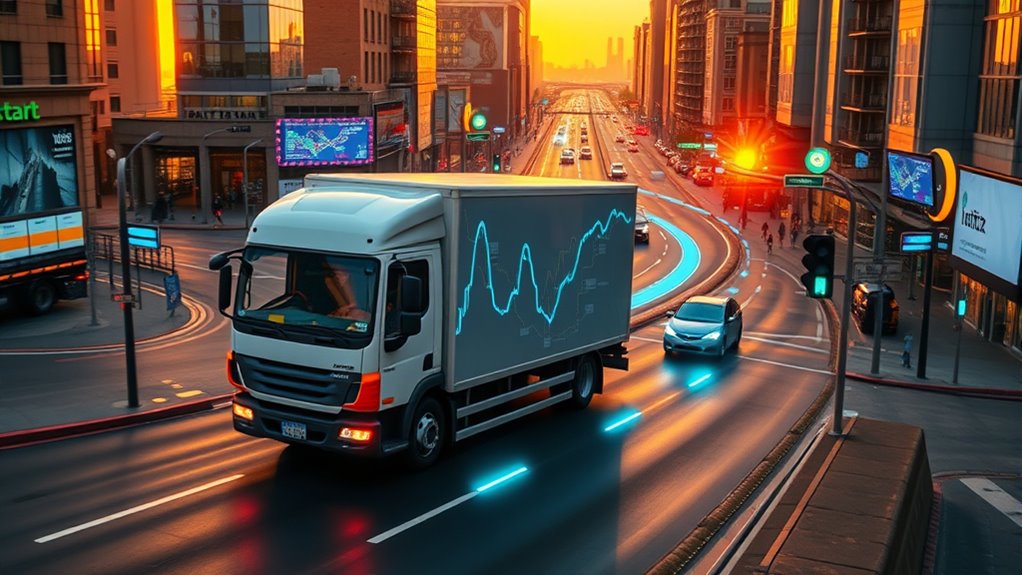
Optimizing routes is vital for improving efficiency and reducing costs in any logistics operation. When you focus on streamlining your delivery fleet’s routes, you can considerably cut down on delivery times and fuel expenses. One of the most effective tools in this process is real-time tracking, which allows you to monitor your vehicles continuously. With real-time tracking, you know exactly where each delivery vehicle is at any moment, enabling you to make instant adjustments to avoid delays caused by traffic, road closures, or other unexpected obstacles. This immediate visibility helps you keep your delivery schedule tight and reliable.
By leveraging route optimization strategies, you can plan the most efficient paths for your delivery fleet. Instead of relying on static routes or manual planning, advanced algorithms analyze multiple factors—such as delivery windows, vehicle capacities, and road conditions—to generate the best possible routes. These optimized routes minimize unnecessary mileage, reducing fuel consumption and vehicle wear and tear. As a result, your fleet becomes more cost-effective and environmentally friendly. Plus, shorter routes mean your drivers spend less time on the road, which can lead to increased productivity and improved customer satisfaction.
Advanced algorithms optimize routes, reducing mileage, costs, and environmental impact while boosting efficiency and customer satisfaction.
Real-time tracking plays a vital role here because it empowers you to make data-driven decisions on the fly. If a traffic jam develops or a delivery address changes unexpectedly, you can reroute your vehicles instantly. This agility ensures that you meet delivery deadlines and avoid late arrivals, which can damage customer trust. Additionally, real-time data helps you identify patterns—like frequent congestion points or delivery bottlenecks—so you can adjust your planning for future routes. Over time, this ongoing optimization leads to smarter, more efficient logistics operations. Route planning tools can further enhance this process by integrating various data sources and providing actionable insights.
Furthermore, integrating route optimization with your delivery fleet management system streamlines communication between dispatchers and drivers. Drivers can receive live updates about their routes through mobile apps, reducing confusion and the need for manual instructions. This seamless communication improves response times and allows your team to adapt quickly to any changes. It also helps in maintaining accurate delivery estimates, reducing customer complaints and increasing satisfaction.
Frequently Asked Questions
How Do Weather Conditions Affect Route Optimization?
Weather conditions greatly impact route optimization. Snowstorms can cause road closures and slow traffic, forcing you to delay or reroute deliveries. Fog reduces visibility, increasing the risk of accidents and slowing down travel. You need to monitor weather reports closely and adjust your routes proactively. Planning for these weather challenges helps you maintain efficiency, reduce delays, and ensure safety for your drivers and deliveries.
What Technologies Are Most Effective for Real-Time Route Adjustments?
You should use real-time GPS and AI algorithms to make effective route adjustments instantly. Real-time GPS provides live traffic updates, helping you identify delays and reroute on the fly. AI algorithms analyze this data to suggest ideal paths, avoiding congestion and hazards. This combination guarantees your delivery times stay minimal and fuel costs decrease, giving you a competitive edge and improved service. Always keep these technologies integrated for the best results.
How Can Route Optimization Improve Customer Satisfaction?
Route optimization boosts customer satisfaction by improving delivery accuracy and scheduling reliability. When you plan routes efficiently, you deliver packages on time and in perfect condition, reducing customer frustration. This reliability builds trust and encourages repeat business. Plus, faster, more precise deliveries make customers happier, showing you value their time. By consistently optimizing routes, you enhance the overall delivery experience, leading to increased loyalty and positive reviews.
What Are Common Challenges in Implementing Route Optimization?
You might face challenges like ensuring driver compliance with optimized routes, which is essential for success. Balancing route flexibility with strict schedules can be difficult, especially when unexpected delays occur. Resistance to change from drivers or management also hampers implementation. Technology limitations and data accuracy issues further complicate the process. Overcoming these hurdles requires clear communication, training, and adaptable systems that prioritize both compliance and flexibility.
How Does Route Planning Impact Vehicle Maintenance Schedules?
Your route planning directly impacts vehicle maintenance schedules by influencing vehicle wear. When you optimize routes to reduce unnecessary mileage and harsh driving conditions, you help lessen wear and tear on your vehicles. This allows for more predictable maintenance scheduling, preventing unexpected breakdowns and extending vehicle lifespan. Consistent planning ensures that maintenance is performed at ideal times, saving costs and maintaining fleet reliability.
Conclusion
By implementing these route optimization strategies, you’ll slash delivery times and fuel costs like never before. Imagine transforming your logistics operations into a well-oiled machine that outruns even the fastest competitors. Don’t settle for average—embrace these tactics and watch your efficiency skyrocket, leaving outdated methods in the dust. With the right approach, you’ll turn every delivery into a triumph of speed and savings, proving that smart planning can truly conquer the road.