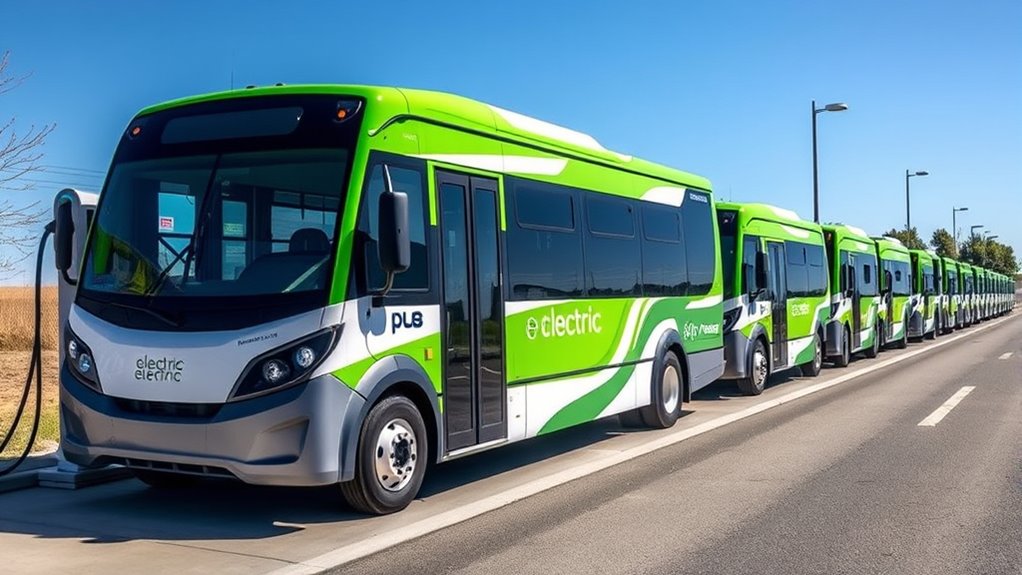

To shift your small transit fleet to electric, start by evaluating your daily routes, stops, and passenger needs to select suitable EV models. Secure funding through grants and incentives, and plan charging infrastructure at key locations with the right equipment. Develop a phased implementation plan, and train staff on new vehicle operations. By following these steps, you’ll improve efficiency and reduce emissions—discover more strategies to guarantee a smooth, successful transition as you go forward.
Key Takeaways
- Analyze fleet routes, mileage, and passenger needs to select appropriate EV models and sizes.
- Research EV options, focusing on range, charging, and total ownership costs suitable for small transit fleets.
- Secure funding through government grants, incentives, and loans to offset purchase and infrastructure expenses.
- Plan and install strategic charging stations at depots to ensure efficient vehicle recharging with minimal route disruption.
- Develop a phased implementation plan with driver training, monitoring, and ongoing adjustments for successful EV integration.

Switching your small transit fleet to electric vehicles (EVs) can seem intimidating, but with a clear roadmap, it becomes manageable and rewarding. The first step is understanding your current operations and identifying how EVs can fit into your existing routes and schedules. Conduct an assessment of your fleet’s daily mileage, stop frequency, and passenger capacity needs. This will help you determine the size and type of EVs suitable for your routes. Knowing your operational demands guarantees you choose vehicles that meet your performance expectations without overextending your budget.
Start by assessing your fleet’s daily mileage and route needs to select the right EVs for your operations.
Next, research the available EV models tailored for transit use. Consider factors like range, charging time, and infrastructure compatibility. Reach out to manufacturers and EV experts to gather detailed specifications and to understand the latest advancements. It’s important to prioritize vehicles that can comfortably cover your typical routes on a single charge, minimizing downtime and maximizing efficiency.
Also, evaluate the total cost of ownership, including purchase price, maintenance, and fuel savings, to build a compelling business case for switching. Securing funding is often the most challenging part, but many government grants, incentives, and loans are available to support EV adoption. Investigate local, state, and federal programs that can offset initial costs. Funding opportunities can significantly accelerate your transition process.
Applying for these grants early helps ensure funding is in place when you’re ready to purchase vehicles and charging infrastructure. Keep detailed records of all expenses and benefits to demonstrate the financial benefits of your transition, which can be useful for future funding opportunities.
Planning your charging infrastructure is critical. Identify strategic locations for chargers, ideally at depots or key transit hubs, to ensure quick turnaround and minimal route disruption. Decide on the type of chargers needed—Level 2 chargers for overnight charging or fast chargers for quick top-ups during the day.
Coordinate with local utilities to understand energy requirements, costs, and possible incentives for installing charging stations. This step also involves budgeting for infrastructure installation and maintenance, so you’re prepared for ongoing operational costs.
Finally, develop a phased implementation plan. Start with a small number of EVs to test performance and driver comfort, then gradually expand as you gain experience and confidence. Train your drivers and maintenance staff on EV operation and upkeep to maximize vehicle lifespan and efficiency.
Regularly review your progress, troubleshoot issues, and adapt your plan as needed. With careful planning and execution, switching your small transit fleet to EVs can lead to substantial long-term savings, reduced emissions, and improved service quality, making it a smart move for your community and your organization.
Top picks for "transition roadmap small"
Open Amazon search results for this keyword.
As an affiliate, we earn on qualifying purchases.
Frequently Asked Questions
How to Secure Funding for Small Fleet EV Conversions?
You can secure funding for small fleet EV conversions by exploring federal, state, and local grants and incentives designed for clean transportation. Reach out to agencies like the EPA or Department of Transportation.
Consider partnerships with local utilities or nonprofits that support sustainable transit. Additionally, apply for low-interest loans or financing programs.
Showcase your fleet’s environmental benefits to strengthen your proposals.
What Are the Best Practices for Driver Training on EVS?
You should start by developing thorough training programs that cover EV operation, safety protocols, and maintenance. Use hands-on demonstrations and real-world scenarios to boost understanding.
Encourage drivers to ask questions and provide ongoing refresher sessions. Provide clear manuals and quick-reference guides.
Emphasize the importance of smooth acceleration and braking to maximize battery life.
Regularly gather feedback to improve training and guarantee drivers feel confident and competent with EV technology.
How to Handle Maintenance and Repair for Small EV Fleets?
Master maintenance with a methodical approach. Start by scheduling regular inspections to spot issues early, ensuring safety and sustainability.
Train your team on EV-specific needs, from battery health to brake systems.
Maintain meticulous records to monitor vehicle performance and predict repairs.
Use manufacturer manuals and digital diagnostics tools to troubleshoot efficiently.
Consistent care keeps your fleet reliable, reduces downtime, and extends vehicle life, making your electric progression seamless and sustainable.
What Are the Common Challenges Faced During EV Integration?
You’ll often face challenges like high upfront costs, limited charging infrastructure, and staff training needs.
Battery range anxiety and vehicle availability can also slow progress.
Coordinating maintenance becomes tricky with new technologies, and securing funding may prove tough.
Additionally, integrating EVs smoothly into your existing fleet requires careful planning.
Overcoming these hurdles demands strategic partnerships, ongoing staff education, and a clear understanding of your fleet’s specific needs.
How to Optimize Route Planning With Electric Vehicle Capabilities?
To optimize route planning with electric vehicle capabilities, you should analyze your fleet’s range and charging needs upfront. Map out routes that align with EV range limits, incorporating strategically placed charging stations along busy corridors.
Use real-time data to adjust routes dynamically, minimizing downtime. Consider vehicle-specific charging times and plan routes to maximize efficiency, ensuring your fleet maintains reliable service while reducing energy costs and emissions.
Conclusion
As you shift your small transit fleet to electric, remember that progress isn’t just about adopting new tech but embracing a cleaner future. While the upfront costs may seem steep, the long-term savings and environmental benefits outweigh the initial hurdles. You’re not just switching vehicles; you’re shaping a sustainable tomorrow. This journey underscores that small steps lead to significant change—reminding you that even the smallest fleet can make a big impact.