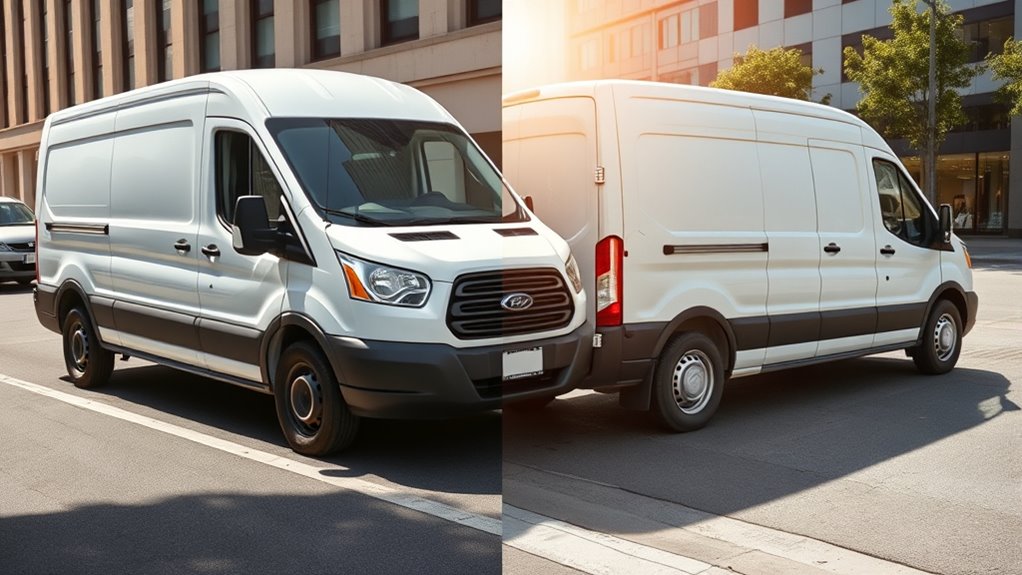

When choosing between new and used vans for your fleet, consider that new vans have higher upfront costs but offer the latest technology, better reliability, and warranties that reduce repair risks. Used vans may seem cheaper initially but can incur higher maintenance and unexpected repairs over time. Your decision depends on balancing short-term savings against long-term dependability. Keep exploring to uncover more insights that can help you make the best choice for your fleet’s needs.
Key Takeaways
- New vans have higher upfront costs but include warranties and advanced features that reduce long-term repair expenses.
- Used vans are cheaper initially but may incur higher maintenance costs and hidden issues affecting reliability.
- New vans lower the risk of breakdowns and operational disruptions, while used vans carry higher potential for unexpected repairs.
- Fleet planning depends on whether long-term durability and warranty benefits or immediate cost savings are prioritized.
- Market resale values favor newer models with technological upgrades, but used vans may offer more stable investment due to depreciation already absorbed.
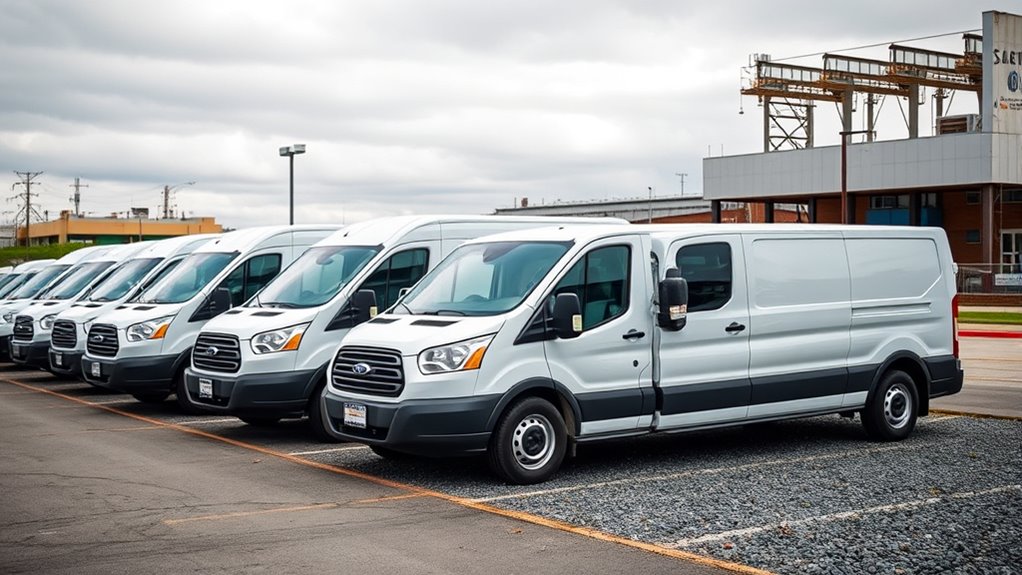
When deciding between new and used vans, you need to contemplate your budget, preferences, and long-term plans. Your choice hinges on how much you’re willing to spend upfront, how important certain features are to you, and how you envision your fleet’s growth over time.
New vans come with a higher purchase price, but they often include the latest technology, improved fuel efficiency, and warranties that can save you money on repairs early on. If your budget allows, investing in new vehicles can provide peace of mind, knowing you’re starting with the most reliable and up-to-date models.
New vans offer the latest tech, better fuel efficiency, and warranty coverage for peace of mind.
On the other hand, used vans typically cost less initially, which means you can acquire more vehicles within your budget. This can be appealing if you’re aiming to expand your fleet quickly or need to manage cash flow carefully. However, used vans may come with higher maintenance costs and less advanced features, which might lead to unexpected expenses down the line.
Considering the long-term plans of your fleet is vital. If you plan to keep vehicles for many years, a new van’s durability and warranty coverage could be beneficial, reducing unforeseen costs. Conversely, if your strategy involves replacing vehicles more frequently or rotating your fleet, used vans might serve your needs better due to their lower upfront costs.
You should also factor in the potential risks associated with each option. New vans generally pose less risk of breakdowns or costly repairs early in their lifespan, which helps maintain your service schedule and customer satisfaction. With used vans, you might encounter hidden issues or wear-and-tear that could lead to unexpected downtime, impacting your operations and profitability.
Insurance costs are another point to consider. New vans tend to have higher insurance premiums because they’re more valuable and have newer safety features. Used vans usually cost less to insure, but this can vary depending on their age, condition, and history.
Additionally, the resale value of new versus used vans can influence your decision. New vehicles tend to depreciate sharply in the first few years, but retaining a warranty can help preserve their value longer. Used vans may have already absorbed most of their depreciation, making them potentially more stable investments if you plan to sell or upgrade in a few years.
Furthermore, the resale value of electric vans is increasingly important as the market evolves, and newer models often retain value better due to technological advancements. Ultimately, your decision should align with your financial situation, operational needs, and risk tolerance. Carefully evaluate your options, consider future growth, and choose the vehicle type that best balances cost, reliability, and long-term value for your fleet.
Frequently Asked Questions
How Do Maintenance Costs Compare Between New and Used Vans?
Maintenance costs for new vans tend to be lower initially because they’re under warranty, and parts are newer.
Used vans usually require more frequent repairs and maintenance as they age, which can add up over time.
However, the upfront costs are lower for used vans.
You should weigh the potential for higher maintenance expenses with used vehicles against the lower costs and reliability of new vans for your fleet.
What Are the Warranty Differences for New Versus Used Vans?
You’ll find that new vans typically come with extensive warranties covering most repairs for several years or miles, giving you peace of mind.
Used vans often have limited or no warranty left, which means you might pay more out of pocket for repairs.
If warranty coverage is a priority, new vans are a safer choice, but used vans can be more budget-friendly if you’re willing to handle potential repairs yourself.
How Does Resale Value Impact Total Cost of Ownership?
Resale value substantially impacts your total cost of ownership by reducing depreciation expenses. When you buy a van with a higher resale value, you recoup more money when selling, lowering the overall cost.
This means your investment lasts longer and costs less over time. You should consider factors like brand reputation and market demand, as they influence resale prices and, ultimately, your savings on fleet management.
Are There Financing Advantages for New Vans Over Used Ones?
You’ll find that financing new vans often offers lower interest rates—up to 0.5% lower than used ones—saving you money over time. Lenders see new vehicles as less risky, making approval easier and terms more flexible.
Plus, you might qualify for manufacturer incentives or tax benefits that aren’t available for used vans, giving you a financial edge right from the start.
What Are the Safety Feature Differences in New and Used Vans?
New vans typically come equipped with the latest safety features like advanced driver-assistance systems, collision mitigation, and modern airbags, which help protect you and your fleet.
Used vans may lack some of these innovations or have outdated safety tech, increasing risks.
When choosing between new and used, consider how current safety features can reduce accidents and liability, ultimately safeguarding your drivers and assets.
Conclusion
Ultimately, choosing between new and used vans boils down to balancing costs and risks. If you want reliability with less upfront expense, used vans might be your best bet. But if you’re after peace of mind and the latest features, new vans could serve you better. Remember, “A penny saved is a penny earned,” so weigh your options carefully. Whatever you choose, make sure it aligns with your fleet’s needs and your bottom line.