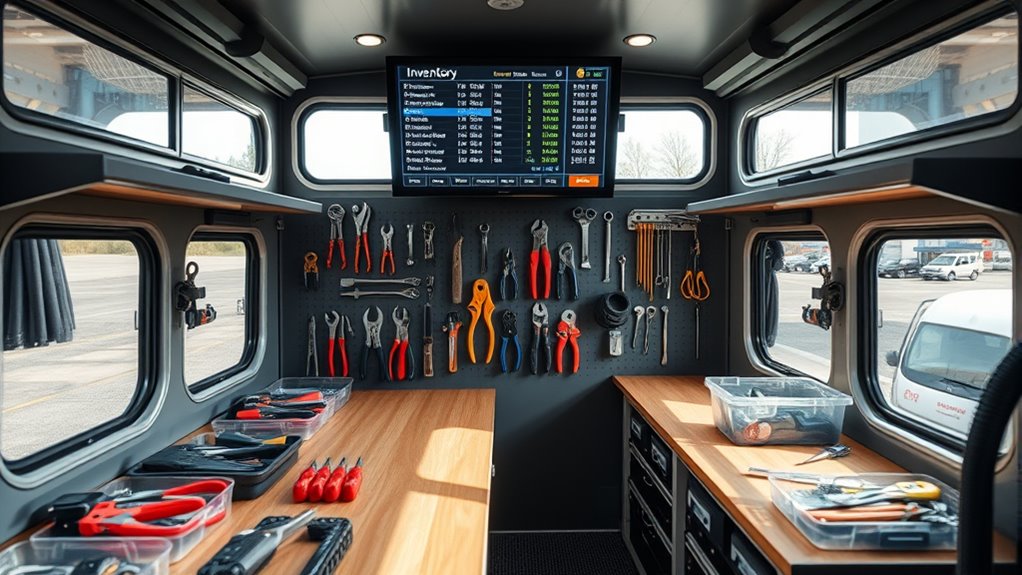

Implementing an effective tool inventory tracking system in your mobile workshop helps you prevent loss, theft, and misplacement of tools. Using digital solutions like barcode or QR code scans allows you to update tool statuses instantly, keeping your inventory accurate and accessible. Establish check-in/check-out protocols and assign tools to specific team members and locations to ensure accountability. Regular audits and team training reinforce good practices, so you stay organized and efficient—discover how to optimize your system further as you continue.
Key Takeaways
- Implement digital inventory systems with barcode or QR code scanning for real-time tool tracking.
- Establish clear check-in and check-out procedures to monitor tool movement accurately.
- Assign designated storage locations to prevent misplacement and facilitate quick access.
- Conduct regular inventory audits to identify discrepancies and ensure inventory accuracy.
- Train team members on proper tool management and accountability practices to reduce loss and improve efficiency.
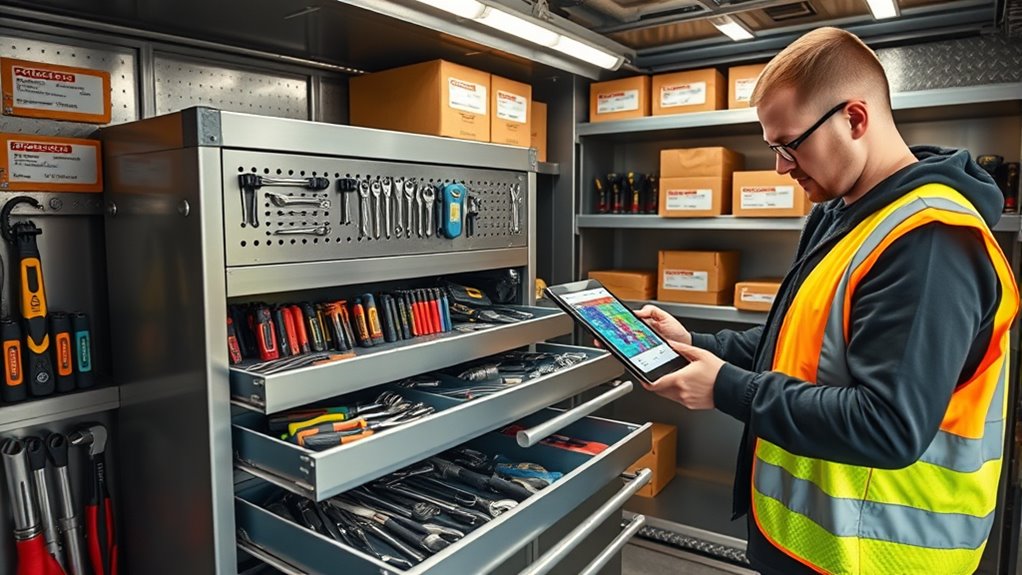
Managing tool inventory in mobile workshops can be challenging without an effective tracking system. When you’re constantly on the move, keeping tabs on every wrench, screwdriver, and power drill becomes a logistical puzzle. Without a reliable method, tools can go missing, get misplaced, or even be stolen, leading to delays and increased costs. You might find yourself wasting valuable time searching for specific items or replacing tools that have been lost, which hampers productivity and affects your bottom line. To avoid this chaos, implementing a solid tracking system is essential.
Effective tool tracking is vital in mobile workshops to prevent loss, reduce delays, and improve productivity.
A good starting point is adopting a digital inventory management solution. Instead of relying on manual logs or handwritten lists, a digital system allows you to quickly update tool statuses, check availability, and record movements in real time. This means every tool has a digital footprint, making it easier to locate and account for each item. You can scan barcodes or QR codes on tools when they’re checked out or returned, ensuring that records are always current. This reduces errors and gives you instant visibility into your inventory, so you know exactly what’s in your workshop at any moment.
In addition to using technology, establishing clear procedures is indispensable. You should create standardized check-in and check-out protocols for your team. When someone takes a tool, they should record it immediately, noting who borrowed it and for what purpose. When they return it, the process should be just as straightforward. Consistency in these procedures minimizes confusion and ensures accountability. You might also consider assigning specific tools to particular team members or work sites, which helps prevent mix-ups and misplacement.
Another effective tactic is designating a dedicated storage area for all tools. When tools have a fixed home, it’s easier to keep track of them and prevent clutter. Label storage locations clearly and ensure everyone knows where each tool belongs. Regular inventory audits—say, weekly or after each project—can catch discrepancies early. During these audits, you verify that all tools are accounted for and in good condition, helping you identify missing or damaged items before they become bigger issues. Incorporating proper organization into your workflow further enhances the accuracy of your inventory system.
Finally, training your team on the importance of proper tool management is essential. When everyone understands how to record tool movement accurately and respects the organized storage system, your inventory becomes more reliable. Empower your team to take responsibility for tools, fostering a culture of accountability. With these practices in place, managing tool inventory in your mobile workshop becomes less of a headache, ensuring you always have the right tools when you need them and reducing unnecessary expenses.
Frequently Asked Questions
How Can I Customize Tracking Features for Different Tool Types?
You can customize tracking features for different tool types by setting specific categories and adding unique attributes for each. Use your inventory system’s options to create custom fields, labels, or tags tailored to each tool type.
This way, you can easily filter, search, and manage tools based on their characteristics. Regularly update the system to reflect changes and verify accurate tracking, making your inventory management more efficient.
What Are the Best Practices for Training Staff on Inventory Systems?
Think of training staff like planting a garden—you need patience, clear instructions, and ongoing care. You should start with hands-on demonstrations, let staff practice, and provide simple reference materials.
Reinforce lessons with regular check-ins, just like watering plants. Data shows that consistent training reduces errors by 30%. When staff feel confident using the system, your inventory stays accurate, saving time and avoiding costly mistakes.
How Does Tracking Integrate With Existing Maintenance Schedules?
Tracking integrates with your existing maintenance schedules by providing real-time data on tool usage and availability. You can schedule maintenance proactively based on actual tool conditions, reducing downtime.
What Security Measures Are Recommended for Mobile Workshop Inventories?
You should prioritize robust security measures to safeguard your mobile workshop inventories. Implement access controls, such as PINs or biometric authentication, to restrict entry.
Use encrypted data transmission and secure cloud storage to protect sensitive information.
Regularly update software to fend off vulnerabilities, and conduct audits to spot any irregularities.
These steps help guarantee your tools stay safe, allowing you to focus on your work without worry.
How Can I Recover Lost or Misplaced Tools Using Tracking Data?
You can recover lost or misplaced tools by reviewing the tracking data to identify their last known location. Use real-time updates to pinpoint where tools were last scanned or recorded.
If the data shows they’re nearby, conduct a quick physical search. For tools outside the expected area, check security footage or consult team members.
Consistently monitoring tracking data helps you quickly locate and recover tools efficiently.
Conclusion
By implementing effective tool inventory tracking, you turn chaos into clarity, like a lighthouse guiding ships safely home. This system keeps your mobile workshop organized, ensuring tools are always ready when needed. With every item accounted for, you prevent costly losses and downtime. Imagine your workspace as a well-oiled machine, where each part moves seamlessly. Embrace these strategies, and watch your productivity soar like an eagle soaring high above the cluttered chaos below.