Last-mile delivery is evolving rapidly, driven by urban congestion and technological advances. Autonomous vehicles, like self-driving vans and bots, are transforming fleet operations by offering faster, more reliable, and eco-friendly delivery options in crowded cities. They enable around-the-clock service, optimize routes, and reduce costs while helping to lower emissions. Keeping up with these trends can give your fleet a competitive edge and improve efficiency—exploring these developments further could be very beneficial.
Key Takeaways
- Autonomous vehicles enhance last-mile delivery efficiency, reducing congestion-related delays for transit fleets.
- Integration of autonomous tech allows 24/7 operations, optimizing fleet utilization during peak and off-peak hours.
- Routing algorithms and smart infrastructure improve navigation, decreasing fuel costs and environmental impact.
- Fleet operators need to adapt by investing in infrastructure, communication systems, and regulatory compliance.
- Embracing autonomous delivery solutions helps fleets stay competitive amid increasing urban density and customer expectations.
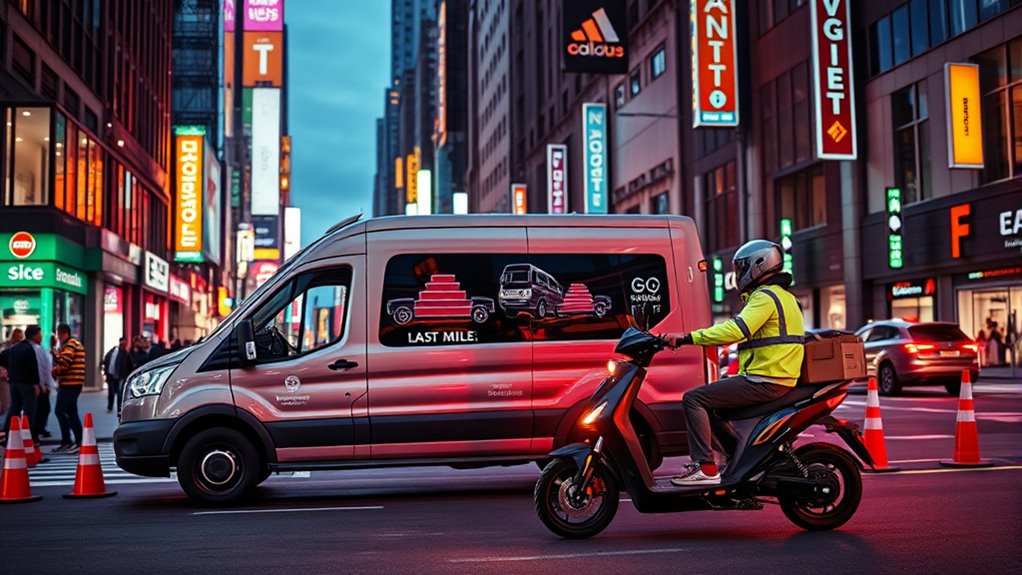
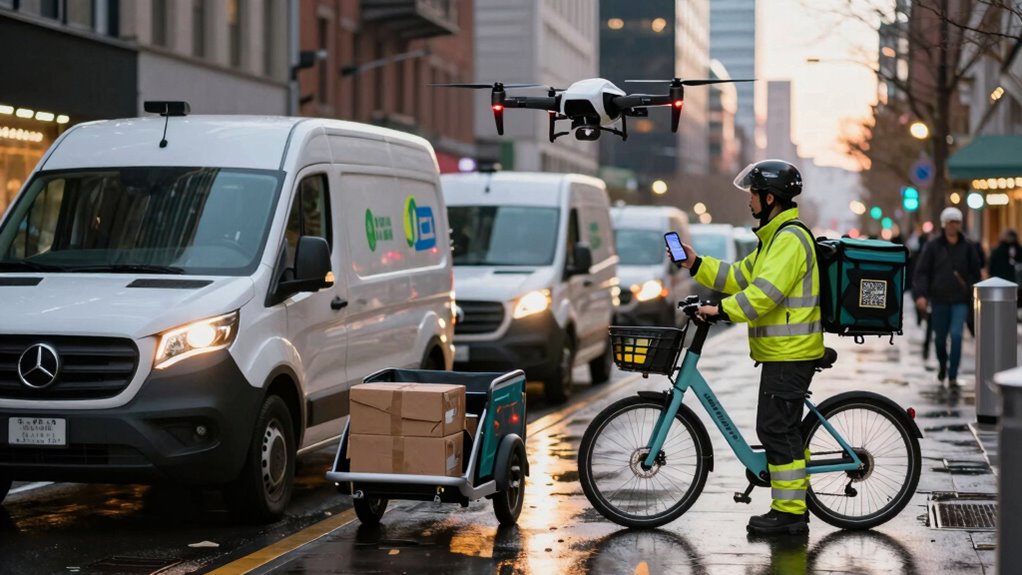
Have you ever wondered how your online orders arrive so quickly? The secret lies in the evolving world of last-mile delivery, where innovations are transforming how goods reach consumers. One major challenge that delivery companies face is urban congestion. City streets are packed, making it difficult for traditional delivery vans to navigate efficiently. This congestion causes delays, increases fuel costs, and adds to the environmental footprint. To combat this, many companies are turning to autonomous vehicles. These self-driving delivery bots and vans can operate around the clock, avoiding traffic jams and optimizing routes without human intervention. Autonomous vehicles can substantially reduce delivery times in congested urban areas, ensuring faster, more reliable service.
Autonomous vehicles reduce urban delivery times by avoiding traffic and optimizing routes around the clock.
As urban congestion worsens, fleet operations need to adapt quickly. Relying solely on conventional delivery trucks isn’t enough anymore. Autonomous vehicles offer a promising solution by providing continuous, efficient deliveries even during peak traffic hours. They can be programmed to follow ideal routes, avoiding heavily congested streets and reducing idle time. This not only shortens delivery windows but also cuts costs associated with fuel and labor. Furthermore, autonomous delivery solutions tend to be more environmentally friendly, as they are often electric, helping to lower emissions in already polluted city centers.
However, integrating autonomous vehicles into existing fleet operations isn’t just about technology. It requires strategic planning and infrastructure updates. You’ll need to consider how these vehicles communicate with traffic management systems and coordinate with human drivers where necessary. Ensuring safety and compliance with local regulations is also critical. Despite these hurdles, the benefits are clear: improved delivery speed, reduced congestion impact, and increased fleet efficiency. Autonomous vehicles can operate during off-peak hours, further easing urban congestion and allowing for more flexible delivery schedules.
The shift toward autonomous vehicles isn’t happening overnight, but the trend is unmistakable. As cities grow denser and traffic worsens, autonomous solutions will become essential components of last-mile logistics. For fleet operators, embracing this technology means staying competitive and meeting customer expectations for quick, reliable deliveries. It also means reducing operational costs and minimizing environmental impact. As you plan your fleet’s future, consider how autonomous vehicles can help you navigate urban congestion more effectively, ensuring your deliveries are faster, greener, and more efficient. This shift isn’t just a trend; it’s a necessary evolution in last-mile delivery that will shape the future of urban logistics.
Frequently Asked Questions
How Do Last-Mile Trends Impact Fleet Maintenance Schedules?
Last-mile trends profoundly impact your fleet scheduling and maintenance planning. As delivery routes become more dynamic and frequent, you’ll need to adjust maintenance schedules to prevent breakdowns and downtime. Incorporate real-time data and telematics to monitor vehicle health closely, ensuring your fleet stays in ideal condition. This proactive approach helps you reduce unexpected repairs, maximize service, and keep your operations running smoothly despite changing delivery demands.
What Technological Innovations Are Most Effective for Fleet Tracking?
You should prioritize technological innovations like real-time analytics and IoT sensors for fleet tracking. These tools give you instant updates on vehicle locations, performance, and maintenance needs. IoT sensors monitor engine health and fuel efficiency, while real-time analytics help you optimize routes and reduce downtime. By leveraging these technologies, you improve operational efficiency, enhance safety, and guarantee timely deliveries, keeping your fleet competitive in the evolving last-mile delivery landscape.
How Can Fleets Reduce Costs Associated With Last-Mile Delivery?
You can reduce costs by implementing effective cost saving strategies like optimized driver scheduling, which minimizes idle time and fuel consumption. Use route planning tools to identify the most efficient paths, cutting down delivery times and expenses. Additionally, consider consolidating deliveries and leveraging technology for real-time tracking. These tactics help streamline operations, lower overhead, and improve overall efficiency, ensuring your fleet operates more cost-effectively in last-mile delivery.
What Safety Concerns Arise With Increasing Delivery Volumes?
As delivery volumes increase, safety concerns rise, especially around driver fatigue and pedestrian safety. You need to monitor driver hours closely to prevent fatigue, which can impair judgment and reaction times. Additionally, with more vehicles on the road, you must prioritize pedestrian safety by implementing clear signaling and cautious driving practices. Staying vigilant and adhering to safety protocols helps protect both your drivers and the public amid higher delivery demands.
How Do Urban Regulations Influence Fleet Operational Strategies?
Urban regulations are your map through a complex maze. They shape your fleet’s path by enforcing urban zoning and parking restrictions, which act as gates and barriers. You must strategize around limited parking zones and restricted access areas, like steering a river with hidden currents. Adapting your routes and schedules guarantees smooth delivery flows, helping you stay compliant and efficient amidst the ever-changing rules governing city landscapes.
Conclusion
Staying ahead of last-mile delivery trends means adapting your transit fleet now, or risk being left in the dust like a forgotten steam engine. Embrace new technologies and changing customer expectations, for the future of delivery depends on your agility. Remember, even in an age of rapid innovation, those who cling to old ways may find themselves as obsolete as a rotary phone. Keep evolving, or your fleet’s story might end in the dustbin of history.