TL;DR
Automotive garage organization tools work best when you match storage to the equipment: use drawers for sockets and small parts, visible wall storage for frequently used hand tools, and rated cabinets or shelves for heavy items. Measure your space, check load limits, and keep daily tools close to where you work so you can find them quickly and return them safely.
A missing 10 mm socket can turn a quick brake-pad check into a hunt through three drawers, a coffee can, and the floor under your car. The right automotive garage organization tools make that familiar scramble less likely by giving every tool a home you can reach and remember.

Get business pricing on garage and car supplies
- Business-only prices and quantity discounts
- Tax-exempt purchasing
- Multiple users, one account, clear invoices
Your setup doesn’t need to look like a professional shop. You’ll get more from a modest chest, a few labeled trays, and well-placed wall rails than from a giant cabinet that blocks the car door. This guide shows you how to choose storage for your tools, fit it to your garage, and keep the space ready for the next repair.
The key facts for a useful setup are simple: group tools by type or task, put frequent-use items within easy reach, and check capacity before loading cabinets or shelves. The best arrangement depends on the size of your garage and the work you do there.
Use fitted trays or labeled drawers for sockets and small automotive parts so sizes stay separated.
Keep tools you use every week near the bench or vehicle; move specialty tools to less prominent storage.
Measure vehicle, doorway, drawer, and walking clearances before buying a cabinet.
Check load limits and secure heavy cabinets and wall systems to suitable support.
Wipe tools dry, store chemicals by their labels, and reset your storage after each repair.
Choose storage that matches the tools you reach for
Automotive garage organization tools work best when each storage type has a clear job: drawers hold small or valuable tools, wall storage keeps common hand tools visible, and shelves handle bulky supplies. A tool chest usually means a portable or stationary drawer box, while a tool cabinet generally refers to a larger floor-standing unit, though retailers sometimes use the terms differently. Matching storage to the tool matters because it affects how quickly you can find it, how well it stays protected, and whether the space is easy to reset after a repair.
Think about a Saturday oil change. You might reach repeatedly for a ratchet, a 10 mm socket, pliers, and a drain pan. Put the socket set in a fitted drawer tray, hang the pliers on a wall rail, and keep the pan on a low shelf near the car. This arrangement puts the small items most likely to get lost in defined slots, keeps the frequently handled pliers visible, and reserves floor or shelf space for a bulky pan. The tradeoff is that open storage collects more dust, while tools buried in closed drawers take longer to spot; use each where its advantages matter most.
Use open storage when you want quick visibility. Pegboards and rails make it easy to spot whether a wrench has gone missing, much like seeing ingredients on a kitchen counter. That visibility also makes a misplaced tool obvious during cleanup. Closed cabinets can cut down on dust and visual clutter, so they suit expensive electrical tools or supplies you don’t use every day. They offer more protection, but a crowded cabinet can hide what you own and make it harder to return items consistently. Neither format does every job well.
- Drawers: sockets, wrenches, measuring tools, and small parts.
- Wall rails or pegboards: frequently used hand tools that you want to grab at a glance.
- Shelves and bins: bulky supplies, towels, and parts grouped by repair task.
Drawer organizers only help when they fit the drawer and your actual collection. A tray sized for a mechanic’s full socket range can waste space if you own just a few sets. Measure first, then label the spots you use most. A well-fitted tray also makes gaps visible, so you can notice a missing socket before it becomes a problem during the next job.
Products Worth Considering

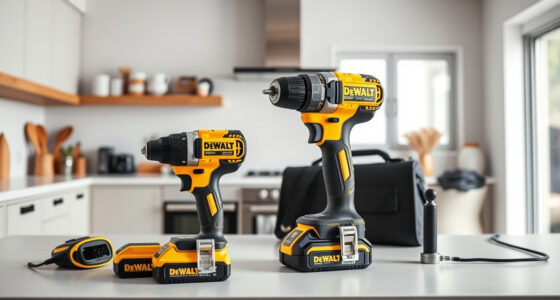
DEWALT 20V MAX XR Hammer Drill and Impact Driver Combo Kit with Two 4Ah Batteries and Charger (DCK250QQ2)

Innova 5610 OBD2 Bidirectional Scan Tool

VIOFO A229 Pro 4K HDR Dash Cam with Dual STARVIS 2 Sensors (Front & Rear)
As an affiliate, we earn on qualifying purchases.
Measure first so your storage leaves room to work
Before you buy a cabinet or tool wall, measure the garage and leave enough room for your vehicle, open drawers, and safe movement. A storage unit can have impressive capacity on paper and still be a poor fit if you can’t open it beside the car or reach the electrical panel behind it. Usable capacity includes access space: a drawer you cannot fully open is storage you cannot readily use, and a blocked panel can make routine maintenance harder.
Measure the wall, floor space, doorway, and the path you’ll use to move a rolling cabinet. Then park your car where it normally sits and check how far the doors swing. For example, a shallow wall cabinet may fit behind the driver’s door where a deep rolling chest would block it. Sketching those clearances on paper can save you a return trip and a frustrating assembly day. Include the cabinet’s open drawer depth in the sketch, since the space needed to use a cabinet is greater than the space it occupies when closed.
Small garages often get more usable space from vertical storage than from another floor cabinet. A rail or pegboard can keep frequently used tools above a workbench, while shallow shelves hold parts bins without crowding the car. The tradeoff is that wall storage depends on a sound attachment and can put tools out of easy reach if placed too high. Mounting matters: attach heavy wall systems to framing or appropriately rated masonry with suitable hardware. Drywall alone generally isn’t a safe anchor for heavy loads.
Make a short inventory before choosing a chest size. If you own two socket sets and a compact impact wrench, you may not need a large professional cabinet. Leave room for drawers to extend fully and for you to walk around a jack or workbench. More storage is useful only when you can reach it without squeezing past a fender. An inventory also helps distinguish genuine capacity needs from the temptation to buy empty drawers that consume scarce floor space.
Put heavy tools on stable, rated storage
Heavy tools belong in storage rated to hold their weight, with the heaviest items kept low for stability. Check the maker’s stated limits for drawers, shelves, cabinets, casters, and wall mounts before loading them. Capacity ratings vary, so the appearance of a thick steel shelf doesn’t tell you how much it can safely carry. A rating helps you judge the whole setup: a shelf may hold the weight, while its brackets or the wall behind them may be the limiting part.
For example, if you keep an impact wrench, puller, and several large socket sets together, put them in a lower drawer rather than stacking them in an upper one. A top-heavy cabinet can tip more easily, especially when several drawers sit open. Keeping weight low reduces that tipping tendency and makes a loaded drawer less awkward to pull out. Anchor tall cabinets as the manufacturer directs, and close drawers before moving a rolling unit.
Mobility can make a cabinet handy when you move between a workbench and a vehicle. It works well on a smooth, clear floor, but damaged casters or a cluttered path can turn a rolling cabinet into a hazard. Look for stable casters and secure drawer latches, then test how it moves before loading it with heavy tools. A mobile cabinet saves trips only if it remains controllable when loaded; on an uneven floor, a stationary cabinet may be the safer and more practical choice.
A load rating is part of the tool’s safe use. Check it before you store heavy equipment, and keep weight low enough that the cabinet stays stable when you open a drawer.
Storage supports your repair work, but it doesn’t make every repair a do-it-yourself job. Brakes, airbags, and high-voltage electric-vehicle systems can put you and others at risk if you lack the right training or equipment. Use a certified mechanic for safety-critical work, and check for open recalls through NHTSA when a vehicle issue may involve a recalled component.
Build a simple layout that makes tools easy to return
Organize the garage around the work you do most: keep common tools near the bench or car, group related items, and label drawers and bins. A simple return routine matters as much as the initial setup. If a tool has a clear home, you’re more likely to put it away before the next job begins. Grouping by task also reduces back-and-forth trips, while grouping by type can make a tool easier to find across different jobs; choose the organizing logic that best matches how you search.
Say you often change oil and rotate tires at home. Keep your socket tray, torque wrench, gloves, and wheel chocks in labeled spaces near the work area; put oil filters and drain-pan supplies together on a shelf. You’ll spend less time crossing the garage, and you’re less likely to leave a tool beside the tire after the job. Keep the setup flexible if these jobs share tools: commonly used equipment can have a central home, while job-specific supplies stay grouped together.
- Sort tools by type or task. Separate sockets, wrenches, pliers, electrical tools, and vehicle-specific items.
- Choose a home for each group. Use a fitted tray for sockets, a wall rail for common pliers, and a bin for small parts.
- Place frequent-use items within easy reach. Keep occasional specialty tools higher or farther away.
- Label the storage. Mark drawer fronts and bins with plain names, such as “electrical” or “10 mm sockets.”
- Reset after each repair. Wipe tools, return them, and note anything damaged or missing.
Labels need to match the way you think. If you search by job, “brake service” may be more useful than “fasteners.” If you share the garage, labels help everyone return a tool to the same place rather than creating several competing systems. Over time, a consistent home also makes a quick visual check possible: an empty labeled spot can signal that a tool is still on the bench or under the car.
Protect tools and supplies from dust, rust, and damage
Good storage protects tools from moisture, knocks, dust, and accidental spills as well as making them easier to find. In a damp garage, wipe metal tools after use and store them in a dry cabinet; desiccants or a dehumidifier may help if moisture keeps returning. A little care can keep a clean wrench from developing a rough orange edge. Reducing moisture matters because rust can make tools harder to use and damage precise surfaces over time; a cabinet helps only if the tools go in dry and the space inside does not trap damp air.
Open pegboards offer fast access, but they expose tools to more dust than closed drawers. If your garage door opens onto a dusty driveway, store precision measuring tools or sensitive electrical equipment inside a cabinet. For a basic set of wrenches you use weekly, wall storage may be a fair trade for quick access. In other words, choose protection in proportion to the tool: dust on a frequently used wrench may be easy to wipe away, while contamination or moisture on a measuring instrument can affect its usefulness.
Keep fluids and chemicals in appropriate containers and follow their product labels and local requirements. Store fuels, solvents, batteries, and other hazardous materials away from heat and sparks, and out of children’s reach. For instance, don’t leave a solvent-soaked rag draped over a work light while you finish a repair. Separating these supplies from ordinary tools also helps prevent leaks or spills from damaging equipment and keeps the products’ instructions accessible when you need them.
During a monthly reset, remove damaged tools, check for leaks, and return loose hardware to its labeled bin. Tools help keep a job moving only when they’re in usable condition. That quick check can catch a cracked handle or rusted clamp before you depend on it under a car. It also gives you a chance to spot recurring clutter or moisture, so you can adjust the storage instead of repeatedly cleaning the same problem.
Spend on useful capacity, not cabinet extras
A good storage purchase fits your space, holds your real tool collection, and has useful drawers and sound construction. Steel cabinets suit heavy-duty use, while resin or modular systems may suit lighter storage or damp areas; quality varies within every material. Compare drawer slides, welds, finishes, warranties, and stated load limits rather than judging by appearance alone. These details affect daily use: a drawer that sticks or a shelf with too little capacity can make a large cabinet frustrating, while a smaller unit that opens smoothly may serve better for years.
Modern modular units can expand as your collection changes, and wall panels can take configurable hooks. Some systems combine cabinets with a work surface or charging features. App-connected inventory and tool-location tags also exist, but they help only if they fit your routine. If you already return every tool to a labeled drawer, an app may add little. Modular storage can defer a large purchase, but check whether future pieces use compatible dimensions and mounting; a system that cannot expand as expected may cost more to replace.
Consider two home mechanics: one owns a basic socket set and does occasional maintenance; the other has a compressor, specialty pullers, and tools for regular projects. The first may be better served by a compact chest and a wall rail. The second may benefit from a larger rated cabinet and more organized parts storage. An expensive cabinet does not make the tools inside it better. The useful distinction is whether added capacity solves a real access or protection problem, rather than simply leaving more room to accumulate items.
Compare options with your measurements and priorities in hand:
| Storage | Good for | Check before buying |
|---|---|---|
| Tool chest or cabinet | Drawers, security, heavy equipment | Load ratings, drawer slides, fit, and anchoring |
| Pegboard or wall rail | Visible, frequently used hand tools | Wall support, hardware rating, and hook fit |
| Bins and drawer trays | Small parts and tool sets | Labels, compartment size, and drawer clearance |
| Shelves | Bulky supplies and containers | Weight capacity, depth, and secure mounting |
Prices and product claims change. Check current specifications, warranties, and availability with the manufacturer or retailer, then prioritize a safe fit and practical layout over features you’re unlikely to use. A short list of must-haves—such as a drawer size, a load limit, or enough clearance beside the car—makes comparisons more useful than starting with a brand or a feature list.
Frequently Asked Questions
What is the best way to organize a home automotive garage?
Group tools by type or task, keep frequently used items close to your work area, and use labeled drawers, bins, or wall storage. For example, keep your socket tray and torque wrench near the car if you often rotate tires.
Are pegboards or tool chests better?
Pegboards and rails make tools visible and quick to grab; tool chests offer enclosed drawer storage that can reduce dust and visual clutter. Many garages use both, with common hand tools on the wall and valuable or small tools in drawers.
What size tool chest should I buy?
Start with an inventory of your tools and measurements of your garage, including drawer clearance and vehicle access. A larger chest can be useful as your collection grows, but only if you can open it fully and move safely around it.
Can I mount a tool wall on drywall?
Heavy tool storage needs to attach to suitable framing or an appropriately rated masonry surface with hardware rated for the load. Drywall alone generally isn’t a suitable anchor for a loaded tool wall.
How do I keep tools from rusting in a damp garage?
Wipe tools after use, keep them in a dry area, and reduce moisture where you can. Desiccants or a dehumidifier may help if your garage stays damp, especially near an exterior wall.
Conclusion
Start with the tools you use most, give each group a practical home, and measure before you buy. A compact chest, visible wall rail, and a few labeled bins can turn a cluttered corner into a workspace where the right socket is waiting when you reach for it.
Keep the heavy gear low, return tools after each job, and let your garage earn its order one repair at a time. Next time you open that drawer, you should hear tools slide into place—not rattle around in a pile.