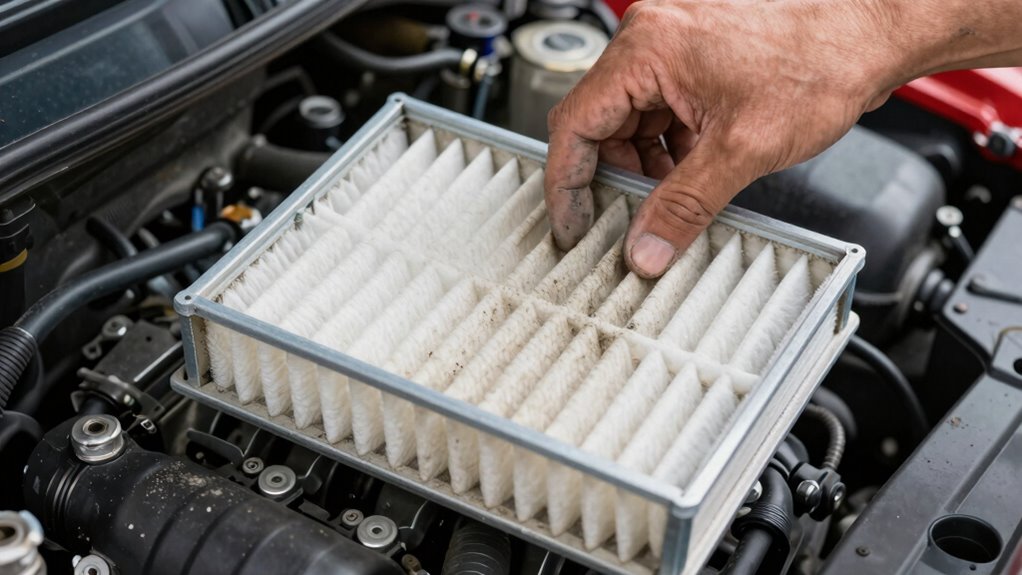
To keep your engine running smoothly and efficiently, check your air filter every 10,000 to 15,000 miles or if you notice performance issues like rough idling or decreased fuel economy. Replace it more often in dusty environments or city driving. Look for signs like visible dirt, clogging, or a dashboard warning. Using a clean filter boosts fuel efficiency and reduces emissions. Stay tuned to learn the best steps to maintain and replace your filter for peak performance.

Get business pricing on garage and car supplies
- Business-only prices and quantity discounts
- Tax-exempt purchasing
- Multiple users, one account, clear invoices
Key Takeaways
- Inspect the air filter every 10,000 to 15,000 miles or during oil changes for dirt and clogging.
- Replace the air filter when it appears dirty, clogged, or if performance issues like rough idling occur.
- Follow the vehicle manufacturer’s recommended replacement schedule, especially in dusty or urban environments.
- Signs for replacement include decreased fuel efficiency, reduced acceleration, and dashboard alerts.
- Use quality filters and ensure proper installation to maintain optimal airflow and engine performance.
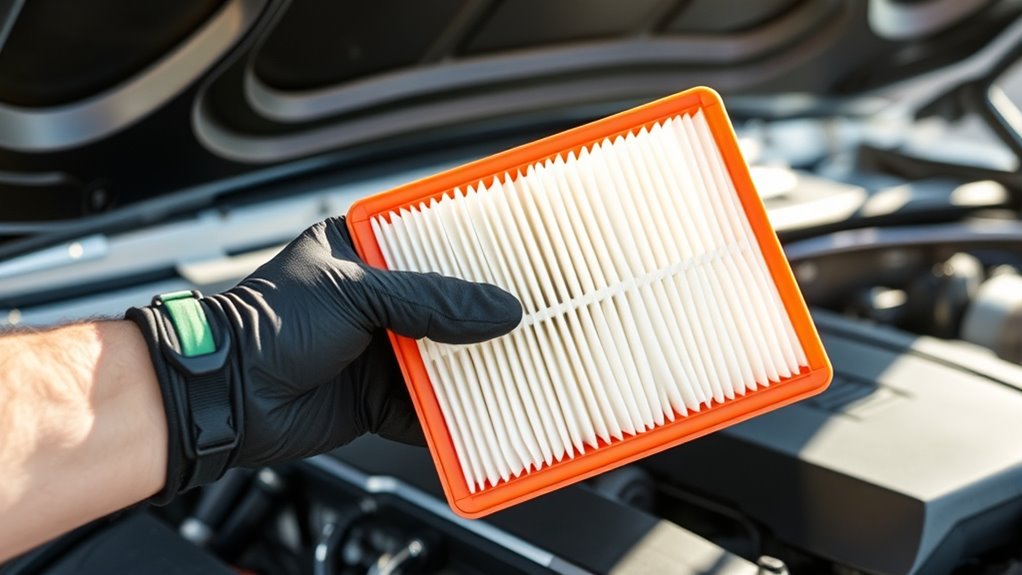
The engine air filter is a vital component that keeps dirt, dust, and debris from entering your engine, making certain it runs smoothly and efficiently. When the filter is clean, your engine breathes easier, which improves fuel efficiency and helps control emissions. A clogged or dirty air filter restricts airflow, forcing your engine to work harder and burn more fuel, leading to decreased mileage and increased pollutant output. That’s why regular maintenance of your air filter isn’t just about keeping your engine healthy—it’s also about saving money and reducing your environmental impact. Regularly inspecting your air filter condition can prevent costly repairs and ensure optimal engine performance. An often-overlooked aspect of air filter maintenance is understanding the specific needs based on your driving environment and habits. Recognizing the importance of proper airflow can help you maintain peak engine efficiency and avoid unnecessary repairs. Additionally, using quality replacement filters can extend the lifespan of your engine and improve overall performance.
Knowing when to replace your air filter depends on your driving habits and the environment. If you mostly drive in dusty areas or city traffic, you might need to change it more often—every 10,000 to 15,000 miles. On the other hand, if you mostly drive on highways through cleaner air, you could extend that interval. A good rule of thumb is to check the filter at every oil change; if it appears dirty or clogged, it’s time for a replacement. Signs that your air filter needs attention also include reduced engine acceleration, rough idling, or a noticeable decrease in fuel efficiency. If your vehicle’s dashboard has a service indicator for air filters, don’t ignore it—follow the manufacturer’s recommended schedule or sooner if you notice performance issues. Proper air flow is essential for optimal engine operation, which is why a clean filter plays such a critical role. This simple maintenance step ensures your engine gets the clean air it needs for ideal combustion, boosting fuel efficiency and helping your vehicle meet emission standards.
Products Worth Considering

Chemical Guys 16-Piece Arsenal Builder Car Wash Kit with Foam Cannon & Bucket

Chemical Guys 14-Piece Arsenal Builder Car Wash Kit with Foam Blaster

DEWALT 20V MAX XR Impact Driver, 1/4 Inch High Torque Brushless 3-Speed Cordless with LED Light, Extended Runtime (DCF845B)
As an affiliate, we earn on qualifying purchases.
Frequently Asked Questions
Can a Dirty Air Filter Affect Fuel Efficiency?
Yes, a dirty air filter can considerably affect your fuel efficiency. When the air filter’s lifespan is exceeded, it restricts airflow to the engine, causing it to work harder. This extra effort uses more fuel, reducing overall efficiency. Regularly replacing your air filter guarantees proper airflow, which helps maintain ideal fuel economy and engine performance. Don’t ignore your air filter—it’s key to saving money and keeping your vehicle running smoothly.
How Often Should I Check My Air Filter?
Think of your air filter as the lungs of your car, needing regular check-ups. You should inspect it every 12,000 to 15,000 miles, or more often if you drive in dusty areas. Following your maintenance schedule guarantees it doesn’t become a clogged filter, choking performance. A quick visual check keeps your engine breathing easy, maximizing efficiency and prolonging its lifespan. Don’t wait until it’s visibly dirty—check regularly for smooth sailing.
Are Aftermarket Filters as Effective as OEM Parts?
Aftermarket filters can be just as effective as OEM parts if you choose reputable brands. They often offer comparable or even superior filtration and airflow, but quality varies. To guarantee peak filter effectiveness, check reviews and specifications before buying. While OEM filters are designed specifically for your vehicle, aftermarket options can save you money without sacrificing performance, as long as you select high-quality products and replace them regularly.
What Are Signs of a Failing Engine Air Filter?
Think of your engine’s air filter as its lung; when it struggles to breathe, performance drops. Signs of a failing air filter include reduced acceleration, rough idling, and decreased fuel efficiency. If you notice these replacement indicators, it’s time to check the air filter’s lifespan and replace it. Ignoring these signals can lead to engine damage, so stay attentive and replace your filter when needed for peak performance.
Can I Clean and Reuse a Disposable Air Filter?
You shouldn’t clean and reuse a disposable air filter because of reusability concerns. These filters are designed for single use, and cleaning methods like washing or vacuuming can damage the filter media, diminishing their effectiveness. Instead, inspect your filter regularly and replace it when it shows signs of dirt or damage. Proper maintenance ensures your engine runs smoothly and maintains peak performance without risking damage from improper cleaning.
Conclusion
By regularly checking and replacing your engine air filter, you keep your car running smoothly and efficiently. Don’t wait until you notice a decrease in performance or fuel economy—think of it like changing your socks to stay invigorated. Visualize a clean filter as a invigorating gust for your engine, while a dirty one chokes it. Stay proactive, and your vehicle will thank you with reliable, peak performance every time.