When deciding between DIY and dealer service, focus on simple tasks like oil changes, filter replacements, or tire rotations, which you can handle easily and cost-effectively. However, avoid complex repairs, especially those involving electronic systems or critical components, as they may impact your warranty or safety. If you want to learn more about which maintenance tasks you can confidently tackle yourself and when to call in experts, keep exploring.
Key Takeaways
- Simple tasks like oil changes, cabin filter replacements, and tire rotations are suitable for DIY; complex repairs are better left to professionals.
- DIY repairs save money on labor but may void warranties if not performed correctly or on critical systems.
- Consider your experience, tools, and safety knowledge before attempting repairs; avoid complex or electronic components if unsure.
- Professional mechanics ensure precise, safe repairs for complex issues, electronics, or when specialized tools are required.
- Weigh cost savings against potential risks, warranty implications, and safety concerns when deciding between DIY and dealer service.
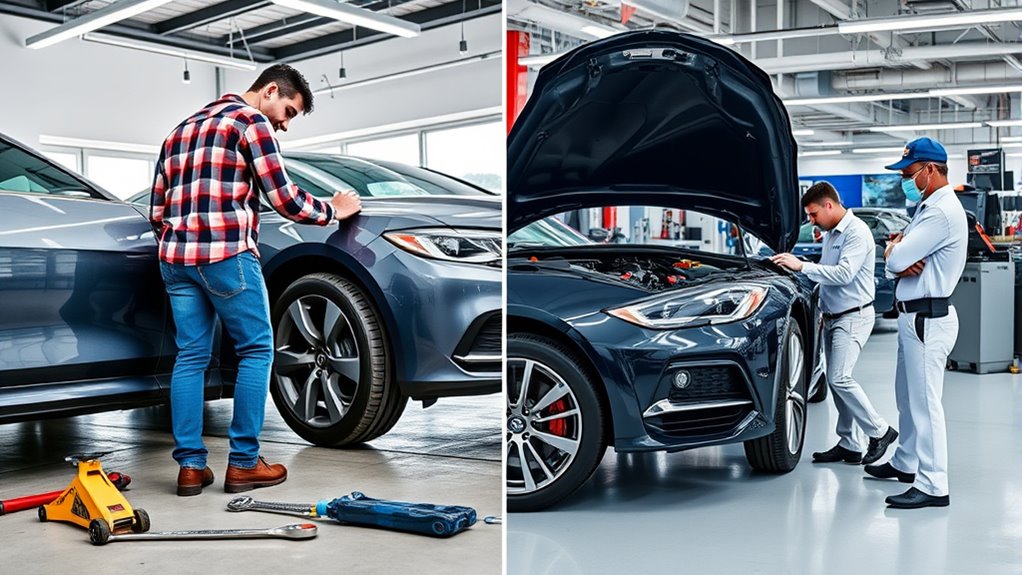
When it comes to maintaining or repairing your vehicle, you often face the choice between doing it yourself or taking it to a dealer. Deciding which route to take depends on your skills, tools, and the task at hand. One key factor to consider is the cost comparison. Generally, DIY repairs tend to be more affordable because you eliminate labor costs. You only pay for parts and materials, which can save you a significant amount, especially for simple tasks like oil changes, replacing air filters, or changing wiper blades. However, some repairs require specialized tools or expertise, which could make a DIY approach more costly if you need to buy or rent equipment or risk damaging parts.
DIY repairs save money by eliminating labor costs but may incur extra expenses for tools or potential mistakes.
Another vital aspect involves warranty implications. If your vehicle is still under warranty, attempting repairs yourself could void certain coverage, especially if the repair involves critical systems like the engine or transmission. Manufacturers often specify that only certified technicians or authorized dealers can perform certain repairs to keep the warranty intact. So, while doing it yourself might save money upfront, it could cost you in the long run if it compromises your warranty coverage or if you need to pay for repairs later due to improper handling.
For simple, straightforward tasks, handling repairs yourself makes sense. Changing the oil, replacing your cabin air filter, or rotating tires are manageable if you follow instructions carefully and have basic tools. These tasks are inexpensive, quick, and give you a sense of accomplishment. Plus, you avoid waiting for appointments or dealing with service queues. But for more complicated issues, such as brake repairs, suspension work, or diagnostics involving electronic systems, it’s often better to leave it to the professionals. These repairs require specialized knowledge and equipment, and attempting them yourself can lead to costly mistakes or safety hazards. Additionally, some repairs might involve electronic components that are sensitive and require precise handling, underscoring the importance of professional expertise. Being aware of DIY limitations and knowing when to seek professional help can prevent costly mistakes and ensure your vehicle remains safe to drive. Also, understanding the tools and skills needed for specific repairs can help you decide whether DIY is feasible or if professional assistance is advisable.
The decision also depends on your comfort level and experience. If you’re confident and have done similar repairs before, tackling them yourself can be rewarding and budget-friendly. If you’re unsure, a dealer or certified mechanic can ensure the job is done correctly and safely. Remember, some repairs might seem simple but have hidden complexities. It’s important to weigh the costs vs safety when considering DIY repairs and to recognize that some tasks require specialized training. Weigh the cost comparison against the potential risks, especially considering warranty implications. Ultimately, understanding your limits and the specific requirements of the task helps you make the best choice for your vehicle’s health and your wallet. Additionally, being aware of affiliate disclosure policies can help you make more informed decisions about purchasing parts or tools needed for DIY repairs.
Frequently Asked Questions
How Do I Choose Between DIY and Professional Maintenance?
To choose between DIY and professional maintenance, start with a skill assessment to see if you can handle the task safely and effectively. Consider the cost comparison—DIY can save money but may risk errors if you’re inexperienced. If the task requires specialized tools or expertise, it’s better to hire a professional. Balance your comfort level with potential costs and risks to make the best decision for your vehicle.
What Safety Precautions Should I Take During DIY Repairs?
You should always wear safety gear such as gloves, goggles, and masks to protect yourself during DIY repairs. Stay aware of potential hazards like sharp tools, hot surfaces, or chemicals, and handle them carefully. Keep your workspace clean and well-lit, and never bypass safety instructions. Taking these precautions helps prevent accidents and guarantees your safety while working on your vehicle. Always prioritize safety over rushing through the job.
Are There Tools Necessary for Basic DIY Vehicle Maintenance?
Think of your toolbox as a trusty toolkit for your vehicle’s health. You’ll need basic tools like a wrench, screwdriver, and a funnel for fluid checks, along with a tire pressure gauge. These tools help you keep your car’s essential signs in check, like monitoring tire pressure and inspecting for fluid leaks. With these in hand, you’re ready to tackle simple maintenance tasks and keep your ride running smoothly.
How Often Should I Perform DIY Checks on My Car?
You should perform DIY checks on your car at least once a month. During routine inspections, focus on fluid checks like oil, coolant, and windshield washer fluid. Also, look for any visible leaks, worn tires, or damaged belts. Regularly monitoring these areas helps catch potential issues early, ensuring your vehicle stays reliable and safe. Consistent DIY checks save money and give you peace of mind between professional service visits.
What Warranty Implications Exist When Handling Maintenance Myself?
Handling maintenance yourself can pose warranty risks if you don’t follow your manufacturer’s guidelines. Many warranties have maintenance exclusions, meaning if you perform certain tasks improperly or without proper documentation, you could void your warranty. Always review your warranty terms before doing DIY repairs, and keep detailed records of any work you complete. This way, you minimize the risk of losing coverage due to maintenance exclusions or improper handling.
Conclusion
Think of maintaining your car like tending a garden—you can’t do it all at once, but with the right tools and knowledge, you’ll see your efforts bloom. I once saved hundreds by changing my own oil, feeling proud as my car ran smoother. Knowing which tasks you can confidently handle versus when to call in the pros keeps your vehicle happy and your wallet healthy. So, plant your DIY seeds wisely and enjoy the ride!