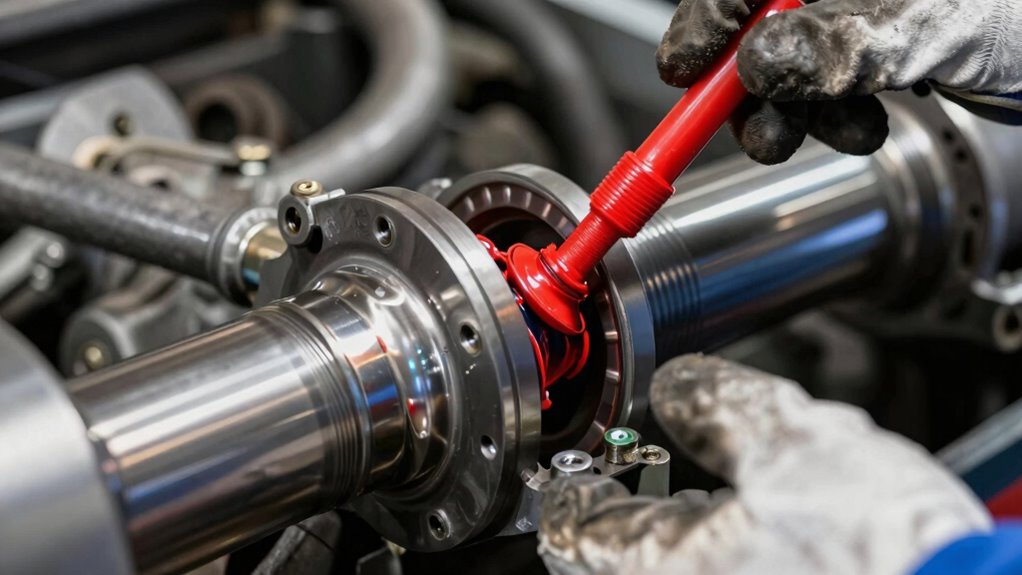

To guarantee your U-joints and driveshaft last longer, regularly inspect for rust, cracks, or damaged boots, and look for signs of wear like unusual noises or vibrations. Lubricate the grease fittings with high-quality grease using a grease gun, following your vehicle’s recommended intervals. Proper maintenance prevents corrosion and reduces wear, keeping your vehicle safe and reliable. Keep caring for these parts, and you’ll discover more tips to boost their longevity.

Get garage and car supplies delivered free — and shop member deals
- Fast, free delivery on millions of items
- Access to Prime Big Deal Days deals on October 6–7
- Prime Video, Amazon Music and more included
Key Takeaways
- Regularly inspect U-joints for rust, cracks, and damaged boots to prevent early failure.
- Use a grease gun to apply high-quality grease through fittings until excess appears.
- Follow manufacturer-recommended lubrication intervals to maintain smooth power transfer.
- Listen for unusual noises and monitor vibrations as early indicators of wear or imbalance.
- Address any signs of corrosion, excessive play, or damage promptly to extend component lifespan.

Your vehicle’s U-joint and driveshaft are critical components that guarantee smooth power transfer from the engine to the wheels, but they often go unnoticed until problems arise. Regular maintenance, especially proper lubrication and inspection, is essential to keep them functioning correctly and extend their lifespan. Understanding lubrication techniques is crucial; most U-joints are fitted with grease fittings, making it straightforward to apply high-quality grease periodically. Using a grease gun, you should inject fresh grease into the fittings until you see excess oozing out. This ensures the internal bearings stay well-lubricated, reducing friction and preventing premature wear. It’s best to follow your vehicle manufacturer’s recommendations for lubrication intervals, which can vary based on driving conditions and usage. Neglecting this routine can lead to increased wear, corrosion, and eventual failure of the U-joint and driveshaft. Incorporating proper lubrication methods into your routine can significantly enhance the longevity of these components. Additionally, choosing the right type of grease based on environmental conditions can further protect against corrosion and wear, especially in harsh climates.
In addition to lubrication, being aware of common wear indicators helps you catch issues early before they cause more significant damage. Unusual noises, such as clunking or banging during acceleration or deceleration, often signal U-joint problems. If you notice vibrations while driving, especially at certain speeds, it could indicate a worn or unbalanced driveshaft. Visual inspections can reveal rust, corrosion, or cracked rubber boots that protect the U-joint’s internal components. Excessive play or movement when you manually wiggle the driveshaft also signals worn bearings, which require immediate attention. Addressing these signs early can prevent catastrophic failures that might leave you stranded or require costly repairs. Additionally, proper lubrication can help maintain the color accuracy of your vehicle’s visual cues, making it easier to detect early signs of wear. Regularly inspecting and lubricating your driveshaft and U-joints is a simple yet vital step toward ensuring safe and reliable vehicle operation.
Frequently Asked Questions
How Often Should I Replace a U-Joint or Driveshaft?
You should replace your U-joint or driveshaft when you notice excessive play, clunking noises, or vibrations. Regularly check your lubrication schedule and follow recommended replacement intervals, typically every 70,000 to 100,000 miles. Don’t ignore signs of wear, as delaying replacement can lead to more costly damage. Stay proactive with inspections, and replace components promptly to ensure smooth operation and prevent further issues.
Can I Inspect U-Joints and Driveshafts Without Removing Them?
Think of inspecting your u-joints and driveshafts like checking the tires on your car—visual inspection is key. You can often spot issues without removing them using a flashlight and a mirror, so no special tools are needed. Look for signs of rust, cracks, or excessive play in the joints. If you notice anything unusual, it’s best to remove and test them more thoroughly to prevent future breakdowns.
What Are Signs of a Failing U-Joint or Driveshaft?
You’ll notice signs of a failing U-joint or driveshaft through unusual noises like clunking or squeaking, especially during acceleration or turns. Vibration issues are also common, making your ride feel shaky or off-balance. If you experience these symptoms, it’s vital to inspect them promptly. Ignoring these signs can lead to more severe damage, so don’t delay in addressing these warning signals to keep your vehicle running smoothly.
Are There Different Types of U-Joints Suitable for Specific Vehicles?
Your question hits the nail on the head—there are indeed different types of U-joints for specific vehicles. Some U-joints are designed for universal compatibility, fitting a wide range of models, while others follow vehicle-specific designs for perfect fit and peak performance. Always check your vehicle’s specifications before replacing a U-joint to guarantee safety and longevity, because using the wrong type can cause your drive system to fail faster than you can say “breakdown.”
Does Driving Off-Road Increase the Need for Frequent U-Joint Maintenance?
Driving off-road definitely increases the need for more frequent U-joint maintenance. Off-road stress causes more vibration, shock, and dirt exposure, which can wear out your U-joints faster. You should check and lubricate them more often to prevent failure. Regularly inspect for any looseness or damage, and keep up with lubrication frequency to make certain your driveshaft stays in good shape during tough terrains.
Conclusion
Regularly greasing and inspecting your u-joints and driveshaft can extend their lifespan considerably. Did you know that neglecting these parts can lead to costly repairs, often costing up to $1,000? By staying proactive with maintenance, you not only prevent breakdowns but also save money in the long run. Keep an eye on these components, stay consistent with your care routine, and enjoy smoother, safer drives for miles to come.
Fall Picks
fall essentials
As an affiliate, we earn on qualifying purchases.