To keep your vehicle running smoothly, regularly inspect your serpentine belt and tensioner for cracks, fraying, glazing, or missing chunks. Replace them if you notice signs of wear, looseness, or unusual noises, as these can lead to breakdowns or engine damage. Worn tensioners can cause belt slippage or misalignment, increasing wear. Staying on top of maintenance guarantees efficient operation and prevents costly repairs—if you want to learn more about proper upkeep, just continue exploring the details.

Get business pricing on garage and car supplies
- Business-only prices and quantity discounts
- Tax-exempt purchasing
- Multiple users, one account, clear invoices
Key Takeaways
- Replace belts showing cracks, fraying, glazing, missing chunks, or shiny surfaces to prevent failure and engine damage.
- Inspect tensioner pulleys regularly for wobbling, grinding, or noise to ensure proper belt tension and alignment.
- Replace the tensioner pulley when it exhibits wear, wobbling, or unusual noises to maintain belt tension and system efficiency.
- Change the belt and tensioner together if the pulley shows signs of wear to prevent premature belt failure.
- Regular inspections and timely replacements extend component lifespan, prevent breakdowns, and maintain vehicle performance.
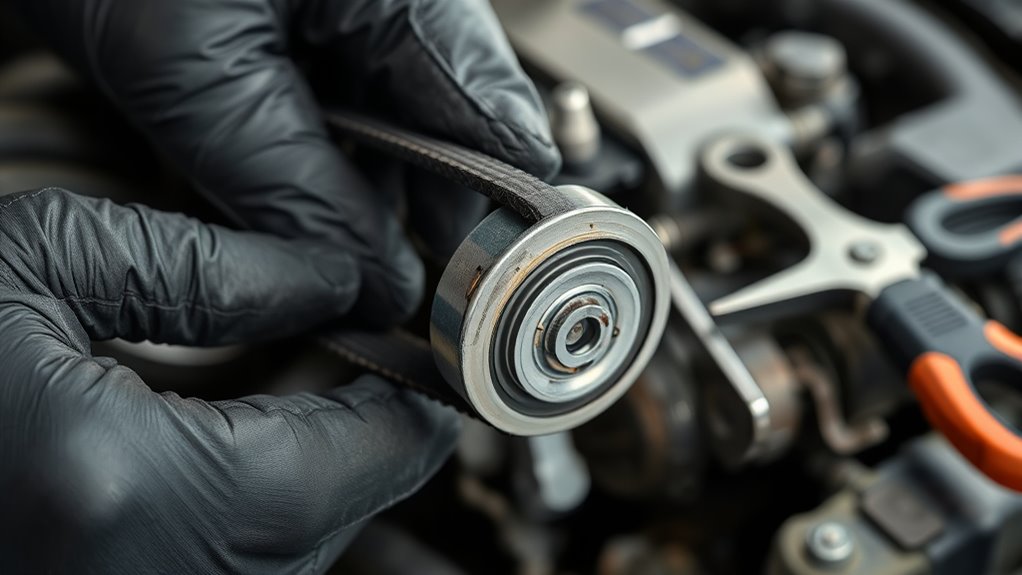
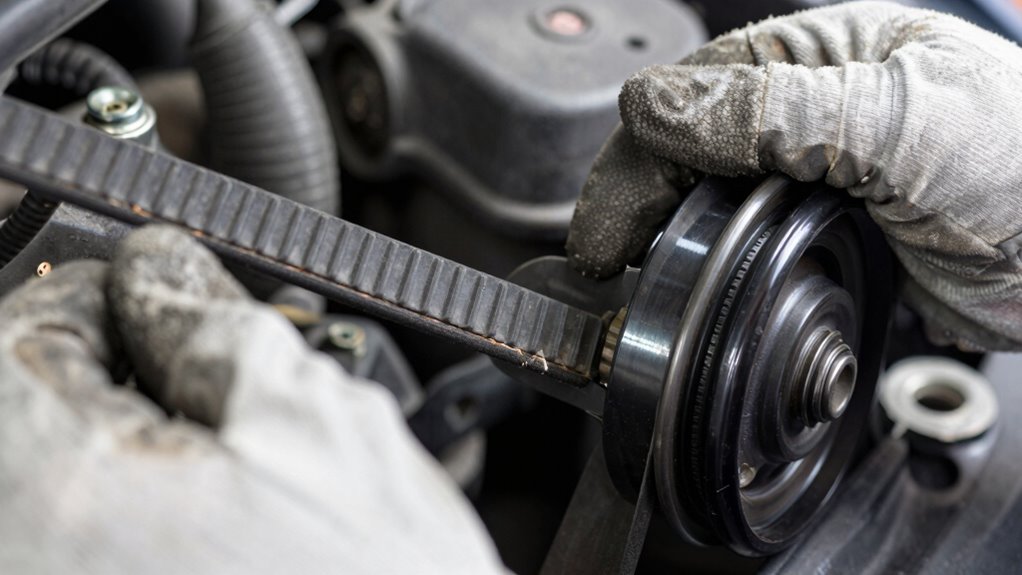
Regular belt and tensioner maintenance is vital for ensuring your vehicle runs smoothly and avoids costly breakdowns. One of the most important tasks you can do is a thorough serpentine belt inspection. This belt drives multiple critical components, such as the alternator, power steering pump, and air conditioning compressor. Over time, the belt can develop cracks, fraying, or glazing, which impair its ability to function properly. During inspection, look for visible signs of wear, such as missing chunks, glossy surfaces, or looseness. If you notice any of these issues, it’s time to replace the belt before it fails completely, which could leave you stranded or cause engine damage.
Regular belt inspection prevents breakdowns and keeps your vehicle running smoothly.
Alongside inspecting the serpentine belt, paying attention to the tensioner pulley is vital. The tensioner maintains proper tension on the belt, preventing slipping or squealing. If the tensioner pulley becomes worn or damaged, it can cause the belt to slip or misalign, reducing the efficiency of your vehicle’s systems. During inspection, check for signs of wear on the pulley’s bearing, such as wobbling or unusual noises when spinning it by hand. If the pulley feels loose or exhibits any grinding sounds, it’s a sign that tensioner pulley replacement is needed. Replacing the tensioner pulley promptly can prevent further damage to the belt or other engine components.
When replacing the tensioner pulley, it’s best to do it as part of a complete serpentine belt replacement if the belt shows signs of wear. A new belt paired with a worn tensioner pulley can lead to premature belt failure. During the replacement process, make sure to release the tension properly, follow your vehicle’s specific procedure, and double-check that the belt is correctly aligned on all pulleys. Proper tension is vital; too tight can strain components, while too loose allows slipping. Additionally, using proper tools and techniques ensures a safe and effective replacement process. Being aware of engine component roles can also help in diagnosing issues early and maintaining overall system health. Regular inspections also help you understand belt wear patterns, which can indicate underlying problems before failure occurs.
Maintaining your belt and tensioner isn’t just about replacing parts when they break. Regular inspections help catch issues early, saving you money and preventing inconvenient breakdowns. By staying vigilant about serpentine belt inspection and promptly replacing worn tensioner pulleys, you guarantee your vehicle’s systems operate smoothly and efficiently. Keeping these components in good shape prolongs their lifespan, maintains engine performance, and keeps you safe on the road. Don’t overlook these simple maintenance steps—your vehicle depends on them. Additionally, understanding the role of contrast ratio in your engine’s components can help optimize performance and longevity. Regularly checking tensioner pulley wear can extend the life of your serpentine belt and improve overall engine reliability.
Products Worth Considering

DEWALT 20V MAX XR Impact Driver, 1/4 Inch High Torque Brushless 3-Speed Cordless with LED Light, Extended Runtime (DCF845B)

VIOFO A229 Pro 4K HDR Front and Rear Dash Cam

Autel Home EV Charger up to 50A J1772 Hardwired Level 2 Charger with 25 ft Cable
As an affiliate, we earn on qualifying purchases.
Frequently Asked Questions
How Often Should I Check My Belt and Tensioner?
You should check your belt and tensioner every 6,000 to 10,000 miles or during your regular inspection schedule. It’s important to look for signs of wear like cracks, fraying, or looseness. Usually, replacement intervals are every 60,000 to 100,000 miles, but always follow your vehicle’s manual. Regular inspections help catch issues early, preventing breakdowns and costly repairs down the line.
Can a Worn Belt Cause Engine Overheating?
A worn belt can definitely cause engine overheating. As the belt material deteriorates, it may slip or break, disrupting the tensioner design and causing overheating due to the failure of essential components like the water pump or radiator fan. You might not notice the signs immediately, but neglecting this can lead to serious engine damage. Keep an eye on your belt’s condition to prevent that suspenseful, costly breakage.
What Are Signs of a Failing Tensioner?
You’ll notice a failing tensioner if it makes noise, like squealing or rattling, especially when the engine is running. You might also see belt cracking or fraying around the tensioner pulley. These signs indicate the tensioner isn’t maintaining proper tension, risking belt slippage or failure. Address these issues promptly to prevent more serious engine problems, and consider replacing the tensioner when these signs appear.
Are There Different Belts for Specific Vehicle Models?
Yes, there are different belt types for specific vehicle models. You should check your vehicle’s compatibility before purchasing, as different models require particular belts based on engine design and specifications. Always refer to your owner’s manual or consult with a mechanic to guarantee you select the right belt for your vehicle. Using the correct belt type helps maintain peak performance and prevents potential damage to your engine components.
Is It Safe to Drive With a Loose Belt?
Driving with a loose belt is like inviting chaos into your engine; it’s unsafe and can cause severe damage. Belt safety is essential, so you should never ignore signs of slack. Regular tensioner inspection helps catch issues early. If your belt feels loose or squeals, replace or tighten it promptly. Don’t risk engine failure—prioritize maintenance to keep your vehicle running smoothly and avoid costly repairs down the line.
Conclusion
Keeping your belt and tensioner in top shape is like tending a delicate rhythm—regular checks assure smooth sailing. When you notice cracks, squeals, or slack, it’s time to replace them before disaster strikes. Think of these components as the heartbeat of your engine, pulsing with energy. Stay proactive, listen to your vehicle’s whispers, and keep everything running seamlessly. With proper maintenance, you’ll enjoy a steady, reliable ride, free from unexpected stalls or breakdowns.