The EGR system in your transit diesel engine helps lower harmful emissions by recirculating some exhaust gases back into the intake, reducing combustion temperatures and NOx emissions. To keep it functioning well, you need to regularly check and clean the EGR valve, cooler, and passages, as deposits can cause issues over time. Proper maintenance ensures your engine runs efficiently and meets environmental standards. Keep going to find out more about keeping your system in top shape.
Key Takeaways
- The EGR system reduces nitrogen oxide emissions by recirculating exhaust gases into the intake, lowering combustion temperatures.
- Regular maintenance, including cleaning the EGR valve and passages, prevents clogging and maintains system efficiency.
- Components like the EGR cooler and sensors should be inspected and tested regularly for proper function.
- Proper EGR system upkeep improves engine performance, fuel efficiency, and helps meet environmental emission standards.
- Signs of malfunction include rough idling, warning lights, and decreased performance, indicating the need for inspection or repairs.
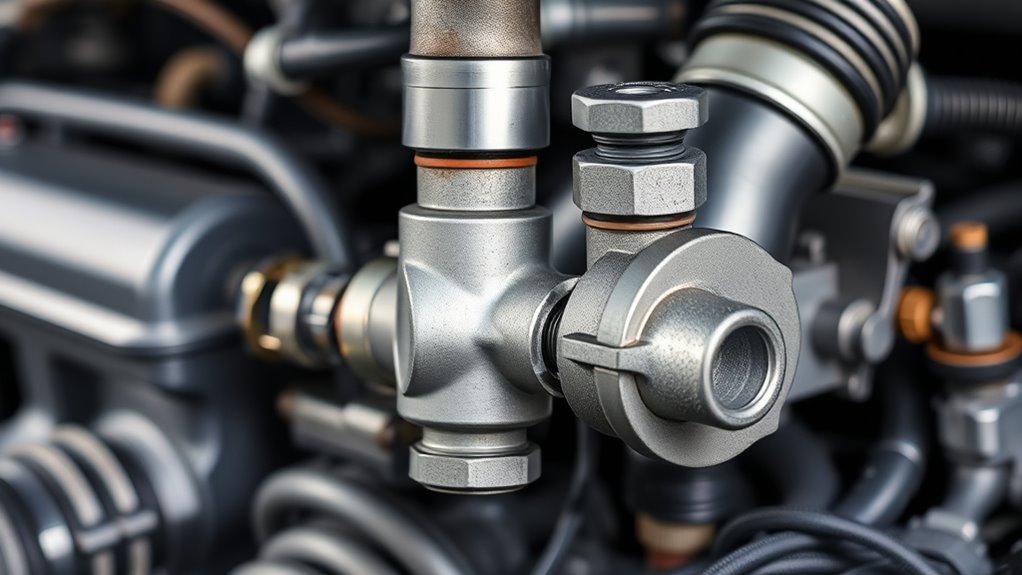
Ever wondered how Transit Diesel engines reduce harmful emissions while maintaining performance? The key lies in the Exhaust Gas Recirculation (EGR) system, a critical technology designed to minimize pollutants like nitrogen oxides (NOx). When your vehicle runs, combustion produces these NOx gases, which are harmful to both the environment and public health. The EGR system helps by redirecting a portion of exhaust gases back into the engine’s intake manifold, effectively lowering combustion temperatures. This process reduces the formation of NOx emissions without sacrificing the engine’s power or efficiency. By doing so, the system guarantees that your transit vehicle adheres to strict emission standards while still delivering reliable performance.
Maintaining your EGR system is indispensable to keep your diesel engine running smoothly and environmentally friendly. Over time, carbon deposits and soot can accumulate within the EGR valve and passages, leading to clogging and impaired function. When this happens, you might notice a drop in engine performance, rough idling, increased fuel consumption, or even engine warning lights. Regular inspection is essential; checking for signs of carbon buildup and cleaning or replacing components as needed can prevent larger issues down the line. Many mechanics recommend cleaning the EGR valve every 50,000 to 75,000 miles, but this can vary depending on driving conditions and fuel quality. Using high-quality diesel fuel and additives can also help reduce deposit formation, keeping the system cleaner longer.
Another critical aspect of EGR system maintenance involves ensuring that the cooling components, such as the EGR cooler, are functioning properly. The cooler’s job is to bring down the temperature of recirculated gases before they re-enter the engine. If it becomes clogged or leaks, it can cause engine overheating or coolant leaks, which may lead to more significant repairs. Regular checks for coolant leaks, corrosion, or corrosion-related damage help guarantee these components operate efficiently. Additionally, sensors associated with the EGR system should be tested periodically to confirm they’re providing accurate readings to the engine control unit (ECU). Proper system calibration can further optimize emissions and performance.
Faulty sensors can cause the system to malfunction, resulting in poor emissions performance or engine warning lights. In essence, the EGR system plays a fundamental role in balancing environmental responsibility with engine performance. Proper maintenance involves routine inspections, cleaning, and replacing parts when necessary. Keeping your EGR system in good shape not only helps meet emission standards but also extends the lifespan of your diesel engine and improves overall efficiency. By staying attentive to signs of trouble and performing regular upkeep, you guarantee your transit vehicle remains compliant, eco-friendly, and dependable for the long haul.
Frequently Asked Questions
How Does EGR Affect Fuel Efficiency?
You might notice that an EGR system can improve fuel efficiency by reducing nitrogen oxide emissions, which helps your engine run more cleanly. When functioning properly, it recirculates exhaust gases to lower combustion temperatures, making combustion more complete and effective.
However, if the EGR valve is clogged or malfunctioning, it can negatively impact fuel efficiency, causing rough idling, increased fuel consumption, and potential engine performance issues. Regular maintenance keeps it working practically.
Can EGR System Repairs Be DIY?
Yes, you can attempt EGR system repairs yourself if you have basic mechanical skills and the right tools. Start by diagnosing the problem, such as cleaning the EGR valve or replacing a faulty sensor.
Follow your vehicle’s repair manual carefully, disconnect the battery before working, and make certain you wear safety gear.
However, if you’re unsure or the issue is complex, it’s best to consult a professional to avoid further damage.
What Are Signs of EGR System Failure?
In the blink of an eye like a horse-drawn carriage, you’ll notice signs of EGR system failure, such as rough idling, engine stalling, and increased exhaust smoke.
You might also see a check engine light or decreased fuel efficiency. If you hear knocking sounds or notice a persistent smell of fumes, these are signs your EGR system is malfunctioning.
Address these issues promptly to avoid further engine damage.
How Often Should EGR Components Be Inspected?
You should inspect your EGR components every 10,000 to 15,000 miles or at every oil change, whichever comes first. Regular inspections help catch issues like clogging or leaks early, preventing costly repairs.
During these checks, look for soot buildup, damaged hoses, and faulty actuators.
Consistent maintenance guarantees your engine runs smoothly, maintains fuel efficiency, and reduces emissions. Stay proactive to keep your diesel transit performing reliably.
Are There Aftermarket EGR System Options?
Sure, there are plenty of aftermarket EGR system options out there, promising better performance and saving you money. But don’t be fooled—many of these alternatives mightn’t meet the same standards as OEM parts, risking your engine’s health.
Before you upgrade, do your homework, read reviews, and consider consulting a professional. Sometimes, sticking with the original is the smartest choice, despite the tempting allure of cheaper, flashy options.
Conclusion
By understanding and maintaining your EGR system, you’re like a skilled captain steering your transit diesel through smooth, pollution-free waters. Keep it clean and functioning, and you’ll guarantee your engine breathes easy, running efficiently like a well-tuned orchestra. Neglect it, and it’s like throwing a wrench in the gears—causing trouble and pollution to seep in. Take care of your EGR system, and it’ll reward you with a reliable, eco-friendly ride every time.