
To reset the TPMS and learn new sensors on your Ford Transit, start by inflating all tires, including the spare if monitored, to the recommended pressure. Turn the ignition ON without starting the engine, then locate and press the TPMS reset button until the warning light flashes or turns off. Drive at around 20 mph to allow the system to automatically recognize the sensors. For more detailed steps, continue exploring how to guarantee proper calibration and sensor recognition.
Key Takeaways
- Turn ignition on without starting the engine, then press and hold the TPMS reset button until the indicator flashes or turns off.
- Ensure all tires, including the spare if monitored, are properly inflated to recommended pressures before resetting.
- Use the vehicle’s menu or infotainment system to select “Learn Sensors” or “Reset TPMS” if available.
- Drive at approximately 20 mph to allow the system to automatically recognize and learn new sensors.
- For persistent issues, utilize a TPMS scan tool to manually calibrate or program new sensors on the Ford Transit.
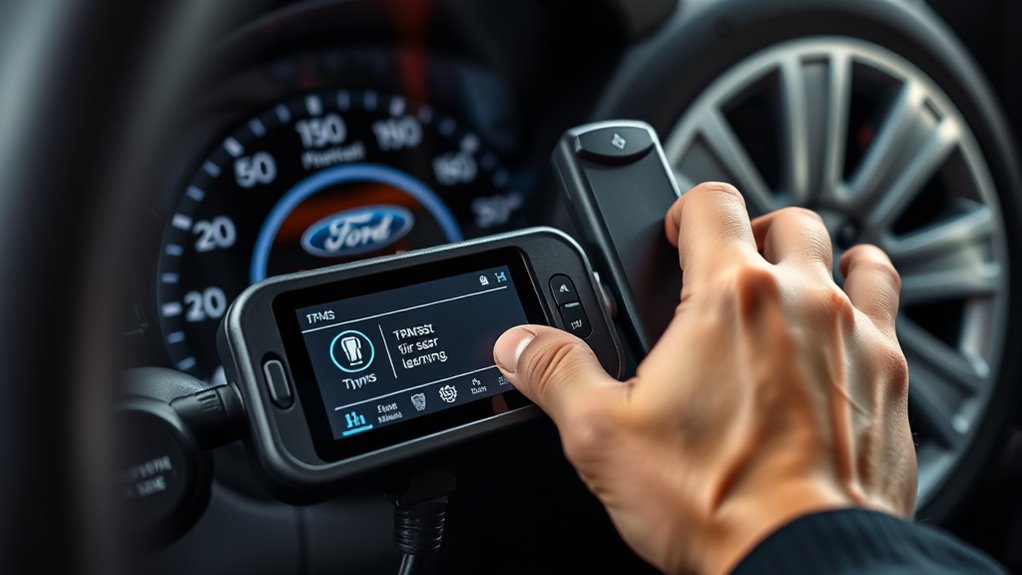
If you’ve recently replaced a tire or your Ford Transit’s tire sensors, resetting the TPMS and teaching the vehicle to recognize new sensors is essential for accurate tire pressure monitoring. Without this step, your dashboard warning lights may stay on, or you might receive false alerts about low tire pressure.
Luckily, the process isn’t complicated, and you can do it yourself with a bit of patience. Start by ensuring that all tires are inflated to the manufacturer’s recommended pressures, including the spare if your Transit monitors it. This helps the system calibrate correctly and prevents unnecessary alerts once the sensors are learned.
Reset the TPMS by ensuring all tires, including the spare, are properly inflated for accurate calibration.
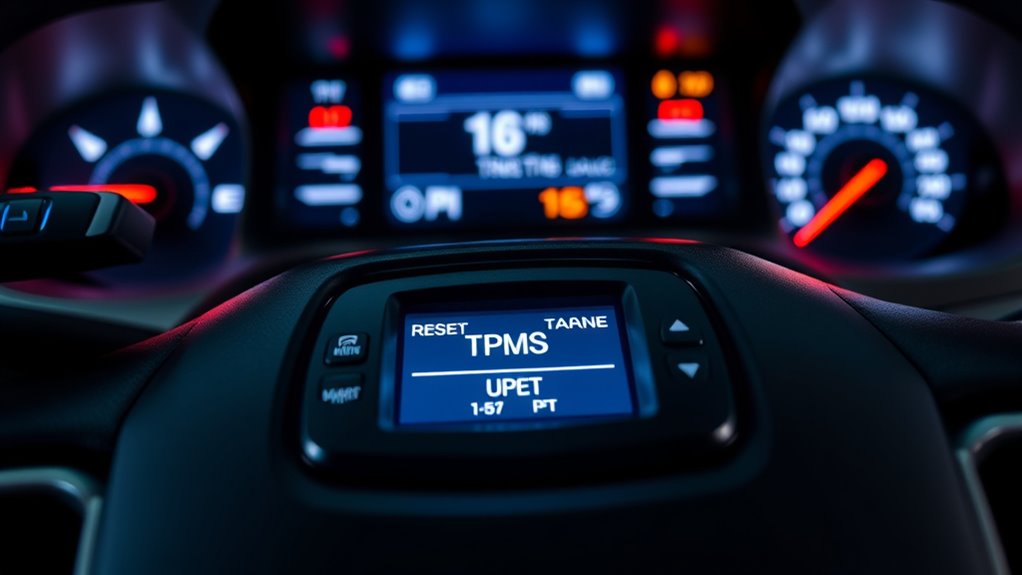
Next, turn on the ignition without starting the engine. You should see the dashboard lights illuminate briefly, confirming the system is powered. Depending on your Ford Transit model, the reset process varies slightly, but generally, you’ll locate the tire pressure reset button.
This button is often found beneath the steering wheel, near the fuse box, or in the glove compartment. Press and hold this button until the TPMS indicator on the dashboard flashes or turns off. This indicates that the system has reset and is ready to learn the new sensors.
If your vehicle is equipped with an infotainment system that supports sensor learning, you might need to access the menu. Use the steering wheel controls or touchscreen to navigate to the vehicle settings, then select the tire pressure or TPMS menu.
Look for an option like “Learn Sensors” or “Reset TPMS,” and follow the prompts. Some Ford Transits require you to drive at a specific speed—usually around 20 mph—to allow the system to recognize the new sensors automatically.
This process can take a few minutes, so keep driving steadily until the warning light turns off or the system confirms the sensors are learned.
In some cases, you may need to manually trigger sensor learning by bringing a new sensor close to the valve stem or by using a scan tool designed for TPMS calibration. Additionally, understanding how paint sprayers work can be useful when performing vehicle maintenance that involves removing wheels or sensors, as keeping tools clean and properly maintained ensures accurate sensor calibration and system functionality.
If you’ve replaced sensors or tires in a shop, ask them if they performed the sensor learning process. For DIY enthusiasts, a TPMS scan tool can make the job easier and more reliable, especially if the vehicle doesn’t respond to the standard reset procedures.
Frequently Asked Questions
How Often Should I Recalibrate My Ford Transit’s TPMS?
You should recalibrate your Ford Transit’s TPMS whenever you change tires, rotate them, or notice the warning light. Additionally, it’s a good idea to check the system if you’ve experienced a significant temperature change or hit a pothole.
Regularly inspecting your tire pressure and resetting the system guarantees accurate readings, which enhances safety and fuel efficiency. Typically, recalibration isn’t needed more than a few times a year unless circumstances demand it.
Can I Reset the TPMS Without Specialized Tools?
Yes, you can reset the TPMS without specialized tools on your Ford Transit. Usually, you can do this by turning on the ignition, pressing the reset button (if available), and holding it until the tire pressure warning light blinks or turns off.
Alternatively, some models automatically reset after driving for a certain distance. Always consult your owner’s manual for specific instructions tailored to your vehicle.
What Are Common Signs of Faulty Tire Sensors?
Faulty tire sensors often act like a lighthouse with a flickering light, confusing your dashboard. Common signs include persistent low tire pressure warnings despite proper inflation, erratic or inconsistent TPMS alerts, and the warning light staying on even after reset.
You might also notice uneven tire wear or difficulty calibrating the system. If these signs appear, it’s time to have your sensors examined and replaced to guarantee your vehicle’s safety and proper functioning.
Does Tire Sensor Learning Differ Between Model Years?
Yes, tire sensor learning can differ between model years on your Ford Transit. Newer models often have advanced systems that require specific procedures or tools for sensor programming.
Older models may permit manual learning or simple resets. Always check your vehicle’s manual or consult a professional to guarantee you’re following the correct process for your specific year and model.
This helps to avoid errors and ensures accurate TPMS functioning.
Are There Risks of Damaging Sensors During Reset Procedures?
Resetting your tire sensors is like handling delicate glass; if you’re not careful, you risk damaging them. During procedures, avoid applying excessive force or using sharp tools, as these can harm the sensors.
Follow the manufacturer’s instructions precisely, and make sure the vehicle is off before starting. If unsure, consult a professional.
Proper care minimizes the chance of damage, keeping your TPMS system functioning correctly and your safety intact.
Conclusion
Now that you’ve learned how to reset your TPMS and teach your Ford Transit’s sensors, you’re ready to tackle any tire warning. Imagine your dashboard as a trusted compass, guiding you safely on every journey. Don’t let a simple sensor hiccup steer you off course—stay proactive and confident in your skills. After all, knowledge is the key that keeps your vehicle’s heartbeat steady and your adventures worry-free.