
Regularly checking belts and hoses in your modern van is essential because they keep your engine running smoothly and prevent costly breakdowns. Over time, heat, vibrations, and fluids cause wear that can go unnoticed, risking engine failure or overheating. Catching issues early can save you money and extend your vehicle’s lifespan. Staying vigilant with routine inspections guarantees reliable performance and can reveal hidden problems before they become serious—if you keep going, you’ll learn more about why this matters.

Get garage and car supplies delivered free — and shop member deals
- Fast, free delivery on millions of items
- Access to Prime Big Deal Days deals on October 6–7
- Prime Video, Amazon Music and more included
Key Takeaways
- Belts and hoses are vital for engine and cooling system operation, preventing overheating and breakdowns.
- Wear signs can be hidden; regular checks catch issues early and avoid costly repairs.
- Modern vans still experience rubber degradation from heat and fluids, requiring ongoing inspections.
- Neglecting maintenance increases the risk of engine failure and reduces vehicle lifespan.
- Routine inspections ensure reliable performance and help identify hidden damage before major problems occur.
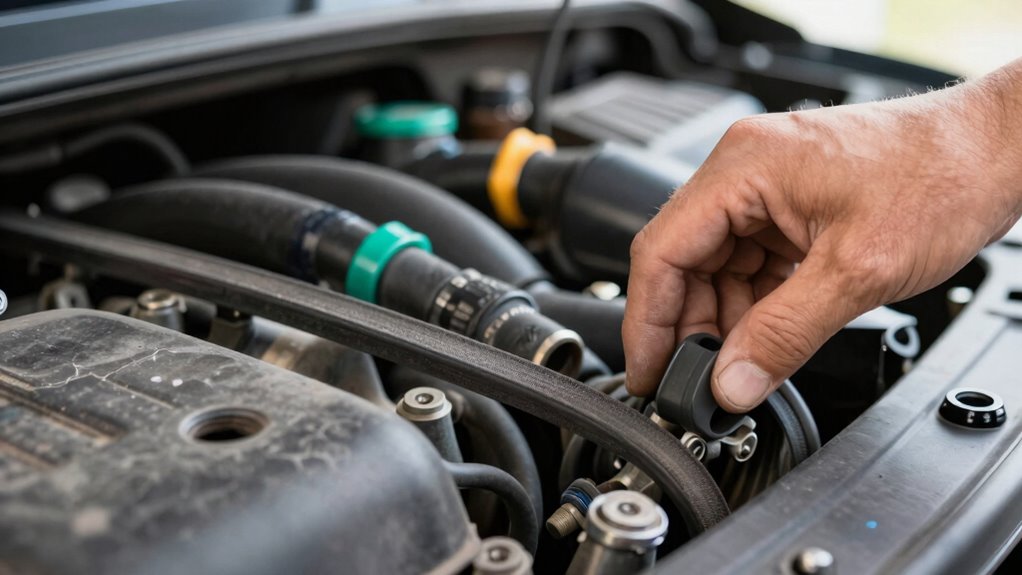
Have you ever wondered how often you should inspect the belts and hoses in your modern van? It’s a common question, especially since many drivers assume that newer vehicles require less maintenance. However, even the most advanced vans rely on belts and hoses to keep everything running smoothly, and neglecting these components can lead to costly repairs or breakdowns. To avoid surprises, it’s imperative to understand the importance of regular inspections within your vehicle’s maintenance schedules and adhere to recommended replacement intervals.
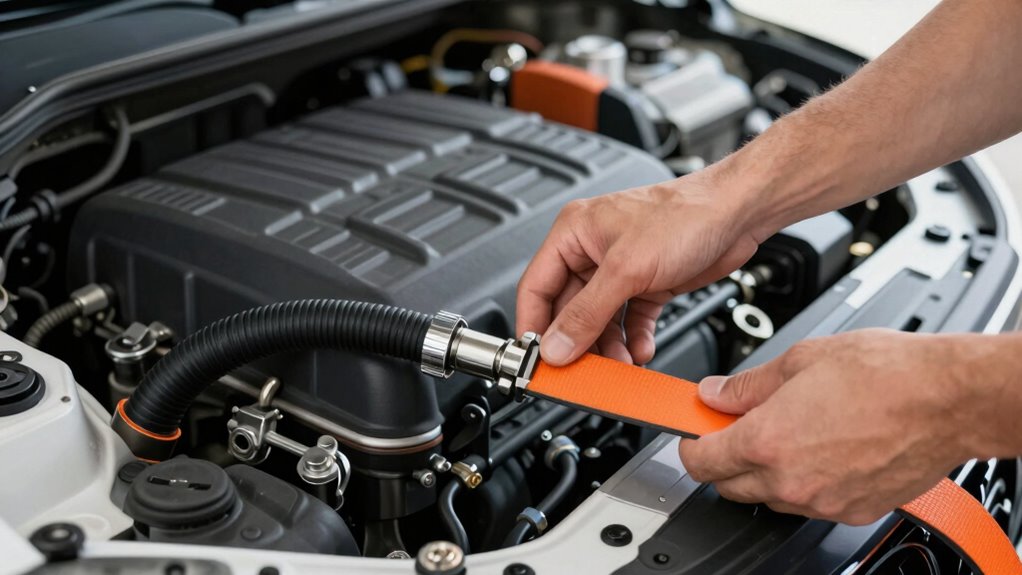
Your van’s belts and hoses are essential parts of its engine and cooling systems. Belts, such as the serpentine belt, drive accessories like the alternator, power steering pump, and air conditioning compressor. Hoses deliver coolant, fuel, and air, ensuring your engine operates efficiently. Over time, these parts wear out from heat, vibration, and exposure to engine fluids. Cracks, fraying, or leaks can develop, often without obvious warning signs. That’s why regular checks are imperative—they help catch issues early before they escalate into engine failures or overheating. Additionally, rubber degradation can occur even without visible signs, making routine inspections crucial. This ongoing wear underscores the importance of staying vigilant beyond just following the vehicle’s maintenance schedule. Regular inspections also help identify hidden issues that might not be immediately apparent but could cause major problems later. Proper understanding of these factors can significantly extend the lifespan of your belts and hoses, preventing unexpected breakdowns.
serpentine belt replacement kit for vans
As an affiliate, we earn on qualifying purchases.
As an affiliate, we earn on qualifying purchases.
Frequently Asked Questions
How Often Should I Replace Belts and Hoses in My Van?
You should replace belts and hoses in your van every 60,000 to 100,000 miles or every 4 to 6 years, depending on your driving habits. Regular inspections are essential; check belt material for cracks and wear, and verify hose flexibility to prevent leaks. If you notice any signs of deterioration, replace them promptly to avoid breakdowns. Staying proactive keeps your van running smoothly and avoids costly repairs.
Are There Signs That Indicate a Belt or Hose Is Failing?
Think of your belts and hoses like the veins and arteries of your van—crucial for its health. Signs of failure include cracks, fraying, or leaks, often visible on belt material and hose material. If a belt feels brittle or a hose is soft and swollen, replace them promptly. Ignoring these signs can cause breakdowns, much like ignoring warning symptoms can lead to serious health issues.
Can I Check Belts and Hoses Myself or Need a Mechanic?
You can definitely perform a DIY inspection of belts and hoses if you’re comfortable, but for thorough checks or if you notice signs of damage, it’s best to see a professional for servicing. Regular visual inspections help catch issues early, while a mechanic can guarantee everything’s in top shape with expert tools. Balancing DIY checks with professional servicing keeps your van running smoothly and prevents unexpected breakdowns.
What Tools Are Needed for Inspecting Belts and Hoses?
You don’t need fancy tools for a visual inspection of belts and hoses—just your eyes and a flashlight. Look for cracks, leaks, or fraying. For a more detailed check, grab a wrench or pliers to gently test tension or loosen clamps. These simple tools help you spot issues early, saving you from unexpected breakdowns. Who knew that a basic flashlight and a couple of hand tools could save your day?
Do Modern Vans Require Different Belt and Hose Maintenance?
Modern vans still require regular belt and hose maintenance, but the focus shifts slightly. You should pay attention to belt material, making certain it’s flexible and free of cracks, and check hose durability, looking for leaks or bulges. While materials have improved, age and wear still impact performance. Regular inspections help catch issues early, preventing breakdowns, and guarantee your van’s systems stay reliable for daily use.
As an affiliate, we earn on qualifying purchases.
Conclusion
Even in modern vans packed with advanced technology, regular belt and hose checks remain essential. Imagine a delivery van breaking down unexpectedly because a worn-out serpentine belt failed—disrupting schedules and costing money. Staying proactive with routine inspections can prevent such surprises, keeping your van running smoothly. Don’t overlook these simple checks; they’re your first line of defense against costly breakdowns and guarantee your vehicle stays reliable on the road.
engine belt and hose inspection tools
As an affiliate, we earn on qualifying purchases.
As an affiliate, we earn on qualifying purchases.
van maintenance belt and hose check
As an affiliate, we earn on qualifying purchases.
As an affiliate, we earn on qualifying purchases.
Halloween Picks
halloween
As an affiliate, we earn on qualifying purchases.