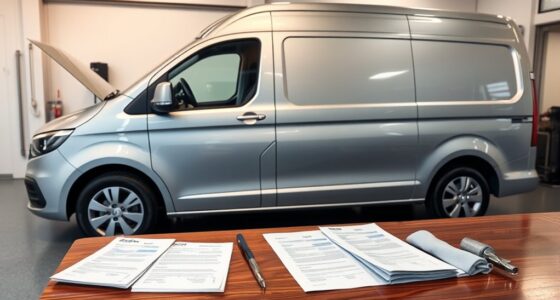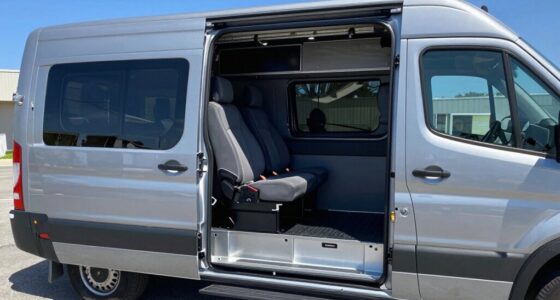
Choosing between commercial and personal van use affects your insurance coverage, premiums, and legal requirements. If you use your van for business or transporting goods, you need a commercial policy, which usually costs more but offers broader protection. On the other hand, personal use policies are cheaper and suited for everyday errands. Making the right choice guarantees you’re properly covered and avoids claim issues—continue to find out how your van’s purpose impacts your insurance choices.
Key Takeaways
- Commercial van use requires broader coverage and typically results in higher insurance premiums than personal use.
- Misclassifying your van’s use can lead to claim denials or policy invalidation.
- Personal policies usually cover basic risks, while commercial policies include cargo and business-related risks.
- Proper use classification ensures compliance with legal standards and appropriate coverage.
- Fleet management of multiple vans increases risk exposure, affecting insurance costs and coverage options.

When choosing van insurance, understanding whether you plan to use your van for personal or commercial purposes is essential, as it directly impacts the coverage you need. If you’re managing a business that relies on multiple vans, effective fleet management becomes a key consideration. Fleet management involves coordinating vehicle operations, maintenance, and driver behavior to optimize efficiency and reduce costs. Insurance premiums play a significant role here; commercial policies tailored for fleet management often come with different rates compared to personal policies. These premiums are usually higher because commercial use increases the risk exposure, especially when multiple vehicles are involved. Knowing how you’ll be using your van helps you select the right coverage and avoid overpaying for unnecessary features or underinsuring yourself.
For personal use, your van is primarily for commuting, errands, or leisure activities. Insurance for personal use tends to be simpler and more affordable because the risk of accidents is generally lower. Your policy might include basic coverage like third-party liability, fire, and theft, which are sufficient for everyday driving. Since you’re not transporting goods or passengers for profit, the insurance company perceives less risk, resulting in lower premiums. Additionally, personal policies often have fewer restrictions, offering flexibility for occasional use of the van for weekend trips or family outings. Furthermore, some policies may exclude commercial activities to ensure the coverage remains appropriate for personal use. Understanding the differences in coverage can help you make informed decisions and avoid potential gaps in your insurance.
On the other hand, if you intend to use your van for commercial purposes, your insurance needs change considerably. Commercial van insurance covers a broader range of risks, including the transportation of goods, tools, or passengers. It often includes higher liability limits and may require additional coverages like cargo insurance or roadside assistance tailored for business use. Commercial policies also account for factors like the number of drivers, the nature of the business, and the vehicle’s usage patterns, which influence insurance premiums. Because commercial activities inherently carry more risk—such as frequent stops, deliveries, or carrying valuable cargo—your premiums tend to be higher than personal policies. Properly categorizing your van use guarantees you’re protected without overspending, and it also helps prevent potential issues with claims if your insurer finds you’ve misrepresented your usage. Being aware of vehicle classification and how it affects insurance is crucial for accurate coverage. Additionally, understanding insurance requirements specific to commercial vehicles can ensure you remain compliant with legal standards and avoid penalties.
Frequently Asked Questions
Can I Switch Between Commercial and Personal Van Insurance Easily?
Yes, you can switch between commercial and personal van insurance, but it usually isn’t instant. You’ll need to update your insurance policy and understand the coverage differences. Contact your insurer to clarify the process and any potential costs. Keep in mind, your policy must match your van’s primary use to avoid issues during claims. Switching is straightforward if you communicate clearly and follow your insurer’s procedures.
Are There Discounts for Combining Commercial and Personal Policies?
Yes, you can often find discounts for combining commercial and personal policies, like hitting two birds with one stone. Policy bundling and multi-policy discounts reward you for consolidating your insurance needs, saving you money. When you bundle, insurers see you as a lower risk, which can lead to lower premiums. Always ask your provider about these discounts—they’re a smart way to keep costs down while protecting all your vehicles.
How Does Your Driving History Impact Commercial vs. Personal Van Insurance?
Your driving history substantially impacts both commercial and personal van insurance. A clean driving record and no accident history can help you secure lower premiums and better coverage, regardless of van use. Conversely, past accidents or traffic violations raise your risk profile, leading to higher rates. Insurers see safe drivers as less risky, so maintaining a good driving record benefits you in both commercial and personal insurance policies.
What Documents Are Needed to Prove Commercial Use for Insurance?
Think of your documents as keys revealing your insurance’s true value. To prove commercial use, you’ll need business documentation like registration, licenses, and permits, along with usage proof such as invoices, delivery logs, or contracts. These papers serve as a clear map guiding insurers through your van’s purpose, ensuring they see your commercial activities clearly. Keep them handy; they’re essential for reliable coverage and peace of mind.
Does Commercial Van Insurance Cover Personal Use Trips?
Commercial van insurance typically doesn’t cover personal use trips due to business restrictions and insurance exclusions. If you take personal trips in a commercial policy, you risk losing coverage or facing denied claims. To avoid issues, always check your policy details and consider a personal or mixed-use policy if you frequently switch between business and personal driving. This guarantees you’re protected and compliant with your insurance coverage.
Conclusion
So, whether you’re hauling for business or just weekend DIY projects, remember—your van’s use type can dramatically shift your insurance costs. It’s almost poetic how a simple switch from personal to commercial can turn a modest premium into a hefty expense. Ironically, what seems like a small decision can have a big financial impact. So, choose wisely—you never know when that minor change might just lead to a major surprise on your next renewal.