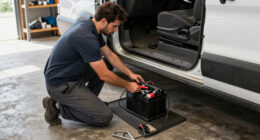

Electrical gremlins like shorts and blown fuses often come from battery corrosion or damaged wiring, which can disrupt circuits and cause instability. Regularly inspect your battery terminals for corrosion and clear any buildup with baking soda and water. Check wiring for frays or loose connectors, and replace damaged parts promptly. Addressing these issues early helps prevent further damage and keeps your transit running smoothly. Keep watching to uncover more about troubleshooting and preventing these electrical problems.

Get business pricing on garage and car supplies
- Business-only prices and quantity discounts
- Tax-exempt purchasing
- Multiple users, one account, clear invoices
Key Takeaways
- Regularly inspect and clean battery terminals to prevent corrosion that can cause shorts and blown fuses.
- Use a multimeter to check wiring continuity and identify damaged or frayed wires causing electrical faults.
- Look for visible signs of wiring damage, corrosion, or burnt smells indicating potential short circuits.
- Replace damaged wiring harnesses and ensure all connections are tight and properly insulated.
- Conduct systematic troubleshooting early to prevent severe damage and maintain reliable vehicle electrical performance.
Ever experienced strange electrical glitches that seem to appear out of nowhere? If so, you’re not alone. Electrical gremlins like these often stem from issues like battery corrosion or faulty wiring harnesses. Understanding these common culprits can help you troubleshoot and fix the problems more effectively, saving you time and frustration.
Battery corrosion is a frequent cause of electrical anomalies. It happens when the battery terminals develop a white or bluish-green buildup of oxidation. This corrosion interferes with the electrical connection, causing inconsistent power flow to your vehicle’s systems. You might notice flickering lights, erratic sensor readings, or sudden loss of power. To address this, you need to inspect the battery terminals regularly, especially if your vehicle sits unused for periods. Cleaning off corrosion with a mixture of baking soda and water, then tightening the terminals, can restore proper contact. Applying a protective dielectric grease afterward helps prevent future buildup. Regular maintenance, like inspecting and cleaning battery terminals, can prevent these issues from escalating.
Wiring harnesses are another common source of electrical gremlins. These bundles of wires connect various electrical components, ensuring signals and power reach their destinations. Over time, vibrations, temperature fluctuations, or poor manufacturing can lead to damaged or frayed wires within the harness. When wiring harnesses are compromised, you might experience blown fuses, short circuits, or intermittent electrical failures. Tracing these issues can be tricky because damaged wires may be hidden beneath the insulation. Using a multimeter to check continuity and inspecting the wiring for visible damage are essential first steps. Sometimes, the issue is as simple as a loose connector or a pinched wire. In more severe cases, replacing sections of the harness or the entire assembly might be necessary. Incorporating proper circuit protection measures can help safeguard your electrical system against future gremlins. Additionally, understanding the role of proper insulation can prevent many wiring issues caused by environmental factors. Being familiar with electrical schematics can also make troubleshooting more straightforward.
Electrical gremlins rarely have a single cause; more often, they result from a combination of issues. For instance, corrosion at the battery terminals can put extra strain on the wiring harness, increasing the likelihood of shorts. Regular maintenance, like inspecting and cleaning battery terminals and checking wiring connections, can help prevent these problems from escalating. Keep an eye out for signs like corrosion buildup, frayed wires, or burnt smells near electrical components. Addressing these issues early prevents more severe damage, such as melted wiring or electrical fires. Recognizing the importance of preventive measures can save you time and money in the long run.
In addition, understanding the importance of color accuracy in your vehicle’s electrical system can help diagnose underlying issues that affect overall performance. Addressing and maintaining these aspects ensures your vehicle remains reliable and safe.
In the end, tackling electrical gremlins requires a methodical approach. Start with basic inspections, keep connections clean, and replace damaged wiring as needed. By proactively maintaining your vehicle’s electrical system, you’ll reduce the chances of chasing shorts and blown fuses, ensuring your transit runs smoothly and reliably.
Products Worth Considering

Vantrue S1 Pro DMS 2.7K Dash Cam with Front and Interior Recording

Milwaukee M18 Impact Wrench BT 2863-20

Autel MaxiCOM MK808S Bidirectional Automotive Diagnostic Scanner
As an affiliate, we earn on qualifying purchases.
Frequently Asked Questions
How Can I Prevent Future Electrical Gremlins in My Transit?
To prevent future electrical gremlins, you should regularly perform battery maintenance to guarantee your power source stays reliable. Additionally, consider wiring upgrades to replace old or damaged cables, reducing the risk of shorts. Keep an eye on your electrical system, fix issues promptly, and avoid makeshift repairs. Proper maintenance and upgrades help maintain a stable electrical system, minimizing the chances of shorts and blown fuses down the road.
What Tools Are Best for Diagnosing Electrical Shorts?
Did you know that nearly 60% of vehicle electrical issues are caused by shorts? To diagnose electrical shorts effectively, you should use a multimeter for testing voltage and continuity. Combine this with thorough wiring inspection, checking for damaged insulation or loose connections. These tools help you quickly identify problem areas, preventing further gremlins from causing unpredictable failures. Regular use keeps your transit running smoothly and safely.
Are There Common Wiring Mistakes That Cause Frequent Fuse Blows?
Yes, wiring errors and installation faults often cause frequent fuse blows. You might accidentally cross wires, connect the wrong terminals, or leave exposed conductors that create short circuits. Double-check your wiring diagrams, guarantee proper insulation, and verify connections for correctness. Poorly secured connections or incorrect grounding can also lead to electrical issues. Carefully inspecting your wiring for these common mistakes can help prevent future fuse blows and keep your transit running smoothly.
How Often Should I Inspect My Vehicle’s Electrical System?
Think of your vehicle’s electrical system as a living garden that needs regular tending. You should inspect it at least every 3 to 6 months, focusing on wiring inspections and battery maintenance. Regular checks help catch issues before they become costly problems, like shorts or blown fuses. Stay proactive to keep your transit running smoothly and avoid surprises on the road. Consistent care is your best defense.
What Safety Precautions Should I Take When Working With Vehicle Electricals?
When working with vehicle electricals, you should always prioritize safety. Wear protective gear like gloves and eye protection to guard against sparks or short circuits. Always disconnect the battery before beginning any work to prevent accidental shocks or fires. Confirm the vehicle is turned off, and avoid working near moving parts. Handling batteries carefully and following proper procedures helps prevent injuries and damage to your vehicle’s electrical system.
Conclusion
As you hunt down those elusive shorts and blown fuses, remember—every clue brings you closer to the root of the problem. But beware, sometimes the gremlins hide where you least expect, waiting to surprise you when you think you’ve got it figured out. Stay alert, keep digging, and don’t let frustration get the best of you. Because just when you think the mystery’s solved, a new glitch might suddenly appear—ready to test your patience again.