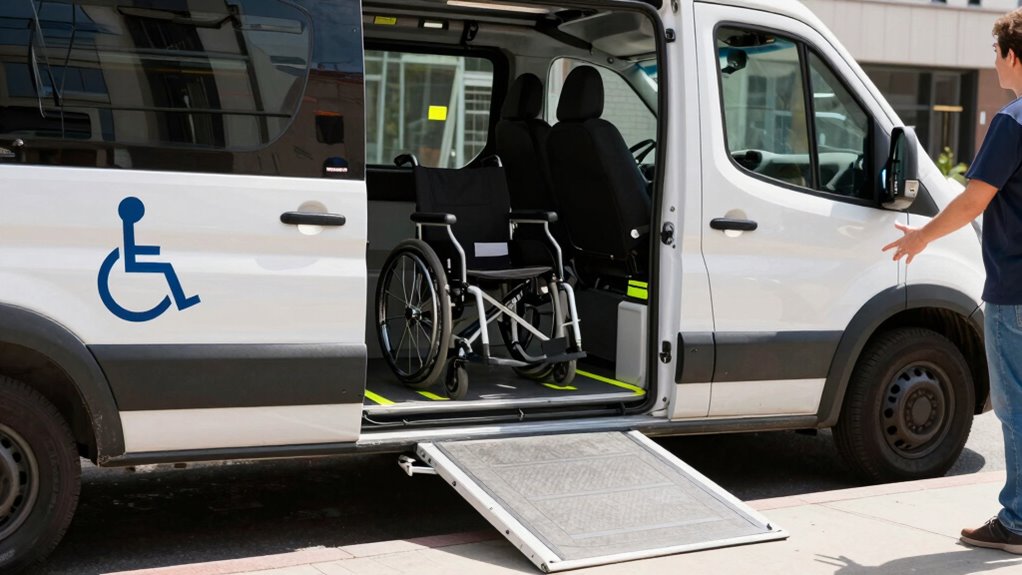

To guarantee your transit vans meet ADA wheelchair accessibility rules, you need to include compliant lifts, securement systems, and proper interior layout. Make sure the lifts are reliable, easy to operate, and meet size and weight capacity standards. Incorporate securement devices that are user-friendly and visibly clear signage. Regular maintenance is key to safety and compliance. Staying on top of these requirements helps provide inclusive, confident transportation options—continue to learn more about making your vans fully accessible.
Key Takeaways
- ADA mandates specific size, weight capacity, and functionality requirements for wheelchair lifts in transit vans.
- Securement systems must accommodate various wheelchair types and be easy for passengers to operate.
- Vans should feature adequate interior space, level flooring, and strategic placement of lifts to ensure accessibility.
- Regular maintenance and safety inspections are essential to maintain ADA compliance and reliable operation.
- Clear signage and instructions improve passenger understanding of lift use and securement procedures.
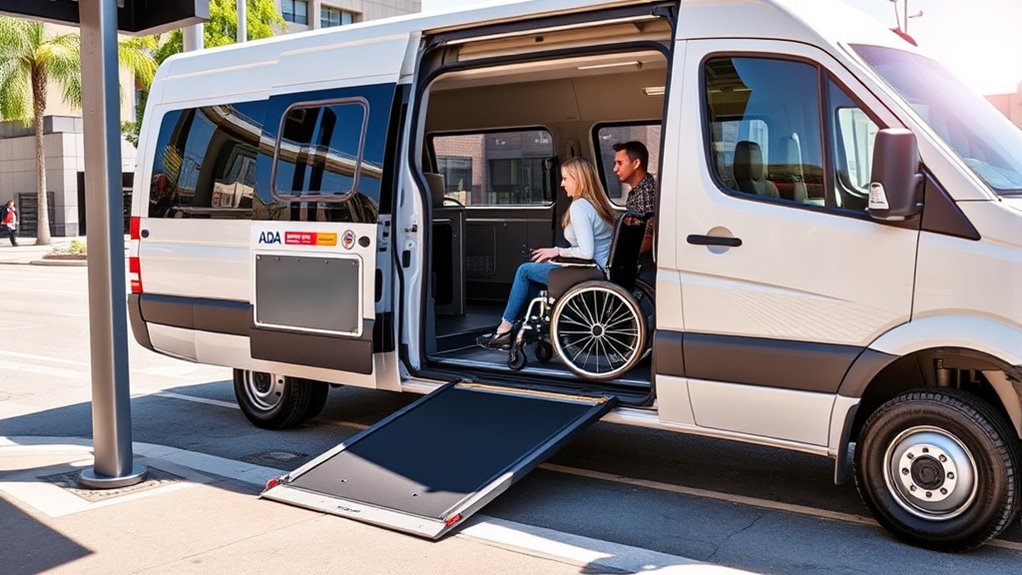
Ensuring ADA compliance for transit vans isn’t just a legal requirement—it’s essential for providing accessible transportation to all passengers. When you prioritize accessibility features, you demonstrate a commitment to serving everyone, including individuals with mobility challenges. A key component of this is installing a reliable wheelchair lift, which allows passengers using wheelchairs or mobility devices to board and disembark safely and efficiently. The wheelchair lift must meet specific size and weight specifications, guaranteeing it can accommodate various mobility aids comfortably. Properly functioning, easy-to-operate lifts reduce barriers, making transit more inclusive and user-friendly.
Prioritize reliable wheelchair lifts to ensure safe, inclusive transit for all passengers.
In addition to the wheelchair lift, you need to incorporate other accessibility features that enhance the overall passenger experience. These include securement systems designed specifically for wheelchairs, which keep users safe during transit. Straps or anchoring devices should be easy to use and capable of holding diverse wheelchair sizes and types securely in place. Clear signage and instructions are also imperative, guiding passengers on how to operate lifts and secure their mobility devices. This helps minimize confusion and guarantees safe boarding and disembarking processes. Ensuring these features meet safety standards from trusted brands can further enhance passenger trust and compliance.
You must also make certain that the interior layout of your transit van provides enough space for wheelchair users to move comfortably. This involves strategically positioning the wheelchair lift and securement areas, so they don’t obstruct aisles or seating. The floor should be level and slip-resistant, reducing fall risks during boarding and transit. Additionally, consider features like low-floor designs, which eliminate the need for lifts altogether, providing easier access for passengers with limited mobility. Incorporating modern accessibility technology can further streamline the boarding process and improve overall safety. Regular maintenance of these systems ensures ongoing reliability, minimizing the risk of malfunction during critical moments and is vital for maintaining compliance with ADA regulations.
Frequently Asked Questions
Are There Specific Size Requirements for Wheelchair Lifts?
Yes, there are specific size requirements for wheelchair lifts. You need to make sure your wheelchair lift dimensions meet the lift size regulations, which typically specify a minimum platform size of 30 inches wide by 48 inches deep for wheelchair accessibility. Check your local regulations, but generally, the lift must comfortably accommodate the wheelchair and user. Always verify your lift’s size complies with ADA standards to ensure safety and accessibility.
How Often Must Wheelchair Lifts Be Inspected and Maintained?
You should inspect and maintain wheelchair lifts regularly, following the inspection schedule recommended by the manufacturer, typically at least once every six months. During each inspection, check for proper operation, wear, and damage. Perform maintenance procedures promptly if any issues arise, such as lubricating moving parts or replacing worn components. Keeping to this schedule guarantees the lift functions safely and complies with accessibility standards, reducing the risk of breakdowns or safety hazards.
Can Non-Compliant Transit Vans Still Operate Legally?
You cannot operate non-compliant transit vans legally, as service exemptions are limited and usually don’t apply to regular passenger services. If you do, you risk legal penalties, including fines and service disruptions. Ensuring your vans meet ADA accessibility standards is vital for compliance and avoiding penalties. Regular inspections and maintenance help keep your vehicles compliant, and ignoring these rules can lead to serious legal consequences.
Are There Financial Assistance Programs for ADA Compliance Upgrades?
Yes, you can access funding sources and grant opportunities to help with ADA compliance upgrades. Many government agencies and private organizations offer financial assistance programs designed to support transit agencies in making their vans wheelchair accessible. You should research local, state, and federal programs, as well as grants specifically aimed at transportation accessibility. Applying for these funding sources can greatly reduce the financial burden of upgrading your transit fleet.
What Training Is Required for Drivers on Wheelchair Passenger Assistance?
You need to complete driver training focused on passenger assistance for wheelchair users. This training teaches you how to safely secure wheelchairs, assist passengers with mobility challenges, and communicate effectively. It’s essential to understand proper procedures to guarantee passenger safety and comfort. By completing this training, you’ll be better prepared to provide accessible, respectful service, fulfilling ADA requirements and enhancing overall transit safety and inclusivity.
Conclusion
Ensuring your transit van meets ADA compliance isn’t just about ticking boxes; it’s about opening doors to everyone who needs them. By following wheelchair accessibility rules, you demonstrate true commitment to inclusivity and safety. Remember, when it comes to accessibility, it’s better to be safe than sorry. Making these adjustments now means you’re not just staying compliant — you’re paving the way for a more welcoming environment where nobody gets left behind.