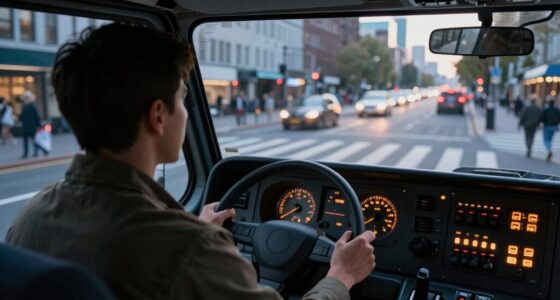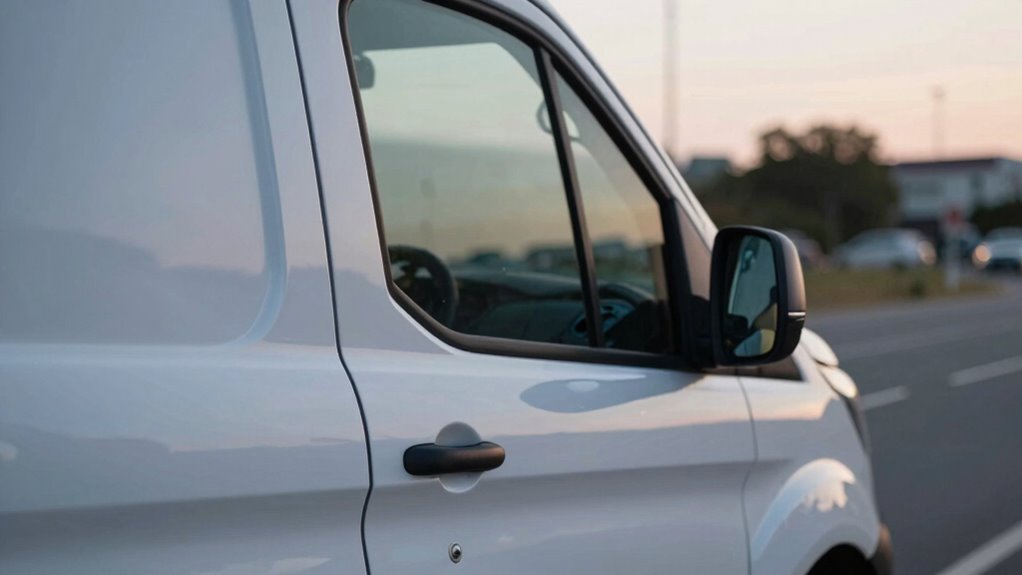
Many Ford Transit drivers underestimate their blind spots’ true size, which can lead to dangerous situations like near-misses or accidents during lane changes. Default mirrors often don’t fully cover these areas, and relying only on blind spot sensors isn’t enough. By adjusting your mirrors properly and understanding the limitations of sensors, you can improve safety. Keep exploring to discover how proper techniques and awareness can make a real difference on the road.

Get business pricing on garage and car supplies
- Business-only prices and quantity discounts
- Tax-exempt purchasing
- Multiple users, one account, clear invoices
Key Takeaways
- Drivers often underestimate the size of blind spots on Ford Transit vans, increasing collision risk during lane changes.
- Default mirror positions may leave blind spots inadequately covered, leading to false confidence in visibility.
- Blind spot sensors can fail or give false alarms, causing drivers to rely less on visual checks.
- Larger-than-expected blind spots on Ford Transit vans require proactive mirror adjustments for safety.
- Continuous driver education on blind spot sizes improves awareness and reduces near-misses and accidents.

Many drivers underestimate the size of the blind spots on Ford Transit vans, which can lead to dangerous situations on the road. These hidden areas are often larger than you think, and failing to recognize this can result in near-misses or accidents, especially when changing lanes or merging. Luckily, Ford has equipped many Transit models with blind spot sensors, designed to alert you when another vehicle enters your blind spots. However, these sensors are only effective if you pay attention to their signals and understand their limitations. Relying solely on technology without proper mirror adjustments can still leave you vulnerable, so it’s vital to optimize your mirrors for maximum visibility.
Proper mirror adjustment and awareness are key to avoiding blind spot accidents on Ford Transit vans.
Mirror adjustments are your first line of defense. Many drivers leave their mirrors in default positions, which often don’t cover the blind spots adequately. To improve your awareness, you should properly set your side mirrors. Start by leaning your head against the driver’s side window and adjusting the left mirror outward until you can just see the side of your van in the mirror’s edge. Repeat this process for the right mirror by leaning to the right and adjusting it outward similarly. This setup minimizes blind spots and gives you a broader view of adjacent lanes, reducing your dependence on blind spot sensors alone.
Blind spot sensors are a helpful addition, but they’re not foolproof. They can sometimes fail to detect smaller vehicles, motorcycles, or objects in adverse weather conditions. That’s why mirror adjustments remain vital. Use your mirrors in conjunction with the sensors to create a thorough awareness of what’s around your van. When a sensor alerts you, don’t immediately assume it’s a mistake; instead, double-check by glancing over your shoulder. Your mirrors, combined with the sensors, give you a more complete picture of what’s around you. Additionally, understanding the limitations of blind spot sensors can help you avoid over-reliance on the technology. Proper maintenance and calibration of these sensors are also essential to ensure they function as intended.
Many drivers make the mistake of relying solely on blind spot sensors, assuming they’re enough. But sensors can be delayed or give false alarms, especially if they’re dirty or misaligned. Remember, technology should augment your driving, not replace your vigilance. Proper mirror adjustments, combined with the use of blind spot sensors, greatly improve your ability to detect and avoid hazards. Being aware of the size of blind spots and actively working to reduce them can make a significant difference in your safety on the road. Regularly understanding the true extent of blind spots can help you make more informed decisions while driving. It’s also beneficial to educate yourself about the impact of blind spot visibility on overall driving safety.
A thorough understanding of these aspects, combined with ongoing driver awareness, can greatly enhance your safety and confidence behind the wheel. In the end, understanding the true size of your blind spots and taking proactive steps to manage them can markedly increase your safety. You need to see more than just what’s in front of you or directly beside you; you need a thorough view. Adjust your mirrors correctly, familiarize yourself with your blind spot sensors, and always stay alert. Doing so will help you navigate safely and avoid the common pitfalls many Ford Transit drivers face due to underestimated blind spots.
Ford Transit side mirror adjustment kit
As an affiliate, we earn on qualifying purchases.
As an affiliate, we earn on qualifying purchases.
Frequently Asked Questions
How Can I Improve My Awareness of Blind Spots in My Transit?
To improve your awareness of blind spots in your Transit, start by properly adjusting your mirrors to minimize blind spots and maximize your view of surrounding traffic. Practice situational awareness by regularly checking mirrors and turning your head to look over your shoulder before changing lanes or merging. This proactive approach helps you stay aware of vehicles in blind spots, reducing risks and increasing your confidence while driving.
Are There Aftermarket Solutions to Detect Transit Blind Spots?
Yes, there are aftermarket solutions like blind spot sensors and cameras that can help. Ironically, some drivers think they don’t need extra tech to spot their blind spots—until they miss a vital lane change. Installing aftermarket cameras offers a clear view, while blind spot sensors alert you before danger strikes. These tools boost your awareness, making blind spots less of a mystery and your driving safer.
How Does the Transit’s Blind Spot Size Compare to Other Vans?
The Transit’s blind spot dimensions are larger than many smaller vans, making visibility enhancement essential. Its extensive blind spots can be challenging to judge, especially during lane changes. Compared to other vans, like Sprinters or ProMasters, the Transit’s blind spots tend to be more significant, so you should consider aftermarket solutions or sensors to improve safety. Awareness of these blind spot sizes helps you stay more alert and avoid potential accidents.
Can Blind Spot Issues Vary Between Different Transit Model Years?
Yes, blind spot issues can vary between different Transit model years. As Ford updates the Transit, they often improve blind spot visibility with better mirrors, camera systems, or design changes. You might find that newer models have reduced blind spots compared to older ones. It is crucial to check specific model year differences, as they directly impact your ability to see around the vehicle, enhancing safety during driving and lane changes.
What Training Techniques Help Drivers Recognize Blind Spot Dangers?
You can improve your awareness of blind spot dangers through effective driver education and by understanding sensor technology. Focus on regular mirror checks and using blind spot monitoring systems actively. Training techniques like simulation exercises and real-world practice help you recognize when other vehicles are in your blind spot. By staying attentive and leveraging sensor technology, you reduce the risk of accidents and increase your confidence on the road.
blind spot mirror for Ford Transit
As an affiliate, we earn on qualifying purchases.
As an affiliate, we earn on qualifying purchases.
Conclusion
You might think the blind spot is just a small shadow behind your van, easy to ignore. But it’s more like a silent threat lurking just beyond your sight, waiting to surprise you. As you drive, imagine that unseen space as a dark tunnel—your awareness is the light guiding you safely through. Stay vigilant, because what you don’t see can change everything in an instant. Keep your eyes open; your safety depends on it.
vehicle blind spot sensor calibration tool
As an affiliate, we earn on qualifying purchases.
As an affiliate, we earn on qualifying purchases.
large blind spot mirror for vans
As an affiliate, we earn on qualifying purchases.
As an affiliate, we earn on qualifying purchases.
Halloween Picks
halloween
As an affiliate, we earn on qualifying purchases.