
When choosing a tankless water heater for your camper, consider the source of power and your environment. Solar-powered units are eco-friendly and ideal for sunny, long-term setups, while traditional electric or gas models offer simplicity and reliable hot water near power sources. Insulation is key to maintaining efficiency in both systems. To make the best choice, you’ll want to weigh these factors carefully—stick around, and you’ll uncover even more tips to optimize your system.

Get business pricing on garage and car supplies
- Business-only prices and quantity discounts
- Tax-exempt purchasing
- Multiple users, one account, clear invoices
Key Takeaways
- Decide between solar-powered and conventional tankless heaters based on environmental goals and available power sources.
- Prioritize proper insulation to maintain water temperature in outdoor and variable weather conditions.
- Solar systems are ideal for sunny, long-term remote camping, while traditional units suit power-accessed sites.
- Consider system complexity, installation, and long-term energy costs when choosing the best option.
- Ensure insulation around pipes and tanks to maximize efficiency and reduce heat loss in both systems.
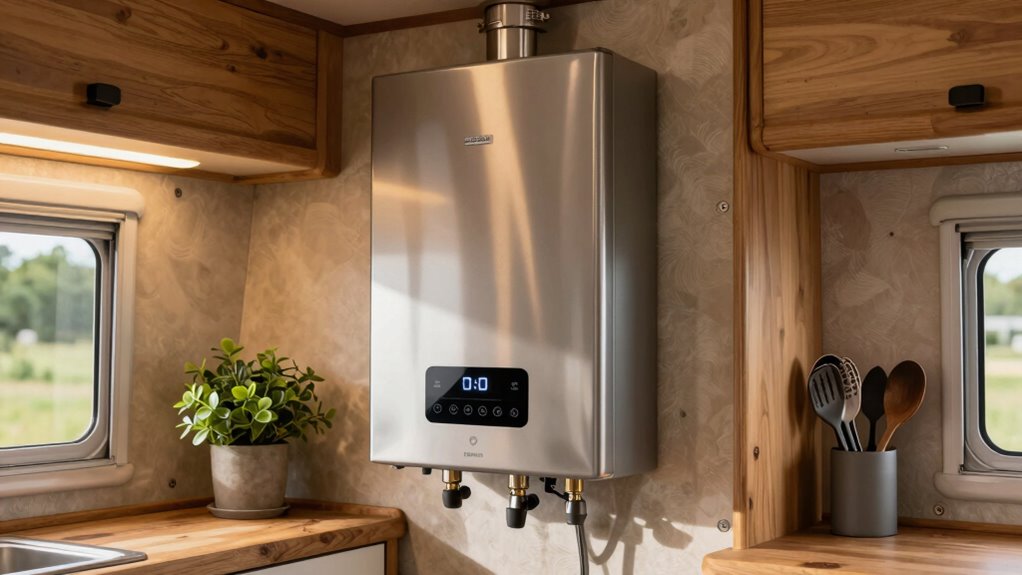
When you’re camping, having a dependable hot water source can make a big difference in comfort and convenience. That’s why many camper builders turn to tankless water heaters—they’re compact, efficient, and ideal for outdoor life. But one common question always pops up: should you choose a solar-powered tankless water heater or stick with a traditional electric or gas model? The answer depends largely on your setup and how much effort you’re willing to put into insulation and energy sourcing.
Solar power offers an appealing, eco-friendly way to heat water, especially if you’re parked in sunny spots or planning to stay long-term. These systems use solar collectors and a tankless unit to produce hot water without relying on batteries or hookups. The advantage is obvious: lower energy costs and a smaller carbon footprint. However, solar-powered systems require good insulation techniques to keep water hot during cloudy days or overnight. Proper insulation around your pipes and storage units minimizes heat loss, ensuring you don’t waste energy reheating water when it cools down. When you’re using solar power, investing in high-quality insulation techniques pays off because it maximizes your system’s efficiency. Additionally, understanding solar energy benefits can help you optimize your setup for maximum performance. Incorporating insulation techniques around your system can significantly improve its efficiency, especially in variable weather conditions. Moreover, selecting the right insulation materials tailored for outdoor use can further enhance energy conservation. Proper planning for energy efficiency is crucial when designing a solar water heating system for camping, ensuring you get the most out of your investment.
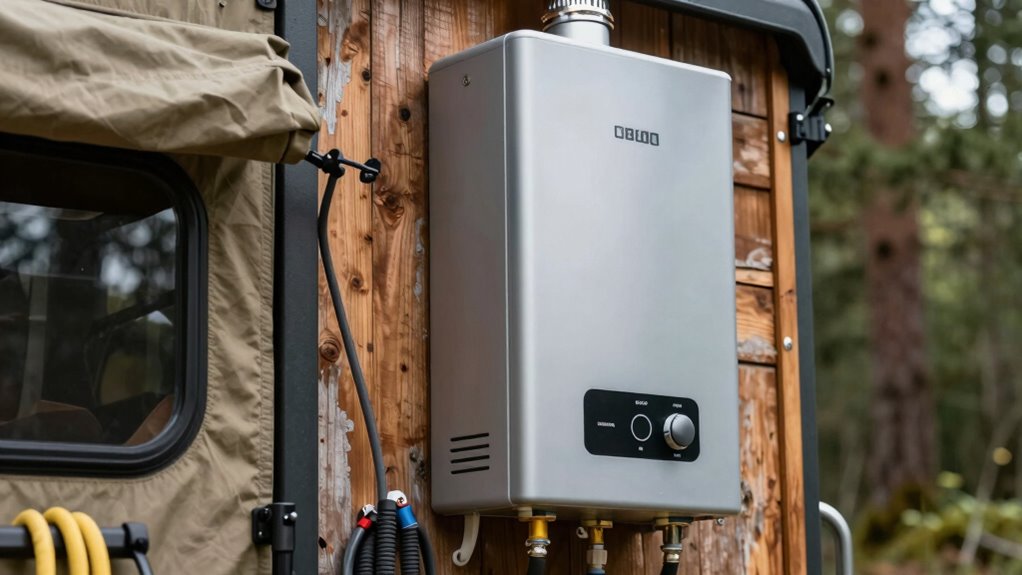
If you prefer a more straightforward approach, traditional electric or propane tankless water heaters can be installed without the need for extensive insulation, but they do rely on external power sources or fuel. These models heat water instantly as you need it, which saves space and reduces energy waste compared to tank systems. Still, they’re less sustainable than solar options, especially if you’re off-grid. To make these more efficient, you can use insulation techniques around the heater and pipes to prevent heat loss, which helps maintain consistent water temperature and reduces energy consumption.
Choosing between a solar-powered or conventional tankless water heater involves weighing convenience, sustainability, and setup complexity. Solar systems are more environmentally friendly, but they demand good insulation techniques and sunny conditions to perform practically. Conventional units are easier to install and operate but may cost more in the long run due to higher energy use. When considering your options, think about your typical camping environment—if you’re often in sunny, remote locations, a solar setup with proper insulation can offer reliable hot water without the need for hookups. Conversely, if you camp near power sources or prefer simplicity, a traditional tankless heater with effective insulation around the pipes and heater can provide reliable hot water without fuss. Either way, focus on insulation techniques to get the most out of your system and keep your hot water flowing comfortably.
Products Worth Considering

Autel 40A Level 2 EV Charger, 240V NEMA 14-50 J1772, WiFi, 25ft Cable

Innova 5610 OBD2 Bidirectional Scan Tool

Chemical Guys 14-Piece Arsenal Builder Car Wash Kit with Foam Blaster
As an affiliate, we earn on qualifying purchases.
Frequently Asked Questions
Can Tankless Water Heaters Handle Freezing Temperatures?
Yes, tankless water heaters can handle freezing temperatures if you meet proper insulation requirements. You should insulate the pipes and the unit itself to prevent freezing, especially in cold climates. Some models have freeze protection features, but relying solely on those isn’t enough. Regularly draining or maintaining the heater during extreme cold can also help prevent damage. Proper insulation is essential for reliable operation in freezing temperatures.
What Is the Typical Lifespan of a Camper Tankless Water Heater?
Think of your camper’s tankless water heater as a seasoned traveler, usually lasting around 20 years if well-maintained. Its energy efficiency keeps it running smoothly, but installation challenges could shorten its lifespan. Regular maintenance helps it withstand the journey, ensuring it stays reliable through the years. With proper care, your heater can serve you well, providing hot water on countless adventures, making every trip more comfortable.
Are There Size Limitations for Installing in Small Campers?
Yes, there are size limitations for installing a tankless water heater in small campers. You need to take into account space constraints carefully, guaranteeing the unit fits comfortably without cramping other essentials. Also, check ventilation requirements, as proper airflow is vital for safety and efficiency. Opt for compact models designed for tight spaces, and always follow manufacturer guidelines to guarantee safe and effective installation in your small camper.
How Do You Maintain and Clean a Camper Tankless Water Heater?
Suppose you notice reduced hot water flow; you should clean your camper tankless water heater. Start by inspecting and replacing water heater filters regularly to prevent buildup. Then, perform descaling procedures using a vinegar solution or descaling kit to remove mineral deposits. This routine maintenance keeps your water heater functioning efficiently, extends its lifespan, and guarantees a consistent hot water supply during your travels.
Can a Tankless Water Heater Provide Hot Water Instantly?
Yes, a tankless water heater can provide hot water instantly, thanks to its on-demand heating system. This boosts energy efficiency by heating water only when needed, reducing waste. However, initial installation costs might be higher compared to traditional units, but the long-term savings on energy bills can make it worthwhile. You’ll enjoy endless hot water with improved energy efficiency, making it a smart choice for your camper.
Conclusion
Choosing a tankless water heater for your camper means you’ll enjoy endless hot water without the bulk of traditional tanks. Did you know that tankless units can be up to 30% more energy-efficient? This efficiency not only saves you money on fuel but also reduces your environmental impact. As a builder, understanding this statistic helps you see the real benefits—more comfort, less waste, and smarter spending—making tankless water heaters a smart choice for your next camper project.