When using jacks and stands on a van, always select equipment rated for your vehicle’s weight and verify it’s in good condition. Place the jack on solid, level ground near manufacturer-recommended lift points, then lift slowly and steadily. Securely set stands underneath reinforced support areas, double-check stability before working underneath, and never rely solely on a jack. Proper setup and safety checks are essential—continue exploring best practices to ensure your lifts are safe and secure.
Key Takeaways
- Always use a hydraulic jack rated for the van’s weight and high-quality stands, never rely solely on the jack.
- Position the jack at manufacturer-recommended lift points on reinforced frame rails or designated zones.
- Lift slowly and steadily, ensuring vehicle stability before crawling underneath, and double-check stand locking mechanisms.
- Maintain proper height and stability throughout the work, adding supports if needed, and avoid uneven jacking.
- Carefully lower the van after work, store equipment properly in dry, secure locations, and regularly inspect for wear or damage.
When working under your van, using jacks and stands properly is vital for safety and stability. You’re putting yourself in a vulnerable position, so guaranteeing your vehicle is secure prevents accidents and injuries.
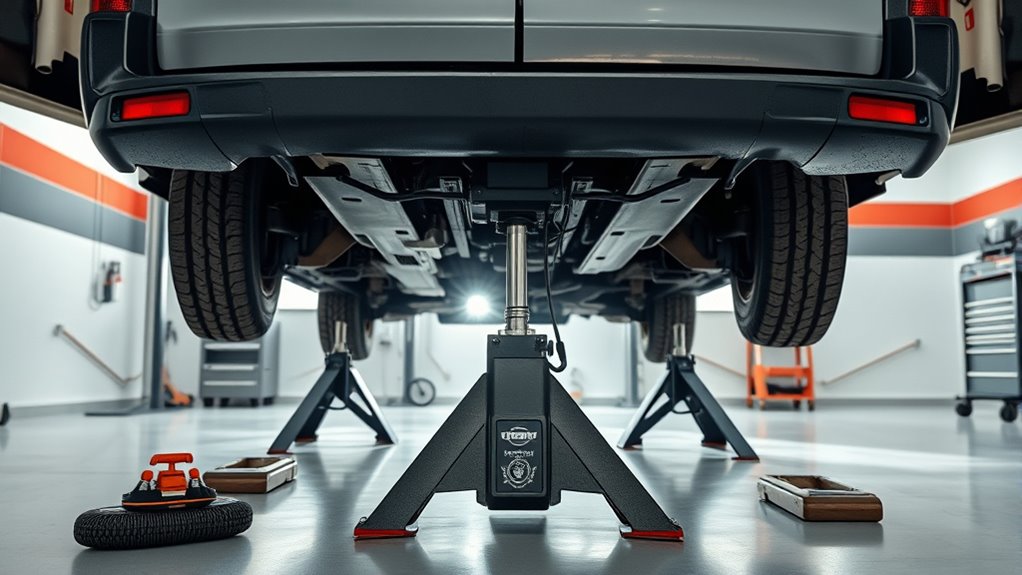
Before lifting your van, make sure you have the right tools—specifically, a sturdy hydraulic jack rated for your van’s weight and high-quality jack stands. Never rely solely on the jack; always support the vehicle with stands once it’s lifted.
Always use the correct hydraulic jack and high-quality stands to ensure safe vehicle lifting.
Place the jack on a solid, level surface, away from cracks or soft ground that could cause slipping. Position the jack at the manufacturer’s recommended lift points, usually marked or outlined on the vehicle’s frame or undercarriage. Using the correct lift points ensures the weight is distributed evenly and prevents damage to the frame or suspension components.
When raising your van, lift it slowly and steadily, paying close attention to any shifting or instability. Never go under the vehicle until you’ve confirmed it’s stable on the stands.
Once the van is at the desired height, position the jack stands directly under sturdy support points, such as reinforced frame rails or designated jack points. Carefully lower the vehicle onto the stands, ensuring they sit flat and securely against the support surfaces. Double-check that the stands are locked into place and stable before crawling underneath. Keep your body clear of the area underneath the van until you’re certain it’s securely supported.
It’s vital to maintain proper height and stability while working. If you need additional height, use additional stands or a thicker, more stable support. Never attempt to jack up your vehicle unevenly or on an incline, as this can cause it to slip or tip. Always use the same type and brand of jacks and stands to guarantee compatibility and safety standards.
Regularly inspect your equipment for signs of wear, rust, or damage. Worn or damaged stands can fail unexpectedly, causing serious injury. Additionally, understanding the importance of proper lifting techniques can significantly enhance your safety during vehicle maintenance.
When you’re finished, carefully raise the van slightly to remove the stands, then lower it slowly onto the ground. Store your jacks and stands in a dry, secure place, away from moisture and corrosive substances.
Frequently Asked Questions
Can I Use Regular Car Jacks for My Van?
You shouldn’t use regular car jacks for your van because they may not support the weight safely or properly. Vans are typically heavier and require specialized jacks designed to handle their load.
Always use a jack rated for your van’s weight and make certain it’s positioned on a stable, flat surface.
For added safety, use jack stands once the van is lifted, and never rely solely on a jack.
How Do I Choose the Right Jack Stand Height?
Choosing the right jack stand height is like fitting the pieces of a puzzle perfectly. First, measure the height from the ground to the lifting point on your van.
Then, select a stand that can comfortably support that height with some extra room for stability.
Always aim for stands that match your van’s weight and height, ensuring they’re rated properly.
Safety first—never compromise on stand strength or size.
Are Hydraulic Jacks Safe for Lifting Vans?
Hydraulic jacks can be safe for lifting vans if you use them properly. Always guarantee the jack is rated for your van’s weight and use it on a flat, stable surface.
Never exceed the jack’s weight limit, and always set jack stands securely before working underneath.
Regularly inspect the jack for leaks, damage, or wear, and follow the manufacturer’s instructions closely to prevent accidents.
What Are Signs of Worn or Damaged Jack Stands?
Your safety depends on recognizing worn or damaged jack stands, which is vital enough to save your life. Look for visible cracks, bends, or rust on the metal. Check the locking mechanism for smooth operation and make certain it holds securely.
If the stand wobbles or collapses under minimal weight, discard it immediately. Never compromise—damaged stands can give way like a house of cards, risking serious injury. Replace them promptly for safe lifting.
How Often Should I Inspect My Jacks and Stands?
You should inspect your jacks and stands before each use to make certain they’re in good condition. Look for signs of wear, cracks, rust, or any damage that could compromise safety.
Regularly check for leaks or misalignment, especially if you use them frequently. It’s also wise to give them a thorough inspection every few months, or more often if you notice any issues.
Staying vigilant helps prevent accidents and ensures your safety.
Conclusion
Now that you know the best practices for using jacks and stands on your van, you’re ready to work safely and confidently. Remember, a solid lift isn’t just about tools—it’s about your safety and peace of mind. So, will you take the time to double-check your setup and make certain everything’s secure before you get under? When you prioritize safety, you turn a simple task into a worry-free job, keeping yourself protected every step of the way.