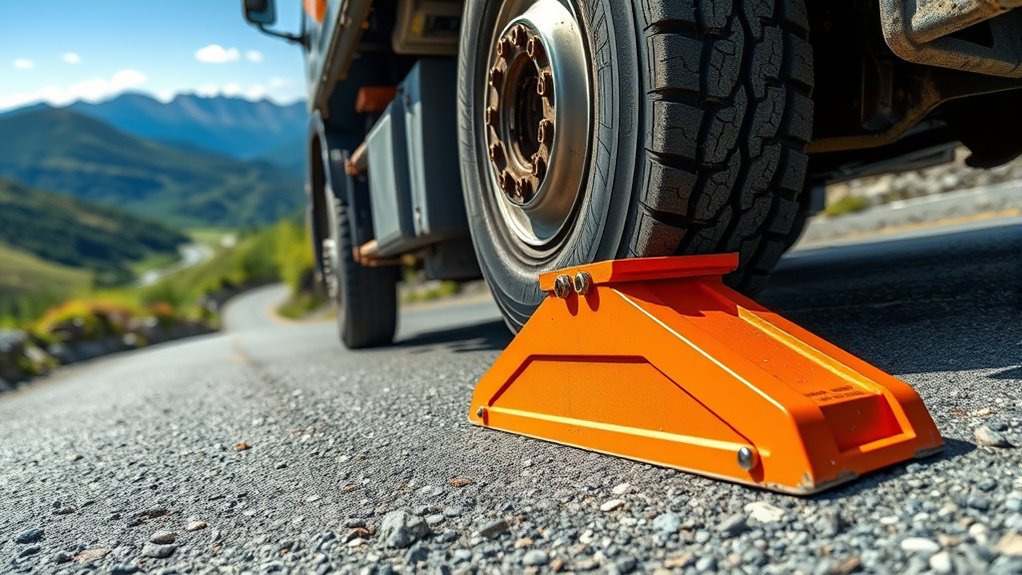
When parking on grades, you should always use wheel chocks to help prevent your vehicle from rolling. Place the chocks snugly against the tires on the downhill side and on both sides if possible for extra security. Remember to engage your parking brake and remove the chocks carefully once you’re ready to leave. Proper placement and regular inspection of chocks are essential for safety, and if you keep going, you’ll discover more tips to guarantee your vehicle stays secure.
Key Takeaways
- Always place wheel chocks snugly against tires on the downhill side for maximum stability.
- Use wheel chocks in conjunction with the parking brake for enhanced safety on slopes.
- Ensure chocks are sturdy, undamaged, and properly positioned before leaving the vehicle.
- Regularly inspect and replace worn or cracked chocks to maintain effectiveness.
- Prefer parking on level surfaces when conditions are hazardous or on icy/wet grades.

Have you ever wondered how to prevent your vehicle from rolling when parked on a slope? It’s a common concern, especially if you park on hilly terrain regularly. The solution is simple but effective: use wheel chocks. Wheel chocks are small blocks, typically made of rubber, plastic, or wood, that you place against the tires to prevent movement. When used correctly, they provide a reliable barrier, ensuring your vehicle stays put even if the parking brake fails or isn’t fully engaged.
Using wheel chocks is an effective way to prevent your vehicle from rolling on slopes.
To maximize safety, position the chocks snugly against the tires, ideally on the downhill side of the wheels, as gravity will pull the vehicle downward. This action helps prevent any unintended rolling in that direction, offering peace of mind.
When selecting wheel chocks, choose ones that are sturdy and suited for your vehicle’s weight. Larger, heavier-duty chocks are better for trucks and larger vehicles, while smaller, lighter chocks work well for cars. Always inspect your chocks regularly for cracks, wear, or other damage, replacing them if necessary.
Proper placement is vital; slide the chocks firmly against the tires, making sure they’re stable and won’t slip out of position. For added security, use chocks on both sides of the tires — front and back — especially on steep grades. This way, even if one chock shifts, the other will help keep the vehicle in place.
In addition to wheel chocks, always engage your parking brake when parking on a grade. The brake provides an extra line of defense, especially on steep slopes. Remember, wheel chocks aren’t a substitute for the parking brake but a supplementary safety measure.
Be cautious in wet or icy conditions, where chocks might slip more easily. In such cases, consider parking on a level surface whenever possible or combining chocks with other safety precautions.
When you’re ready to leave, remove the wheel chocks carefully, ensuring the vehicle is still stable. Don’t rely solely on the chocks; always engage the parking brake and shift into park (automatic transmission) or into gear (manual transmission).
Properly using wheel chocks along with other safety practices minimizes the risk of accidents and protects your vehicle and others around you. Remember, taking a few extra seconds to secure your vehicle on a slope can prevent costly mishaps and give you peace of mind every time you park.

MaxxHaul Solid Rubber Wheel Chock 2-Pack | 8" x 4" x 6" Heavy-Duty Tire Stop | Non-Slip Traction Pads | Built-In Handle | All-Weather Vehicle Safety Block (70472)
Heavy-Duty Solid Rubber Construction – Premium-grade molded rubber resists cracking, crushing, deformation, and weather damage for long-lasting stability…
As an affiliate, we earn on qualifying purchases.
As an affiliate, we earn on qualifying purchases.
Frequently Asked Questions
Are There Specific Types of Wheel Chocks for Different Vehicles?
Yes, there are specific types of wheel chocks for different vehicles. You should choose chocks made from durable materials like rubber or plastic for smaller vehicles.
For larger trucks and trailers, heavy-duty rubber or metal chocks are more suitable.
Make sure the chocks fit the wheel size and are sturdy enough to prevent slipping.
Properly selecting and using the right chocks guarantees safety, especially on inclined surfaces.
How Often Should Wheel Chocks Be Inspected for Wear and Damage?
You should inspect your wheel chocks every time before you use them. Don’t wait for visible damage—look for cracks, chips, or signs of wear that could compromise their strength.
Regular checks help prevent accidents, especially on grades. Skipping inspections could mean failure when you need them most.
Stay vigilant, and make inspection a routine part of your safety process to keep everyone secure.
Can Wheel Chocks Be Used on All Types of Surfaces?
Yes, you can use wheel chocks on most surfaces, but you need to take into account the material. Rubber chocks work well on concrete and asphalt, providing good grip and stability.
On loose gravel or dirt, use chocks with a wider base or those designed for uneven terrain. Always make sure the surface is firm and stable before placing chocks, and replace them if they show signs of wear or damage for safety.
What Are the Legal Requirements for Parking on Grades?
Think of parking on grades as anchoring your ship in shifting waters. Legally, you’re required to set your parking brake and turn your wheels toward the curb or side of the road to prevent rolling.
If your vehicle is parked on a hill, use wheel chocks if available, especially for commercial vehicles.
Always follow local regulations, and if in doubt, err on the side of caution to secure safety and compliance.
How Do Weather Conditions Affect the Effectiveness of Wheel Chocks?
Weather conditions can substantially impact how well wheel chocks work. If it’s rainy, snowy, or icy, the surfaces become slippery, making chocks less effective at preventing movement.
Cold temperatures can cause materials to harden or crack, reducing grip. You should always check the surface condition before parking and consider using additional safety measures like parking brakes or blocks to keep your vehicle secure in adverse weather.

Vergo Industrial Extra Large Wheel Chock 2-Pack – Heavy Duty Molded Rubber XL Wheel Chock for Trucks, Trailers, RVs or Large Freight Equipment – Max Weight Capacity 20 Tons / 40,000 lbs (No Handle)
SAFETY FIRST – Extra-Large 9.8 x 8 x 6" Commercial-Grade Wheel Chocks by Vergo Industrial effectively immobilize vehicles…
As an affiliate, we earn on qualifying purchases.
As an affiliate, we earn on qualifying purchases.
Conclusion
So, next time you park on a slope, don’t forget those wheel chocks — they’re your best friend in disguise. It’s ironic how something so simple can prevent disaster, yet many overlook it. Think of wheel chocks as your silent heroes, working tirelessly behind the scenes. Ignoring them could turn a routine parking job into a costly lesson. Remember, safety isn’t just a suggestion; it’s a smart move that keeps you out of trouble.

ROBLOCK Wheel Chocks (2pair/4pack with Rope) for RV Trailer Camper Truck Car Aircraft, Versatile Heavy Duty Rubber Wheel Chocks Block with 3 Reflective Strips, Tire Wheel Immobilizers & Chocks
Premium Quality: Our wheel chocks are made from durable rubber blocks. Size is 6.3" ×4.3" ×4" providing reliable…
As an affiliate, we earn on qualifying purchases.
As an affiliate, we earn on qualifying purchases.

Speedway Motors Electric Emergency Parking Brake Kit with Cables and Brackets, Universal Push Button Electronic E-Brake Actuator for Disc or Drum Brake Systems
PUSH BUTTON ELECTRIC PARKING BRAKE – Electronic actuator system uses a single latching button to set or release…
As an affiliate, we earn on qualifying purchases.
As an affiliate, we earn on qualifying purchases.