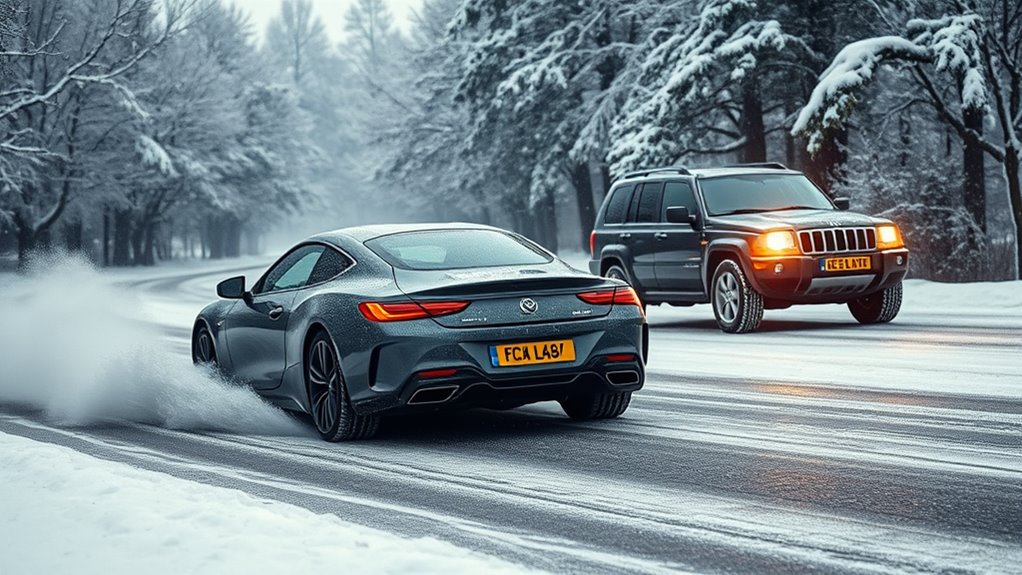

In winter, RWD vehicles require gentle acceleration, smooth steering, and avoiding sudden stops or sharp turns, especially on icy slopes, while AWD cars offer better traction by distributing power to all wheels but still need cautious driving. With RWD, get momentum on hills and increase following distance, whereas AWD helps prevent wheel spin during acceleration. For safer journeys, understanding these techniques will help you better manage winter conditions—explore further to stay fully prepared.

Get garage and car supplies delivered free — and shop member deals
- Fast, free delivery on millions of items
- Access to Prime Big Deal Days deals on October 6–7
- Prime Video, Amazon Music and more included
Key Takeaways
- RWD vehicles require gentle acceleration, smooth steering, and careful braking to maintain control on winter roads.
- AWD vehicles enhance traction with power distribution to all wheels but still need cautious driving and slow speeds.
- Both RWD and AWD drivers should increase following distances and avoid abrupt maneuvers in snowy or icy conditions.
- Proper tire maintenance, including winter tires, is crucial for safety regardless of drivetrain type.
- Planning routes to avoid steep hills and heavily snowed areas minimizes risks for both RWD and AWD vehicles.

Winter driving can be dangerous if you’re not prepared, but with the right precautions, you can stay safe on icy and snow-covered roads. One key factor that affects your safety is the type of drivetrain your vehicle has—rear-wheel drive (RWD) or all-wheel drive (AWD). Understanding how each system performs and adjusting your driving techniques accordingly can make a notable difference in maintaining control and avoiding accidents.
Proper understanding of RWD and AWD systems is essential for safe winter driving.
If you’re driving a rear-wheel drive vehicle, you need to be extra cautious because RWD cars tend to lose traction more easily on slippery surfaces. To counter this, start by accelerating gently and avoiding abrupt movements. When approaching a turn, slow down beforehand, and steer smoothly to prevent tires from slipping. Pay close attention to your throttle control; applying power too quickly can cause the rear wheels to spin out.
When stopping, pump the brakes gently or use the anti-lock braking system (ABS) if available to maintain steering control. It’s also helpful to increase your following distance, giving yourself more time to react if you start to slide. Keep in mind that RWD vehicles often have less grip in winter conditions, so maintaining momentum on hills can be tricky—try to get a running start and avoid stopping on inclines whenever possible. Additionally, proper tire condition and tread depth significantly influence how well your vehicle handles winter road conditions.
In contrast, AWD vehicles distribute power to all four wheels, providing better traction and stability on snow and ice. However, this doesn’t mean you can drive recklessly. AWD helps prevent wheel spin during acceleration, but it doesn’t improve braking or cornering.
You should still drive cautiously, especially when turning or stopping. Accelerate gradually to prevent unnecessary wheel slip, and avoid sudden steering inputs that could upset your vehicle’s balance. Even with AWD, it’s wise to reduce your speed considerably and increase your following distance.
When steering through curves, steer smoothly and avoid sharp turns, as AWD doesn’t eliminate the risk of sliding. Remember, AWD is a traction aid, not a safety device that makes winter driving risk-free.
Both drivetrain types require you to be vigilant and adapt your driving style to winter conditions. RWD drivers need to be more conservative with throttle and steering, while AWD drivers should focus on smooth, deliberate movements.
No matter what kind of vehicle you’re in, always check your tires for proper tread and consider using winter tires for added grip. Keep your windshield clear and plan your routes to avoid steep hills or heavily snowed areas.
Frequently Asked Questions
How Does Tire Choice Impact RWD and AWD Winter Performance?
Your tire choice substantially impacts winter performance for both RWD and AWD vehicles. Opt for winter tires with deep treads and softer rubber compounds to improve grip on snow and ice.
These tires increase traction, reduce slipping, and enhance braking. Even with AWD, quality winter tires are essential for safety, as they help you maintain control, accelerate smoothly, and stop effectively on icy or snowy surfaces.
What Are the Best Practices for Recovering From a Skid?
Imagine yourself on a snowy road, and suddenly your car slides—what now? To recover from a skid, stay calm and steer gently into the skid’s direction. Ease off the accelerator and avoid braking hard, which could worsen the slide.
Keep your eyes focused where you want to go, and gently regain control. Practice these steps, and you’ll turn a slip into a safe return to traction.
How Does Vehicle Weight Distribution Affect Winter Traction?
Your vehicle’s weight distribution greatly impacts winter traction. If more weight is over the driving wheels, you get better grip and control, especially on slippery surfaces.
For example, a front-heavy car improves steering and braking in snow, while a rear-heavy vehicle might struggle with traction but could spin out easier. Adjust your load or drive cautiously based on your vehicle’s weight balance, helping you stay safer in winter conditions.
Are There Specific Maintenance Tips for Winter Driving Safety?
Sure, because nothing says winter safety like ignoring your car’s health! Make sure your tires have enough tread and are properly inflated—think of it as giving your car a warm winter coat.
Check your brakes, battery, and windshield wipers regularly, and keep your fluids topped off.
And don’t forget to clear snow and ice from all windows and lights. After all, a well-maintained car is your best winter survival buddy.
How Should I Adjust Driving Habits for Icy Versus Snowy Conditions?
When driving on icy roads, you should reduce your speed, increase following distances, and avoid sudden movements like sharp turns or abrupt braking.
On snowy surfaces, maintain steady acceleration and gentle steering to prevent slipping.
In both conditions, use lower gears for better control, stay alert, and anticipate stops well in advance.
Adjusting your habits helps you stay safe and maintain control, no matter the winter terrain.
Conclusion
So, whether you’re steering RWD or AWD this winter, your skills could be the difference between safety and disaster. But there’s one vital technique that could catch you off guard if you’re not prepared. Are you ready to discover the secret that could save your life on icy roads? Don’t wait until it’s too late—master this essential tip now, because when winter strikes hardest, it’s your knowledge that will keep you safe.
Halloween Picks
halloween
As an affiliate, we earn on qualifying purchases.