
Poorly packed work vans pose serious safety risks that you might overlook. Uneven weight distribution, unsecured cargo, and overloaded vehicles increase the chances of cargo shifting mid-drive, which can cause loss of control or accidents. Heavy tools piled on one side strain your vehicle and lead to uneven tire wear or blowouts. If you ignore these issues, you risk injuries and damage. Keep your van properly packed, and discover more ways to stay safe on the road.

Get garage and car supplies delivered free — and shop member deals
- Fast, free delivery on millions of items
- Access to Prime Big Deal Days deals on October 6–7
- Prime Video, Amazon Music and more included
Key Takeaways
- Unsecured cargo can shift or become projectiles during sudden stops or turns, causing injuries.
- Improper load distribution increases vehicle instability, risking loss of control and accidents.
- Overloading and uneven weight spread lead to mechanical failures and tire blowouts.
- Loose tools and equipment may lodge under pedals or hit occupants, creating driving hazards.
- Poor loading practices elevate the risk of accidents, injuries, and damage to the vehicle and cargo.
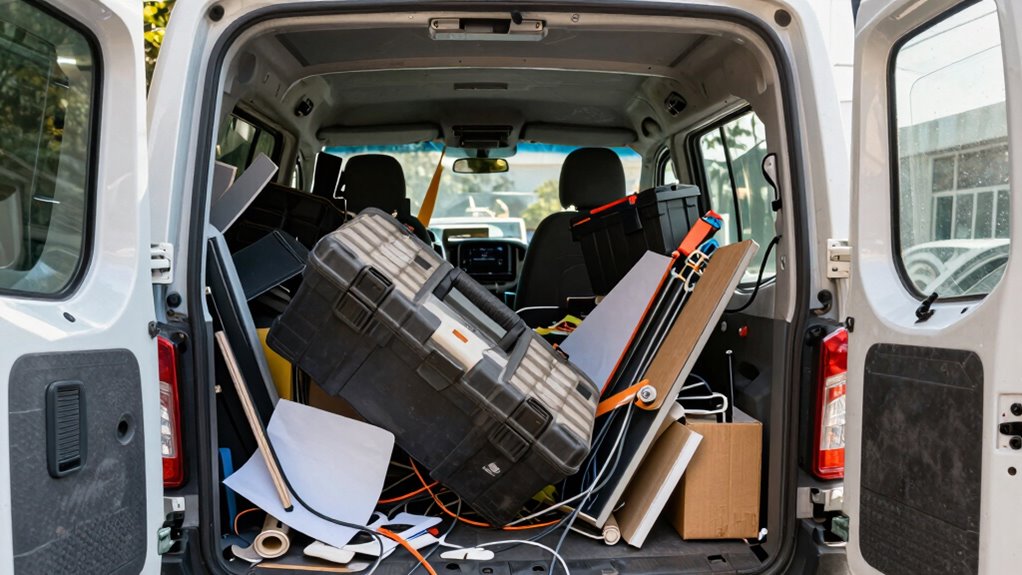
When work vans are poorly packed, the risk of accidents and injuries skyrockets. A common mistake you might make is neglecting proper load distribution. If heavy tools or equipment are piled up on one side or at the back, your van’s center of gravity shifts, making it unstable during turns or sudden stops. This imbalance not only increases the chances of cargo shifting mid-drive but also puts you at risk of losing control altogether. Proper load distribution ensures that weight is evenly spread across the van’s floor, reducing the strain on any one area and maintaining stability. You should aim to keep heavier items low and centered to keep the vehicle balanced and improve handling. Additionally, using smart organization techniques can help you plan and execute a more secure load efficiently. Understanding vehicle stability principles can further enhance your loading strategy for maximum safety.
Proper load distribution keeps your van stable and reduces the risk of accidents during transit.
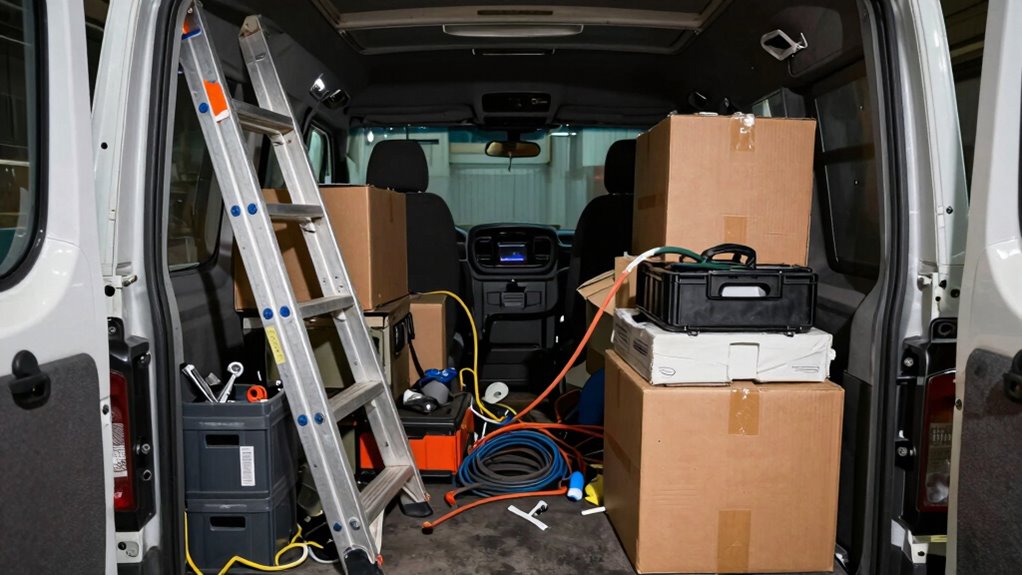
Securing cargo is another critical factor that many overlook. When you fail to properly secure items, they become loose and can move unexpectedly during transit. This movement can be dangerous, especially if a heavy box slides forward and hits the driver or passengers, or if loose tools get lodged under brake pedals. Always use appropriate tie-downs, straps, or bungee cords to fasten everything securely in place. Don’t just toss items into your van—take the time to ensure each piece is restrained. This simple step prevents shifting cargo that could topple over or fly around, creating hazards inside and outside the vehicle. Proper cargo securing techniques are essential for preventing accidents and injuries on the road.
Additionally, understanding the importance of load capacity and weight limits can help prevent overloading, which is a common cause of vehicle instability and mechanical failure. Imagine driving down a busy road, and suddenly, a piece of unsecured equipment slides forward, hitting your feet or the pedals. The moment becomes chaotic, and your ability to react quickly is compromised. Properly securing cargo minimizes this risk, allowing you to focus on the road without distractions. Additionally, when you think about load distribution, you’re also reducing the strain on your vehicle’s suspension and tires. Overloading one side or stacking items unevenly can cause uneven tire wear, increasing the risk of blowouts or mechanical failure. Maintaining a balanced load extends the life of your van and keeps it operating safely.
In essence, paying attention to how you load your work van isn’t just about keeping things organized—it’s a crucial safety measure. Distributing weight evenly and securing cargo tightly protect you, your passengers, and other road users. Skipping these steps might seem minor, but the consequences can be severe. When you take the time to load carefully, you’re not only preventing accidents but also promoting a safer work environment. Remember, a well-packed van isn’t just about efficiency; it’s about safety every mile you drive.
As an affiliate, we earn on qualifying purchases.
Frequently Asked Questions
How Does Improper Packing Affect Vehicle Fuel Efficiency?
Improper packing affects your vehicle’s fuel efficiency by disrupting weight distribution and cargo stability. When you overload or unevenly distribute cargo, your engine works harder to maintain balance and control, which increases fuel consumption. Additionally, unstable cargo shifts during transit, causing extra drag and strain on the vehicle. To save fuel and improve performance, guarantee proper weight distribution and secure cargo tightly, reducing unnecessary engine effort and improving overall efficiency.
What Are the Legal Penalties for Unsafe Van Loading?
If your van is loaded unsafely, you face legal penalties like fines and liability concerns. Regulatory compliance requires following safety standards to prevent accidents and injuries. You could be held responsible for damages or injuries caused by improperly secured or overloaded cargo. Ensuring proper packing not only keeps you compliant with laws but also minimizes your liability, helping you avoid costly fines and legal issues down the line.
How Often Should Work Vans Be Inspected for Safety?
You should inspect your work van weekly to guarantee safe loading techniques and proper weight distribution. Regular checks help identify loose items, uneven weight, or potential hazards that could cause accidents or damage. Focus on securing loads tightly and balancing weight across the van to prevent shifting during transit. Consistent inspections maintain safety, reduce risk, and ensure compliance with safety standards, keeping both you and your team protected on the road.
Can Poorly Packed Vans Damage the Vehicle’s Suspension?
Yes, poorly packed vans can damage the vehicle’s suspension by causing suspension strain and load imbalance. When heavy or unevenly distributed items shift during transit, they put extra stress on suspension components, leading to premature wear or failure. To prevent this, you should evenly distribute the load and secure everything tightly. Regular inspections help catch any suspension issues early, ensuring your van stays safe and functional.
What Training Is Recommended for Proper Van Packing?
Think of your van as a ship—balanced cargo keeps it steady. You should receive training on proper packing techniques and cargo distribution to prevent shifting and damage. This training covers weight limits, securing items, and ideal placement to maintain balance. By mastering these skills, you guarantee safety and efficiency, avoiding unnecessary wear and tear, and keeping your work van sailing smoothly through every job site.
work van load distribution tools
As an affiliate, we earn on qualifying purchases.
As an affiliate, we earn on qualifying purchases.
Conclusion
So, next time you’re loading up your work van, ask yourself: is safety worth risking? Properly packing your van isn’t just about organization — it’s about protecting yourself and others from preventable accidents. Don’t let poor packing put your safety in jeopardy. Take a few extra minutes to secure your tools and supplies; your well-being depends on it. After all, isn’t a safe workday worth the effort?
cargo securing straps for trucks
As an affiliate, we earn on qualifying purchases.
As an affiliate, we earn on qualifying purchases.
vehicle load balancing equipment
As an affiliate, we earn on qualifying purchases.
As an affiliate, we earn on qualifying purchases.
Halloween Picks
halloween
As an affiliate, we earn on qualifying purchases.