If your ABS light comes on, start by checking for common issues like dirty or damaged brake sensors, which prevent accurate wheel speed signals. Use an OBD-II scanner to retrieve error codes pointing to faulty sensors or the ABS control module. If codes relate to sensors, cleaning or replacing them might solve the problem; if they point to the module, professional repair is advised. Keep exploring to uncover more ways to diagnose and fix these faults effectively.

Get business pricing on garage and car supplies
- Business-only prices and quantity discounts
- Tax-exempt purchasing
- Multiple users, one account, clear invoices
Key Takeaways
- Use an OBD-II scanner to retrieve specific error codes related to ABS system components.
- Inspect and clean wheel speed sensors to eliminate dirt or debris interference.
- Check wiring and connections for corrosion, damage, or loose contacts affecting sensors and modules.
- Diagnose the ABS control module for internal damage or electrical faults using professional testing tools.
- Address identified issues promptly with sensor replacement or module repair to prevent system failure.
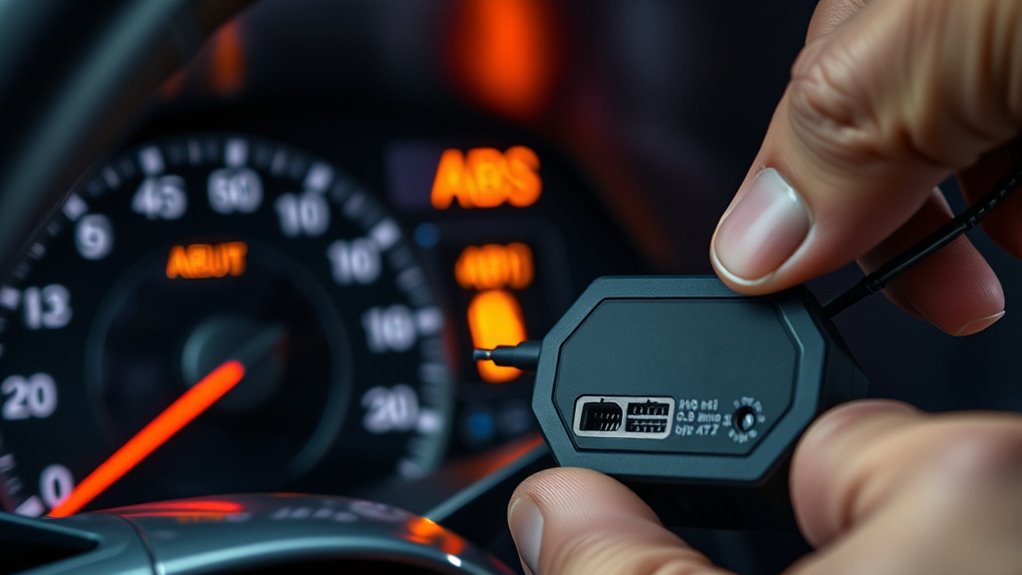
Have you ever wondered why your car’s ABS light suddenly turns on without warning? It can be frustrating and confusing, especially if you’re unsure what caused it. Often, the culprit is related to brake sensor issues or a malfunctioning ABS module. These problems can trigger the warning light, signaling that something isn’t right within your vehicle’s anti-lock braking system. Recognizing the signs and understanding the causes can help you address the problem quickly before it worsens.
Brake sensors are essential components of your ABS system. They monitor wheel speed and send data to the ABS control module, which helps prevent wheel lock-up during hard braking. When these sensors malfunction or get dirty, they can send incorrect signals or stop working altogether. This can cause the ABS light to come on, alerting you to a potential problem. Sometimes, brake sensor issues occur because of damaged wiring, corrosion, or debris interfering with sensor readings. In other cases, the sensor itself may be faulty or worn out, failing to send accurate information to the system. Proper maintenance of brake sensors**** can help prevent these issues from occurring unexpectedly.
A malfunctioning ABS module is another common reason the warning light illuminates. The ABS module acts as the brain of the system, processing signals from the sensors and controlling brake pressure accordingly. If the module malfunctions—due to electrical faults, internal damage, or software glitches—it can disrupt the entire ABS operation. When that happens, the system may revert to standard braking, or in some cases, disable itself entirely, and the ABS warning light turns on as a precaution. Sometimes, issues within the module are caused by power surges, water damage, or age-related wear.
Diagnosing these problems requires more than just a visual inspection. Using an OBD-II scanner, you can retrieve error codes stored in your vehicle’s computer. Codes related to brake sensors or ABS modules will point you toward the specific issue. If the error codes indicate problems with the sensors, you might need to clean, repair, or replace them. When codes reference the ABS module, it could be a sign that the entire unit needs professional repair or replacement.
Products Worth Considering

DEWALT 20V MAX XR Impact Driver, 1/4 Inch High Torque Brushless 3-Speed Cordless with LED Light, Extended Runtime (DCF845B)

Autel MaxiCheck MX808S Bidirectional OBD2 Diagnostic Scanner

DEWALT 20V MAX Cordless 1/2-Inch Impact Wrench Kit (DCF900P1)
As an affiliate, we earn on qualifying purchases.
Frequently Asked Questions
Can ABS Light Come on Due to Low Brake Fluid Levels?
Yes, the ABS light can come on due to low brake fluid levels. When fluid is low, it may trigger a sensor malfunction, causing the ABS warning to activate. You should check your brake fluid and top it off if needed, as low levels can impact the system’s sensors and overall functionality. Keeping the brake fluid at the proper level helps prevent sensor malfunctions and ensures your ABS works correctly.
How Long Can I Drive With the ABS Warning Light On?
It’s like stepping into a sci-fi movie when the ABS warning light appears—you shouldn’t ignore it. You can usually drive for a few days, but it’s risky. The light signals a potential brake fluid issue or faulty sensor testing, which can compromise your safety. Drive cautiously and get your brake fluid checked and sensors tested soon. Ignoring it could lead to more severe braking problems down the line.
Are There DIY Methods to Reset the ABS System?
Yes, you can try a DIY reset of your ABS system by disconnecting the car battery for about 15 minutes, then reconnecting it. This may clear minor sensor troubleshooting issues and reset the system. Before doing so, check for loose or damaged sensors, as sensor troubleshooting is often needed. However, if the ABS light stays on, it’s best to have a professional diagnose and fix the underlying problem.
Do All Brake Sensors Perform the Same Diagnostic Functions?
Did you know that brake sensors vary by vehicle? Not all perform the same diagnostic functions, as sensor variations influence how they detect wheel speed and communicate with the ABS module. Diagnostic differences mean some sensors require specific tools or reset procedures, while others are more straightforward. So, if you’re troubleshooting, consider the sensor type, because understanding these differences helps you identify issues faster and ensures proper system operation.
What Are the Costs Associated With ABS Module Repairs?
ABS module repair costs vary, typically ranging from $500 to $1,200 depending on your vehicle and repair shop. You might need brake sensor replacement if sensors fail, impacting brake sensor functions and causing the ABS warning. Keep an eye on brake fluid level importance, as low fluid can trigger alerts. Driving with ABS warning isn’t recommended, but resetting ABS system DIY can sometimes help. Always consult a professional for accurate diagnosis and repairs.
Conclusion
As you piece together the clues behind the ABS light, one question lingers—could the next drive reveal the true culprit? Sometimes, a simple sensor or module fault hides deeper issues that only surface when you least expect it. Don’t assume it’s just a quick fix; the mystery deepens with every warning light. Stay vigilant, keep diagnosing, and remember—what you uncover might change everything about your vehicle’s safety. Are you ready to solve the puzzle?