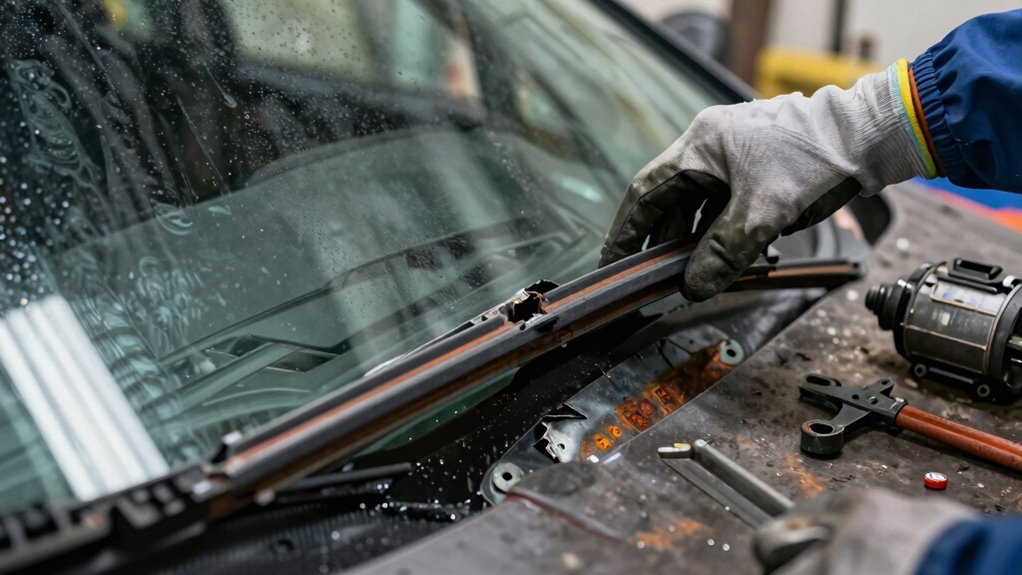

If your windshield wipers won’t park properly or leave streaks, start by inspecting the wiper motor’s park switch, as it’s often the cause. Check for damaged blades, dirt buildup, or debris that could hinder wiping performance. Verify all electrical connections are secure and free of corrosion. Replacing worn blades and cleaning the windshield can also improve results. To fix more complex electrical issues or ensure a thorough repair, continue exploring detailed troubleshooting steps.

Get garage and car supplies delivered free — and shop member deals
- Fast, free delivery on millions of items
- Access to Prime Big Deal Days deals on October 6–7
- Prime Video, Amazon Music and more included
Key Takeaways
- Check the wiper motor’s park switch for debris, corrosion, or damage and replace if faulty.
- Inspect and replace worn or streaking wiper blades for optimal windshield contact.
- Verify electrical connections, fuses, and wiring for looseness, corrosion, or damage.
- Test the park switch function by manually moving the wipers to ensure proper parking.
- Perform regular maintenance, including cleaning blades and windshield, to prevent streaking and system failure.

Ever wondered why your windshield wipers suddenly stop working when you need them most? Sometimes, it’s because your wiper motor isn’t parking correctly or your blades are streaking across the glass. Both issues can be frustrating, but understanding the root causes helps you fix them efficiently. One common culprit is a problem with the wiper motor’s park switch, which tells the blades where to stop. If that switch fails, your wipers might not return to their resting position, leaving you stranded in the rain. Another factor could be worn or damaged wiper blades, which cause streaks and reduce visibility. Regular wiper blade replacement ensures clear sightlines and safer driving conditions.
Wiper motor parking issues and worn blades cause streaks and visibility problems. Regular maintenance keeps your windshield clear.
If your wipers aren’t parking properly, start by inspecting the motor’s park switch. Sometimes, debris or corrosion can interfere with its function. You can test this by manually moving the wipers to their resting position and then activating them. If they fail to park correctly, the switch might be faulty or the motor itself could be malfunctioning. In some cases, the problem stems from electrical issues like blown fuses or damaged wiring. Checking your vehicle’s fuse box and replacing any blown fuses related to the wiper system can often resolve the problem. If these steps don’t solve the issue, it might be time to replace the wiper motor or have it repaired by a professional. Additionally, electrical connections should be checked for secure and corrosion-free contact, as poor connections can cause intermittent or complete failure of the system. Ensuring proper electrical system maintenance can prevent many of these issues from recurring. Incorporating diagnostic tools can also help identify hidden electrical faults more efficiently. Recognizing how the wiper motor’s park switch functions can help you understand and troubleshoot parking issues more effectively.
Streaking wiper blades are another common problem, especially if you notice poor visibility during rain. Wiper blades wear out over time, causing uneven pressure on the windshield and leftover streaks. The solution is straightforward: wiper blade replacement. When replacing blades, make sure to select the right size and style for your vehicle. Clean your windshield regularly to remove dirt and debris that can accelerate blade wear. Maintaining a clean windshield and replacing worn blades ensures your wipers clear the glass effectively, reducing streaks and improving safety. Additionally, keep your windshield fluid reservoir filled with high-quality fluid. Proper windshield fluid helps keep the glass clean, making your wiper blades’ job easier and more effective.
Sometimes, streaks are caused by dirt or grime buildup on the blades or windshield. Before replacing blades, try cleaning both thoroughly with a cloth and windshield cleaner. This simple step can extend the life of your existing blades and improve their performance. Remember, regular maintenance is key to avoiding wiper troubles. To put it another way, if your wipers aren’t parking correctly or leaving streaks, check the motor, electrical connections, and replace the blades as needed. Keeping your windshield clean and your wiper blades in good condition ensures clear visibility and a safer driving experience in any weather. Proper maintenance techniques can help prevent many common wiper problems before they start.
Frequently Asked Questions
How Do I Test if the Wiper Motor Is Receiving Power?
To test if your wiper motor is receiving power, start with electrical testing using a multimeter. Turn on the wipers and carefully inspect the circuit by probing the power and ground wires at the motor connector. If your multimeter shows voltage, the circuit is working, and the issue might be the motor itself. If there’s no power, perform a thorough circuit inspection to check for blown fuses, broken wires, or faulty switches.
Can a Faulty Wiper Switch Cause Parking Issues?
Ever wonder if a faulty wiper switch could mess up your wipers’ parking? It definitely can. The switch controls signals for the parking mechanism, so if it’s defective, the wipers might not park correctly or at all. Check the switch for wear or damage, and replace it if needed. A good wiper switch guarantees your wipers park properly, keeping your windshield clear and your vision safe.
What Are Common Signs of a Bad Wiper Relay?
You’ll notice signs of a bad wiper relay when your wipers stop working randomly or won’t activate at all. Common wiper relay symptoms include delayed response or intermittent operation. To confirm, you should perform relay testing techniques like swapping it with a working relay or using a multimeter to check for proper voltage and continuity. If the relay isn’t functioning correctly, replacing it usually restores your wipers’ normal operation.
How Long Does a Typical Wiper Motor Last?
Think of your wiper motor like a dependable marathon runner—its lifespan depends on durability factors like quality, usage, and maintenance. Typically, a wiper motor lasts between 5 to 10 years, but this can vary based on climate and how often you use it. Properly maintaining your wiper blades and keeping the motor clean can extend its life, ensuring it keeps your windshield clear season after season.
Is It Safe to Replace the Wiper Motor Myself?
Yes, it’s generally safe to replace the wiper motor yourself if you follow proper DIY safety precautions. Make sure to disconnect the vehicle’s battery first to prevent electrical shocks. Use the right tools and work in a well-lit area. However, if you’re unsure or uncomfortable with automotive repairs, it’s better to seek professional repair. This ensures safety and that the replacement is done correctly, avoiding potential damage or injury.
Conclusion
Don’t let wiper issues ruin your drive. Fixing a motor that won’t park or blades that streak is simpler than you think, saving you time and money. It’s easy to feel overwhelmed, but taking a little time now prevents bigger problems later. Remember, maintaining your wipers keeps your visibility clear and your safety high. So, tackle the repair today — a small effort for a safer, smoother ride tomorrow.
Halloween Picks
halloween
As an affiliate, we earn on qualifying purchases.