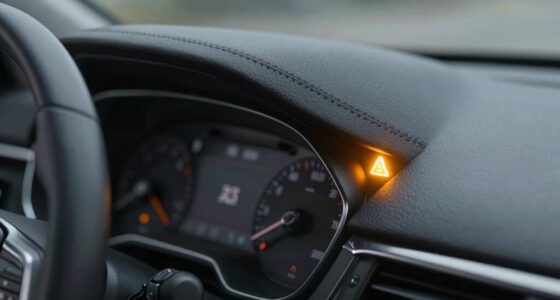
Brake squeals usually mean your brake pads have a worn wear indicator, signaling you should get them checked soon. Grinding sounds, on the other hand, mean your pads are fully worn through, exposing metal and risking rotor damage. Ignoring these noises can lead to costly repairs and safety issues. Understanding the difference helps you react properly—continue exploring to learn how to address these brake warnings effectively.
Key Takeaways
- Squealing often indicates worn brake pads with a wear indicator, signaling the need for inspection before further damage occurs.
- Grinding sounds usually mean brake pads are fully worn, exposing metal and risking rotor damage, requiring immediate repair.
- Squeals are generally less severe and can be a warning sign, while grinding indicates a critical issue needing prompt attention.
- Both noises can cause rotor damage; squeal may be early warning, but grinding signifies urgent repair to prevent costly repairs.
- Regular brake maintenance helps distinguish between normal squealing and problematic grinding, ensuring safety and extending brake system lifespan.
Brake noises can be unsettling and may indicate underlying issues with your vehicle’s braking system. When you hear squealing or grinding sounds, it’s a sign you shouldn’t ignore. These noises often point to problems like uneven pad wear or rotor damage, which can compromise your safety. Recognizing what each noise means helps you decide whether you can handle the issue yourself or need professional help.
Brake noises signal potential brake system issues that shouldn’t be ignored for safety and cost reasons.
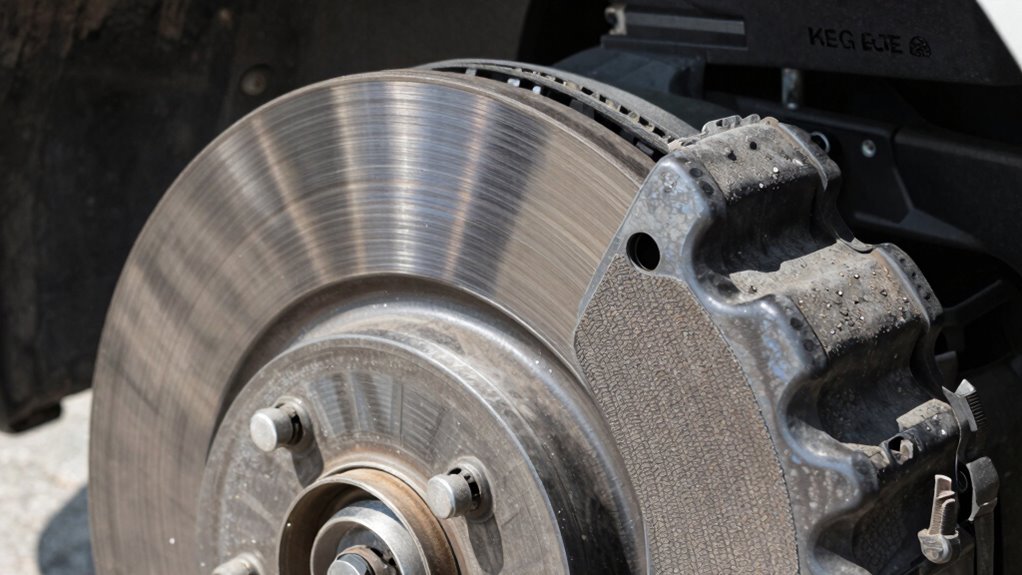
A squeal typically indicates that your brake pads are wearing down. Most brake pads have a built-in wear indicator—a small metal tab that scrapes against the rotor when the pads are nearly gone. This sound acts as a warning, alerting you to replace the pads soon. If you catch it early, you might avoid more serious problems. However, if you continue driving with worn pads, you risk damage to the rotors. When pads become too thin, the metal backing can grind directly against the rotor surface, causing damage that’s more expensive to repair. Rotor damage from pad wear can include grooves, scoring, or warping, all of which reduce braking efficiency and may lead to more noise or vibrations when stopping.
Grinding sounds are more serious and usually mean your brake pads are completely worn through, exposing the metal backing. At this point, the metal-to-metal contact can cause significant rotor damage. You might notice a rough, grinding noise every time you brake, and it can become quite loud. Ignoring this sound can lead to uneven rotor surfaces, increased stopping distances, and even brake failure in extreme cases. The more you drive with severe pad wear and rotor damage, the higher the repair costs will be. Rotors may need resurfacing or replacement, and your brake pads will definitely need replacing. Regular inspections can help catch pad wear early before it causes rotor damage, especially if you are aware of brake system wear indicators. Additionally, using quality brake components can extend the lifespan of your braking system and improve safety.
If you hear squealing, check your brake pads for wear indicators. If you hear grinding, get your brakes checked immediately. Addressing these problems early not only saves you money but also keeps you safe on the road. Remember, brake noises aren’t just annoying—they’re signals that your braking system needs attention. Acting promptly ensures you maintain excellent braking performance and avoid costly repairs down the line. Additionally, understanding the signs of brake system wear can help you stay proactive in vehicle maintenance. Regular maintenance and awareness of brake component function are essential for safe driving.
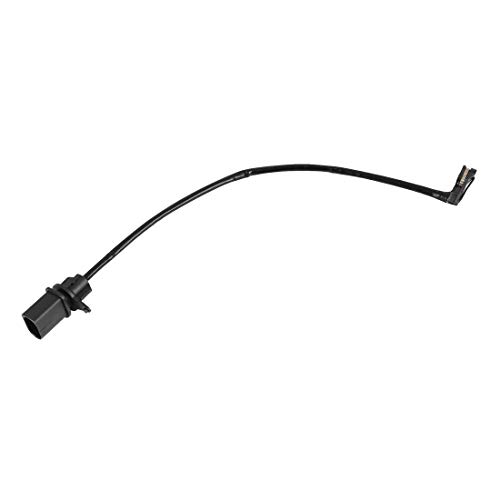
X AUTOHAUX 8T0907637 Front Brake Pad Electronic Wear Sensor Replacement Brake Pad Wear Indicators for Audi A4 A5 A6 A7
[Effectiveness] – In order to ensure the safe and effective braking performance of the vehicle, the brake pad…
As an affiliate, we earn on qualifying purchases.
As an affiliate, we earn on qualifying purchases.
Frequently Asked Questions
Can Brake Noises Be Fixed Without Replacing Parts?
Yes, brake noises can often be fixed without replacing parts. You should start with a brake pad inspection to identify if worn pads are causing squeals or grinding. Sometimes, cleaning the rotor surface or applying brake lubricant can resolve squealing. If the rotors are damaged or worn, rotor replacement might be necessary. Regular maintenance and inspections help prevent costly repairs and keep your brakes functioning smoothly.
How Long Can I Drive With Brake Squeal or Grind?
You shouldn’t drive long with brake squeal or grind because these noises often signal serious brake issues. Brake noise causes like worn-out pads or damaged rotors can worsen quickly, risking safety and leading to costly repairs. While some repair options, like lubricating or adjusting components, may temporarily help, ignoring persistent sounds can cause more damage. It’s best to get your brakes inspected and fixed promptly to keep your vehicle safe and reliable.
Are Brake Noises Always a Sign of Serious Damage?
Brake noises aren’t always a sign of serious damage, but they do indicate something needs your attention. Common brake noise causes include worn brake pads, dirt, or rust buildup. Ignoring these sounds can lead to more extensive damage and higher repair costs. You should have a mechanic inspect your brakes promptly to determine the cause and prevent costly repairs later. Regular maintenance helps keep your braking system safe and reliable.
Do Brake Noises Occur More in Certain Weather Conditions?
Did you know that brake noises tend to increase by 30% during winter months? Weather influence plays a big role, especially with seasonal effects like cold temperatures and humidity. These conditions cause moisture and rust, which can lead to squealing or grinding sounds. You might notice more noise in wet or icy weather, so it’s smart to check your brakes regularly during seasonal changes to prevent further damage.
Can Regular Brake Maintenance Prevent Squeal and Grind?
Regular brake maintenance can definitely prevent squeal and grind noises. You should perform brake pad inspections regularly to catch worn pads early, and consider rotor resurfacing if you notice uneven wear or vibrations. Keeping your brakes well-maintained guarantees they function smoothly, reduces noise, and prolongs their lifespan. Don’t wait until noises become a problem—schedule routine check-ups to keep your braking system in top shape.

3M Roloc Brake Rotor Surface Conditioning Disc Refill Pack, 01411, P120 grit, 12 discs pack
Refill pack for 3M Roloc Brake Rotor Surface Conditioning Disc Starter Pack
As an affiliate, we earn on qualifying purchases.
As an affiliate, we earn on qualifying purchases.
Conclusion
Understanding brake squeal and grind is like tuning a musical instrument—you need to recognize the notes to keep everything sounding smooth. Squealing often signals a minor issue, while grinding means you’re heading for trouble. Don’t overlook these noises; they’re your car’s way of warning you something’s off. Think of your brakes as the heartbeat of your car—keeping them healthy ensures your ride stays safe and steady, ready to hit the road without missing a beat.

TIKBRO Hydraulic Piston Press for Bicycle Disc Brakes Repair Tool Kit 4-piece Set Rotor Truing Fork Rotor Adjustment Tool Disc Brake Gap Regulator Bike Disc Alignment Tool
Tool Set for Brake Maintenance : This set includes 1 Hydraulic Piston Press, 1 Rotor Truing Fork, and…
As an affiliate, we earn on qualifying purchases.
As an affiliate, we earn on qualifying purchases.

Bendix Premium SBC1589 Ceramic Front Brake Pads for Select Models Chrysler Grand Caravan, Pacifica, Town & Country, Voyager, Dodge Journey, Jeep Gladiator, Wrangler, Ram C/V, Volkswagen Routan
OE REPLACEMENT: Designed and engineered to OE specifications for fit, form, and function. OEM Equivalent Part Number: 68144163AB
As an affiliate, we earn on qualifying purchases.
As an affiliate, we earn on qualifying purchases.