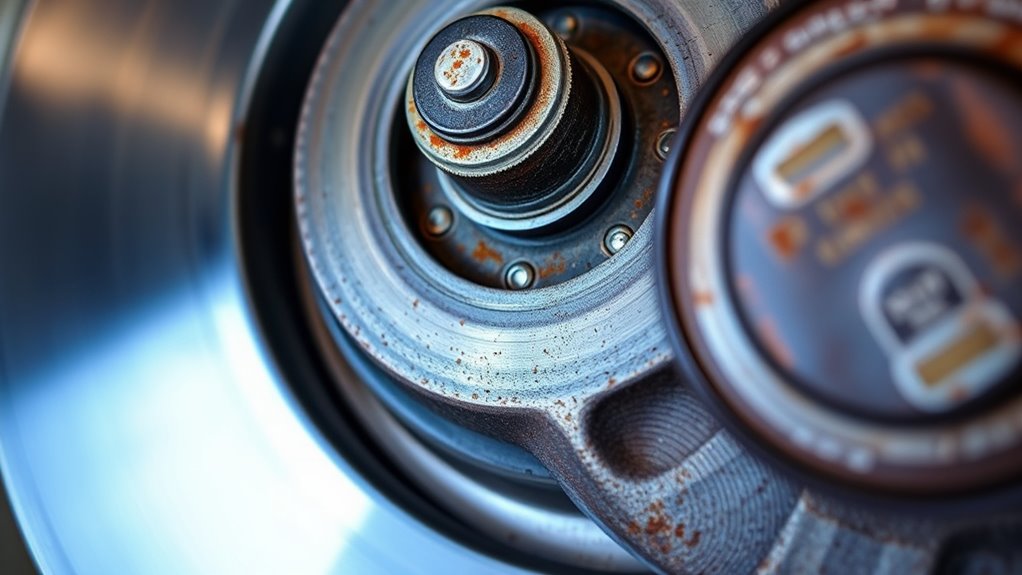

If you feel a vibration when braking, it could be caused by warped rotors or hub issues. Warped rotors typically create a pulsating pedal and steering wheel vibrations that lessen when you release brake pressure. Hub problems, on the other hand, often cause wobbling and persistent vibrations even without braking. Identifying the specific cause can be tricky, but understanding the signs can help you decide if your vehicle needs inspection—you’ll discover more about troubleshooting next.

Get garage and car supplies delivered free — and shop member deals
- Fast, free delivery on millions of items
- Access to Prime Big Deal Days deals on October 6–7
- Prime Video, Amazon Music and more included
Key Takeaways
- Warped rotors typically cause pulsating brake pedal and steering wheel vibrations during braking.
- Hub issues often result in persistent wheel wobbling and vibrations both during braking and normal driving.
- Vibration from warped rotors diminishes when brake pressure is released; hub problems may persist regardless of braking.
- Uneven rotor surfaces lead to pulsation, whereas worn or loose hub bearings cause continuous wobbling.
- Accurate diagnosis involves checking for vibration patterns, pedal feel, and listening for noises to distinguish between the causes.
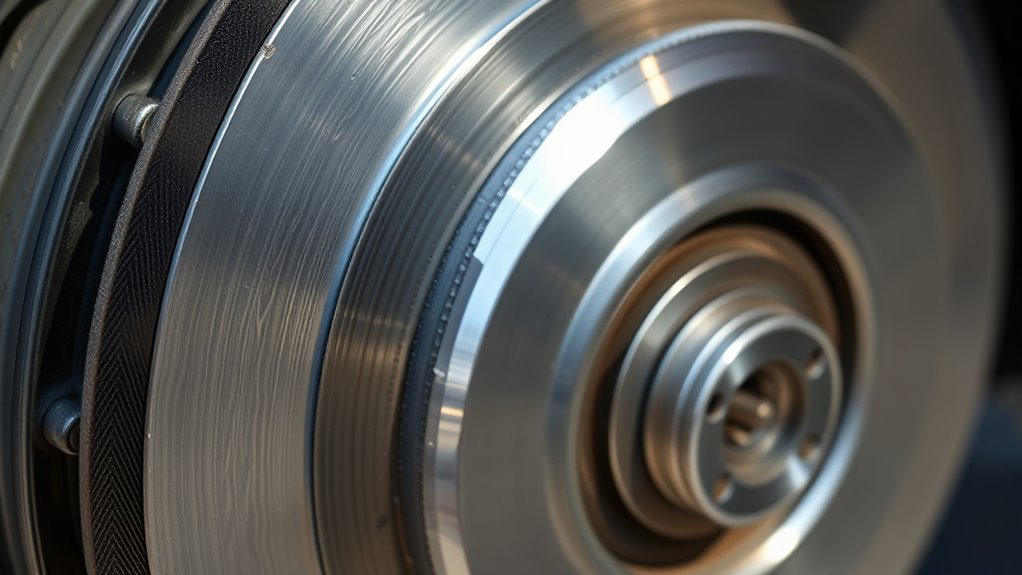
If you notice a vibration when applying your brakes, it’s often a sign that something isn’t right with your braking system. This shaking can be unsettling and may point to a few common issues, primarily involving your rotors or hubs. Understanding the difference between warped rotors and hub problems is key to diagnosing and fixing the issue effectively.
When rotors become warped, it’s usually due to excessive heat buildup. This can happen from frequent hard braking, driving downhill for long periods, or riding the brakes constantly. Warped rotors develop uneven surfaces, causing the brake pads to grab unevenly as they contact the rotor.
Warped rotors result from excessive heat, causing uneven surfaces and uneven brake pad contact.
This uneven contact results in a pulsating or vibrating sensation when you press the brake pedal. The vibration often feels like the steering wheel or brake pedal itself is pulsing. Warped rotors are a common cause of vibration because they directly affect the way your brake pads make contact with the rotor surface.
If you notice the vibration only when braking and it diminishes when you let off, warped rotors are a likely culprit.
On the other hand, hub issues can also cause vibrations, but they tend to present differently. The hub is the central part of the wheel assembly, holding the wheel onto the axle.
If the hub bearings wear out or become loose, it can lead to a wobbling or shaking that’s felt during braking. Unlike warped rotors, these vibrations might persist even if the rotors are perfectly smooth.
You may notice the vibration start as you accelerate or turn, but it can become more noticeable when braking as the wheel’s connection to the hub gets compromised.
Hub problems often generate a grinding or humming noise and can lead to uneven tire wear over time.
Addressing these issues promptly is crucial because driving with warped rotors can cause further damage to your braking system, and ignoring hub issues can lead to more serious wheel and suspension problems.
A professional inspection will help you determine the exact cause and ensure you get the necessary repairs to keep your vehicle safe and smooth on the road.
Frequently Asked Questions
Can Warped Rotors Cause Brake Fluid Leaks?
No, warped rotors typically don’t cause brake fluid leaks. They mainly lead to vibrations or pulsations during braking.
If you notice a brake fluid leak, it’s likely due to a damaged or worn brake line, caliper, or master cylinder.
You should inspect your brake system promptly, as leaks can reduce braking effectiveness and pose safety risks.
Address any leaks immediately to guarantee your vehicle remains safe to drive.
How Long Do Brake Rotors Typically Last Before Warping?
Brake rotors typically last between 30,000 to 70,000 miles, but this depends on driving habits, vehicle type, and maintenance. If you frequently brake hard or drive in stop-and-go traffic, your rotors may warp sooner.
Regular inspections help catch wear early. If you notice vibrations or squeaking when braking, it’s time to have your rotors examined and potentially replaced to guarantee safe stopping performance.
Are Hub Issues Always Related to Wheel Bearing Failure?
No, hub issues aren’t always due to wheel bearing failure. Sometimes, misaligned or damaged hubs cause vibrations or uneven tire wear, but it could also be caused by corrosion, loose lug nuts, or bent hubs.
You might notice grinding sounds or uneven handling. To get to the root cause, have a mechanic inspect your hubs and bearings.
Addressing these issues early prevents further damage and keeps your ride smooth.
Can Incorrect Torque Cause Rotor or Hub Problems?
Yes, incorrect torque can cause rotor or hub problems. When you don’t tighten lug nuts properly, it leads to uneven pressure on the wheel assembly. Over time, this can cause the rotor to warp or the hub to become misaligned.
Always use a torque wrench and follow the manufacturer’s specifications to guarantee even tightening. Proper torque prevents unnecessary stress, helping your brakes and hub stay in good condition.
What Are Signs of a Failing Wheel Hub Assembly?
Ever wonder how you’ll know if your wheel hub assembly is failing? You might notice a grinding noise when turning, uneven tire wear, or your steering feels loose or pulls to one side.
You could also feel vibrations through the steering wheel or experience ABS warning lights. These signs suggest your hub assembly needs checking; ignoring them can lead to more serious suspension or steering problems, so don’t delay in getting it inspected.
Conclusion
So, next time you feel that wobble during braking, remember it’s like a car’s heartbeat telling you something’s off. Whether it’s warped rotors or hub issues, ignoring the vibration can lead to bigger problems down the road—like a small crack turning into a shattered windshield. Regularly inspecting your brake system is like tuning a musical instrument; it keeps everything running smoothly. Don’t wait until the noise becomes a crash—trust your instincts and get it checked out.
Fall Picks
fall essentials
As an affiliate, we earn on qualifying purchases.