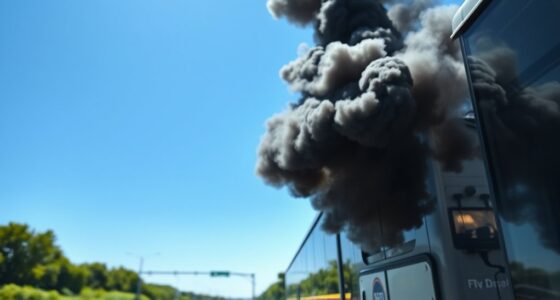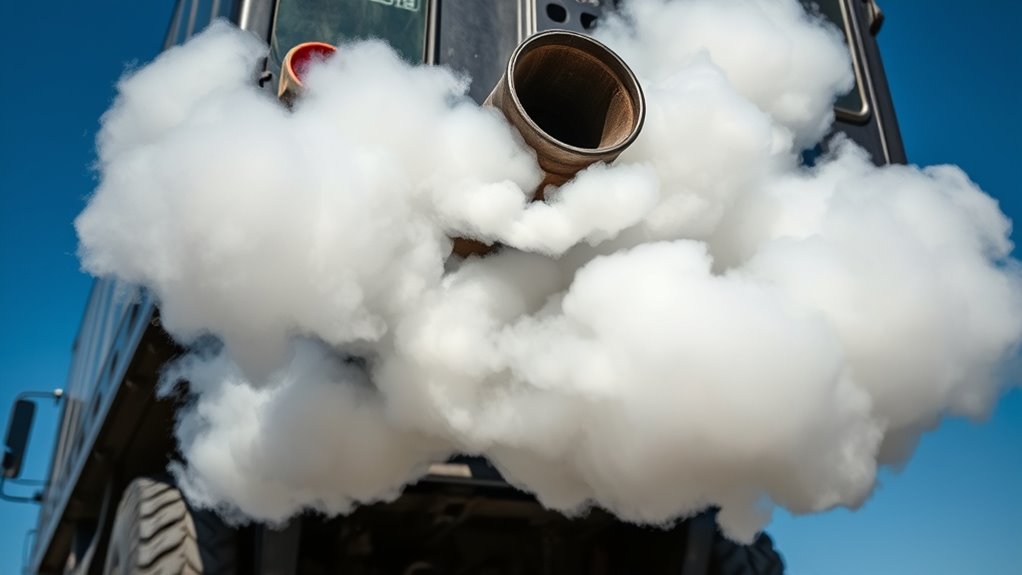
White smoke on your diesel Transit often happens during cold starts and usually clears quickly, signaling normal engine warm-up or moisture burning off. However, if it persists after the engine warms, it could mean serious issues like coolant leaks, a blown head gasket, or fuel system problems. You should keep an eye out for other symptoms like overheating or power loss. To understand what’s really going on, it’s best to explore the underlying causes more closely.

Get business pricing on garage and car supplies
- Business-only prices and quantity discounts
- Tax-exempt purchasing
- Multiple users, one account, clear invoices
Key Takeaways
- White smoke during startup in cold weather is normal and usually clears quickly.
- Persistent white smoke after warming indicates coolant leaks, possibly due to a blown head gasket.
- Excess fuel from faulty injectors can cause white smoke from incomplete combustion.
- Mechanical issues like clogged air filters or turbocharger problems can lead to abnormal white smoke emissions.
- Ongoing white smoke with symptoms like overheating requires immediate professional inspection to prevent engine damage.

Have you noticed white smoke billowing from your diesel transit vehicle? If so, you’re probably wondering what it means and whether it’s something to worry about. White smoke can be caused by several issues, and understanding the cause is *essential* to preventing further damage or breakdowns.
White smoke from your diesel vehicle may indicate underlying engine issues; prompt inspection is crucial.
First, it’s important to recognize that some white smoke during startup is normal, especially in cold weather. When you start your engine, the combustion process may produce white smoke as residual moisture burns off or as the engine warms up. This usually clears within a few minutes and isn’t a cause for concern.
However, if white smoke persists after the engine warms up, it signals a problem that needs your attention.
One common cause of persistent white smoke is a coolant leak into the combustion chamber. This typically indicates a blown head gasket, cracked cylinder head, or a damaged engine block. When coolant leaks into the combustion chamber, it vaporizes during combustion, creating that thick white smoke.
You might also notice other symptoms, such as a sweet smell in the exhaust, rough engine running, or overheating. If you see these signs, it’s *crucial* to have your vehicle inspected immediately. Continuing to run the engine in this condition can lead to severe engine damage and costly repairs.
Another reason for white smoke could be a fuel injection problem. If your diesel engine’s injectors are malfunctioning or delivering too much fuel, it can result in incomplete combustion, which produces white smoke.
This scenario is less common but still significant. It often requires professional diagnosis, as adjusting or replacing faulty injectors can resolve the issue.
Additionally, in some cases, the white smoke might be caused by a clogged air filter or a problem with the turbocharger, both of which affect the combustion process and can produce abnormal emissions.
It’s also worth noting that certain engine modifications or additives can temporarily produce white smoke, but these are usually short-lived and not a cause for alarm.
Still, persistent white smoke, especially accompanied by other unusual symptoms like loss of power, poor fuel economy, or engine overheating, should prompt you to seek professional help.
Ignoring these signs risks permanent engine damage, costly repairs, and possible safety hazards.
Frequently Asked Questions
Can White Smoke Indicate a Clogged Fuel Injector?
Yes, white smoke can indicate a clogged fuel injector. When injectors are blocked, they don’t deliver fuel properly, causing the engine to run lean or misfire.
This incomplete combustion often produces white smoke. If you notice this, check your fuel injectors and consider cleaning or replacing them.
Ignoring the issue can lead to further engine damage, so addressing it promptly helps keep your transit running smoothly.
How Does Ambient Temperature Affect White Smoke Production?
Ambient temperature does influence white smoke production, but not in the way you might think. Cooler temperatures can cause thicker, more visible white smoke because the engine takes longer to warm up, leading to incomplete combustion.
Conversely, warmer weather helps the engine reach ideal operating temperature faster, reducing smoke. So, while temperature affects smoke visibility, persistent white smoke indicates other issues, like coolant leaks or injector problems, regardless of ambient conditions.
Is White Smoke More Common in Certain Diesel Engine Models?
Yes, you’ll find white smoke more common in older or certain engine models, especially those with less advanced fuel injection systems. These engines often struggle with incomplete combustion, leading to visible white smoke during startup or under heavy load.
Modern diesel engines are designed to reduce emissions and often produce less white smoke, but you might still see it if there’s a problem like a coolant leak or fuel issue.
What Are the Safety Risks Associated With White Smoke Emissions?
You might think white smoke isn’t dangerous, but it actually signals potential safety risks. It can indicate coolant leaks or engine overheating, which could lead to engine failure or fire if ignored.
You should avoid driving the vehicle until a mechanic inspects it, as continuing to operate with white smoke could cause further damage or pose a safety hazard to you and others on the road.
Prioritize safety and get it checked promptly.
How Long Can White Smoke Persist Before Indicating Serious Damage?
White smoke can persist from a few seconds to several minutes, depending on the cause. If it lasts more than a minute or two, it often indicates serious issues like a blown head gasket or coolant leak.
You should stop driving immediately and have a mechanic inspect your vehicle. Ignoring prolonged white smoke can lead to severe engine damage, so don’t delay in getting professional help to prevent costly repairs.
Conclusion
Just like the phoenix rising from ashes, white smoke on your diesel transit signals a story of change—whether it’s a sign of incomplete combustion or a potential issue brewing. Paying attention now can prevent future pitfalls, much like Odysseus steering treacherous waters. So, stay vigilant, address the warning signs, and keep your journey smooth. After all, understanding what white smoke means guarantees you’re the captain steering clear of storms ahead.
Halloween Picks
halloween
As an affiliate, we earn on qualifying purchases.