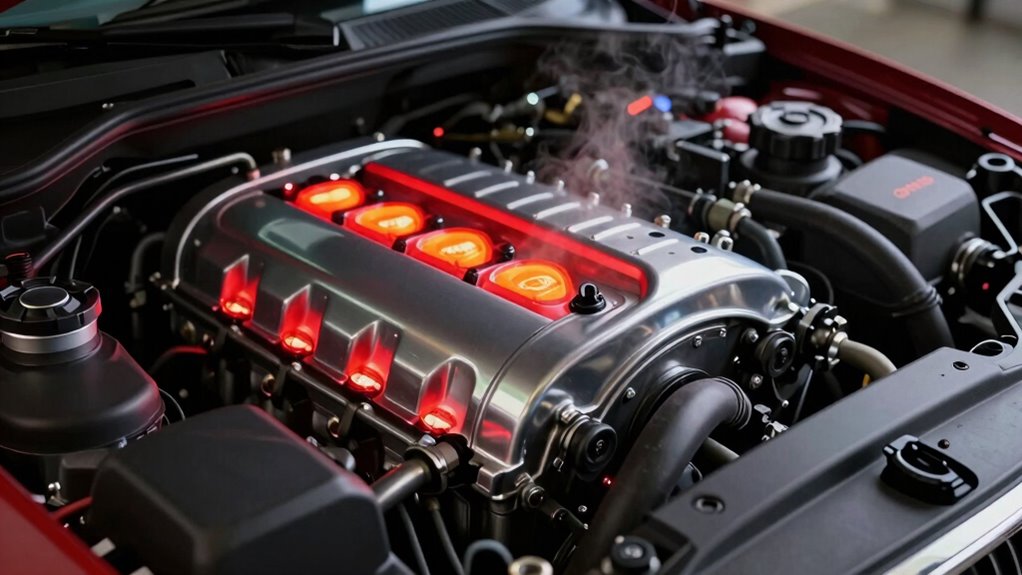
When your engine temperature spikes, it’s essential to check the cooling system immediately. Inspect hoses for leaks or cracks, make sure the radiator isn’t blocked, and verify the water pump’s functioning. Keep an eye on coolant levels and look for signs of leaks or puddles beneath the vehicle. Regular maintenance of these components helps prevent overheating. Stay aware of these warning signs, and you’ll discover simple steps to keep your engine cool and running smoothly.
Key Takeaways
- Check coolant levels regularly and top off if they are low to maintain proper heat transfer.
- Inspect hoses, radiator, and water pump for leaks, cracks, or corrosion that may cause coolant loss.
- Look for signs of coolant leaks such as puddles beneath the vehicle or a drop in coolant reservoir levels.
- Ensure the radiator cap is secure and functioning properly to maintain system pressure and prevent overheating.
- Perform routine maintenance like flushing the cooling system to prevent blockages and enhance heat dissipation.
Coolant leaks are often underestimated, but they’re a leading cause of overheating. When your cooling system isn’t holding the proper amount of coolant, the engine can’t dissipate heat effectively. Leaks can occur anywhere within the system—hoses, water pump, radiator, or fittings—causing a gradual loss of coolant. Over time, this loss diminishes the coolant’s ability to absorb and transfer heat, leading to elevated engine temperatures. If you notice puddles beneath your vehicle or a drop in coolant levels, don’t ignore these signs. Regularly inspecting your coolant reservoir and hoses can help you spot leaks early before they escalate into a serious problem. Additionally, coolant management is vital for maintaining optimal engine temperature and preventing overheating issues. Proper coolant levels ensure that your engine remains within safe operating temperatures and can prevent costly repairs caused by overheating. Ensuring your cooling system components are in good condition and free of corrosion can also help maintain efficient coolant flow and prevent blockages that contribute to overheating.
Frequently Asked Questions
How Often Should I Flush My Cooling System?
You should flush your cooling system every 2 to 3 years to guarantee ideal radiator maintenance and prevent overheating. Regular coolant replacement helps remove rust, debris, and old fluid that can impair cooling efficiency. Check your vehicle’s manual for specific recommendations, but don’t wait too long—neglecting radiator maintenance can lead to engine damage. Schedule a flush during your routine maintenance to keep your engine running smoothly and cool.
Can a Faulty Radiator Cap Cause Overheating?
Imagine you’re in a sci-fi movie; a faulty radiator cap can definitely cause overheating. It acts as the pressure release, maintaining the cooling system’s ideal pressure. If it’s defective, it won’t release excess pressure, leading to coolant loss or boiling over. A compromised radiator cap prevents proper pressure regulation, causing the engine to overheat. So, always check your radiator cap to guarantee it’s functioning correctly and keep your engine cool.
What Are Signs of a Failing Water Pump?
You’ll notice water pump failure through signs like coolant leaks, which usually appear near the pump or along hoses. You might also hear whining or grinding noises from the pump, and your engine could overheat because coolant circulation has stopped. If the water pump isn’t working properly, it can’t keep the coolant flowing efficiently, leading to temperature spikes and potential engine damage. Regular checks help catch issues early.
Is It Safe to Drive With an Overheated Engine?
Think of your engine temperature as a ticking time bomb—definitely not safe to keep driving. When it overheats, your coolant leaks and pressure build-up can cause serious damage. Ignoring this risk turns your car into a fiery furnace on wheels. It’s best to pull over, turn off the engine, and let it cool. Continuing to drive risks engine failure, costly repairs, and leaving everyone stranded—so don’t gamble with your engine’s life.
How Do I Reset the Engine Temperature Warning Light?
To reset the engine temperature warning light, first make certain your engine cools down completely. Then, locate the temperature sensor, which is usually near the radiator or thermostat. Disconnect the sensor gently, wait a few minutes, and reconnect it. This action can reset the warning light. If the light stays on, double-check the sensor for damage or faulty wiring, and consider using an OBD-II scanner to clear the code.
Conclusion
As the temperature needle creeps higher, you realize a simple check could prevent disaster. Will you catch that tiny leak or faulty thermostat before it’s too late? The next drive might be smooth, or it could turn into a costly emergency. Don’t ignore those warning signs—your engine’s fate is in your hands. Stay vigilant, because one small oversight could mean the difference between a quick fix and a roadside breakdown. The choice is yours.