
A sudden power loss is often caused by issues with your turbocharger or fuel system. If you notice sluggish acceleration, unusual noises, or oil leaks, your turbo might be failing. Alternatively, fuel system problems like clogs or contaminated fuel can also reduce power and cause hesitation. To figure out the exact culprit, it’s important to check for leaks, listen for noises, and inspect fuel filters. Keep going to discover more tips on fixing these common issues.
Key Takeaways
- Turbocharger failure often causes sudden power drops, unusual noises, and oil leaks.
- Fuel system issues lead to engine hesitation, stalling, and reduced acceleration.
- Listening for turbo whines or rattles helps identify turbo problems.
- Checking fuel filters and pressure reveals potential fuel system blockages.
- Proper diagnosis involves inspecting turbo components and fuel delivery for accurate cause identification.
Experiencing a sudden loss of power can be alarming and disruptive, especially if you’re in the middle of an important task or traveling. When your vehicle suddenly feels sluggish or stalls, the cause often points to issues with the turbocharger or fuel system. These components play essential roles in delivering the power and performance you expect, so any malfunction can considerably impact how your engine runs.
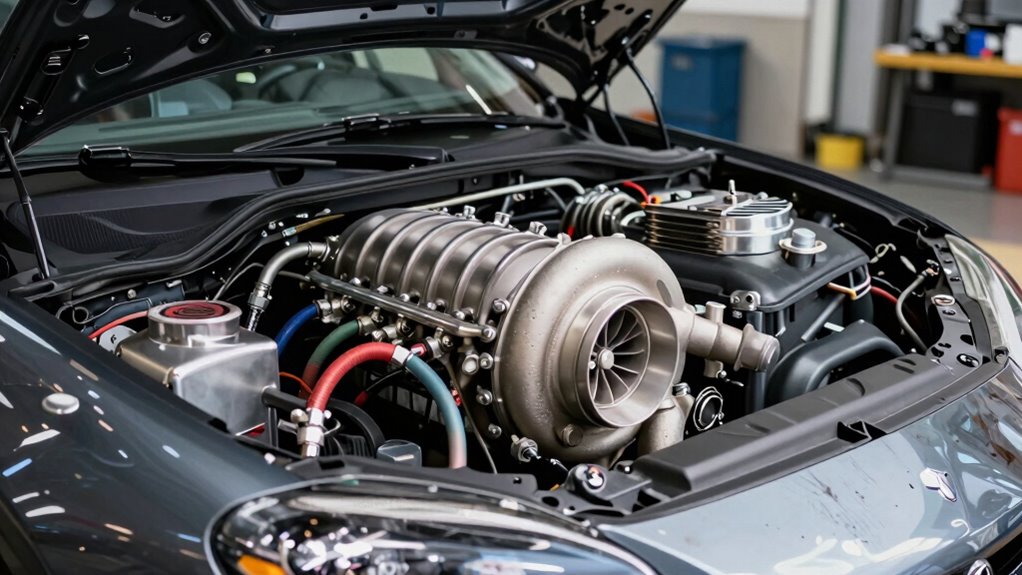
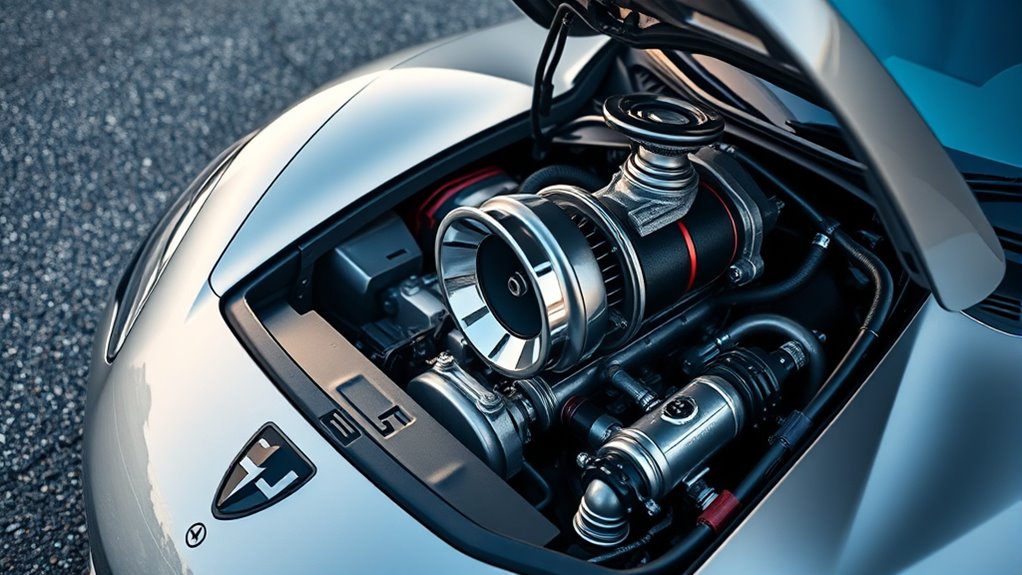
Turbocharger failure is a common culprit behind sudden power drops. Your turbocharger boosts engine power by forcing more air into the combustion chamber, allowing for better fuel combustion and increased performance. If the turbocharger malfunctions—due to worn bearings, damaged blades, or oil supply problems—you’ll notice a sharp decrease in power. Often, this manifests as a lack of acceleration, a sluggish response when you press the gas pedal, or strange noises like whining or rattling coming from the engine bay. Ignoring these signs can lead to more severe engine damage, so it’s essential to address turbo issues promptly.
Turbocharger issues cause power loss and strange noises; prompt repair prevents severe engine damage.
Another frequent cause is a fuel system blockage. Your vehicle relies on a steady flow of clean fuel to operate efficiently. When the fuel system becomes blocked—due to clogged fuel filters, contaminated fuel, or a failing fuel pump—the engine can’t get the proper amount of fuel it needs for combustion. This results in poor acceleration, engine stalling, or a noticeable loss of power during driving. A blocked fuel filter, for example, restricts fuel flow, causing the engine to run lean and struggle to produce power. Similarly, a failing fuel pump may not deliver enough fuel, leading to engine hesitation or shutdowns under load or at high speeds.
In many cases, both issues can present similar symptoms, making diagnosis tricky. You might experience hesitation, reduced power, or even engine warning lights. To determine whether the problem stems from a turbocharger failure or a fuel system blockage, you’ll need to perform some basic checks. Listening for unusual noises, inspecting for oil leaks around the turbo, and checking fuel filters and fuel pressure can help guide your diagnosis. If you’re unsure, it’s best to have a mechanic evaluate your vehicle. They can run diagnostics, identify the exact cause, and recommend repairs to restore your vehicle’s power and performance.
Ultimately, regular maintenance plays an indispensable role in preventing these issues. Keeping your turbocharger well-lubricated and ensuring your fuel system remains clean can help you avoid sudden power loss. When problems do arise, acting quickly can save you from costly repairs and keep you safely on the road.
turbocharger repair kit
As an affiliate, we earn on qualifying purchases.
As an affiliate, we earn on qualifying purchases.
Frequently Asked Questions
Can a Faulty Turbocharger Cause Engine Stalling?
Yes, a faulty turbocharger can cause engine stalling. Turbo failure often leads to reduced airflow, causing the engine to lose power and potentially stall. If your engine stalls unexpectedly, it’s essential to conduct fuel system diagnostics to rule out fuel delivery issues. Addressing both turbocharger problems and fuel system health helps guarantee your engine runs smoothly and prevents future stalling episodes.
How Can I Differentiate Between Turbo and Fuel System Issues?
You can differentiate between turbo and fuel system issues by performing turbo diagnostics and fuel system inspection. If you notice a lack of boost or strange noises, the turbo might be the culprit. Conversely, if your engine stalls or sputters, inspect the fuel system for clogs or leaks. Listening for abnormal sounds and checking for warning signs helps you identify whether the turbo or fuel system causes the power loss.
Are There Warning Signs Before Complete Power Loss Occurs?
Yes, there are early warning signs and diagnostic indicators you should watch for. You might notice a reduction in engine response, unusual noises from the turbocharger, or decreased fuel efficiency. Pay attention to warning lights on your dashboard, like the check engine light, and any irregular vibrations or smoke. Addressing these signs early can help prevent a complete power loss, saving you from costly repairs and breakdowns.
Is It Safe to Drive With a Sudden Loss of Power?
If you experience a sudden loss of power, it’s not safe to keep driving. Pull over safely, activate your hazard lights, and follow emergency procedures to avoid accidents. Check for warning signs like strange noises or dashboard alerts beforehand. Always prioritize safety precautions by stopping the vehicle and seeking professional help. Continuing to drive could damage your engine further or cause a dangerous situation on the road.
What Regular Maintenance Prevents Turbo or Fuel System Failures?
To prevent turbo or fuel system failures, you should perform regular maintenance. Change your oil regularly to keep the turbocharger lubricated and running smoothly. Replace your air filter as recommended to guarantee proper airflow and fuel efficiency. These simple steps help avoid clogs, dirt buildup, and wear that can lead to power loss. Staying on top of maintenance keeps your engine running efficiently and prolongs the life of your turbo and fuel system.
fuel system cleaning kit
As an affiliate, we earn on qualifying purchases.
As an affiliate, we earn on qualifying purchases.
Conclusion
Remember, just like Icarus flying too close to the sun, ignoring warning signs can lead to a sudden meltdown. Whether it’s the turbocharger or fuel system, addressing issues early keeps your engine running smoothly. Don’t let a small problem turn into a catastrophic failure—stay vigilant and act promptly. By doing so, you’ll avoid crashing into trouble and keep your vehicle’s power soaring, just like Icarus’s wings—briefly impressive, but ultimately doomed without caution.
car fuel filter replacement
As an affiliate, we earn on qualifying purchases.
As an affiliate, we earn on qualifying purchases.
turbocharger noise diagnostic tool
As an affiliate, we earn on qualifying purchases.
As an affiliate, we earn on qualifying purchases.