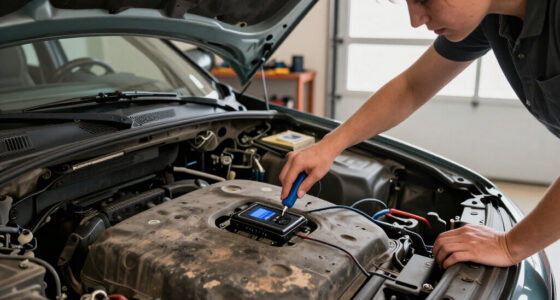
When you face overheating in traffic, start by inspecting your radiator fan to make certain it’s engaging properly and free of debris. Check your thermostat to see if it’s sticking closed, causing the engine to run hot, and verify coolant flow for any blockages or low levels. Maintaining these components helps prevent overheating during congestion. If you want to understand more about diagnosing and fixing these issues, there’s plenty more to explore below.

Get business pricing on garage and car supplies
- Business-only prices and quantity discounts
- Tax-exempt purchasing
- Multiple users, one account, clear invoices
Key Takeaways
- Ensure the radiator fan activates properly by checking the motor, relay, and wiring connections.
- Test the thermostat for sticking closed or open, as it directly impacts engine temperature regulation.
- Verify coolant levels and quality, and perform system flushing to prevent blockages and maintain proper flow.
- Monitor the water pump for proper operation, listening for unusual noises or leaks indicating failure.
- Conduct regular inspections and maintenance of cooling components to prevent overheating in traffic conditions.

Have you ever wondered why traffic jams seem to get worse on hot days? It’s no coincidence. The heat puts extra stress on your vehicle’s cooling system, often leading to overheating that can cause additional delays and potential damage. Understanding how your fan, thermostat, and coolant flow work together can help you prevent these issues and keep your car running smoothly, even in the hottest weather.
First, your radiator fan plays a critical role in cooling your engine. When the engine reaches a certain temperature, the fan kicks on to draw air through the radiator, helping to dissipate heat. If your fan isn’t working properly, your engine can quickly overheat, especially when traffic is moving slowly or stopped. It’s essential to check that the fan engages when needed and that the fan’s motor, relay, and wiring are all functioning correctly. Sometimes, debris or a broken sensor can prevent the fan from activating, so regular inspections are a good idea, especially before the summer months.
Your radiator fan must activate properly to prevent engine overheating in traffic.
Next, the thermostat acts as a gatekeeper, regulating when coolant flows through the engine and radiator. When your engine warms up, the thermostat opens, allowing coolant to circulate and carry heat away. If it sticks closed, the coolant can’t flow efficiently, causing the engine to overheat rapidly. Conversely, if it sticks open, your engine may run too cool, reducing efficiency.
If you notice your temperature gauge rising quickly or fluctuating, it might be time to check or replace the thermostat. A malfunctioning thermostat can lead to inconsistent cooling and increased risk of overheating, particularly when driving in stop-and-go traffic where precise temperature regulation is essential.
Flow checks involve ensuring that coolant circulates freely through the entire system. Coolant passages can become clogged with rust or debris over time, impeding flow and causing hotspots that lead to overheating. Regularly inspecting your coolant level and quality is important; low or contaminated coolant reduces heat transfer efficiency. Flushing the cooling system periodically helps remove buildup and keeps flow unobstructed.
Additionally, a faulty water pump can impair circulation, so listen for unusual noises or signs of leakage that might indicate a failing pump.
Furthermore, implementing proper maintenance practices, such as coolant system flushing and component inspections, can significantly reduce the risk of overheating during traffic congestion.
As an affiliate, we earn on qualifying purchases.
Frequently Asked Questions
How Can I Prevent Engine Overheating During Traffic Jams?
To prevent your engine from overheating during traffic jams, you should keep an eye on the temperature gauge and stop driving if it rises too high.
Turn on your heater to help dissipate heat from the engine, and guarantee your coolant level is adequate.
Regularly check your radiator and coolant hoses for leaks or blockages.
Staying attentive and maintaining your cooling system can help you avoid overheating issues in traffic.
What Are Signs of a Failing Radiator Fan?
If your radiator fan is failing, you’ll notice your engine’s temperature creeping up faster than your patience in traffic. The fan mightn’t spin when needed, or it may run constantly, making noise louder than your favorite playlist.
Sometimes, it just refuses to turn on at all. Keep an eye out for overheating warnings, strange noises, or the fan’s complete silence—your engine’s way of saying, “Help, I’m melting!”
How Often Should I Replace My Vehicle’s Thermostat?
You should replace your vehicle’s thermostat every 50,000 to 100,000 miles or when it shows signs of failure, like engine overheating or fluctuating temperature gauges.
Regular check-ups can help catch issues early. If you notice persistent overheating, coolant leaks, or your engine running hotter than usual, it’s time for a replacement.
Don’t wait until it causes more damage; timely replacement keeps your engine running smoothly.
Can Low Coolant Cause Overheating in Traffic?
Did you know that low coolant levels are responsible for about 60% of engine overheating cases? Yes, low coolant can definitely cause overheating, especially in traffic where airflow is limited.
When coolant levels drop, your engine can’t dissipate heat effectively, leading to temperature spikes. Regularly check and top off your coolant to prevent overheating, particularly during stop-and-go traffic, ensuring your engine stays cool and runs smoothly.
What Is the Ideal Coolant Temperature Range?
You should aim for an ideal coolant temperature between 195°F and 220°F (90°C to 105°C). When your engine operates within this range, it maintains peak efficiency and prevents overheating or excessive wear.
If temperatures rise above 220°F, it indicates potential issues like coolant flow problems or thermostat failure.
Regularly check your coolant levels and monitor the temperature gauge to keep your engine running smoothly within this safe zone.
As an affiliate, we earn on qualifying purchases.
Conclusion
Just like a car overheating on a busy highway, your vehicle’s cooling system needs regular checks to keep everything running smoothly. Remember when I ignored that noisy fan and ended up stranded? Regular flow, thermostat, and fan checks are your traffic patrols, preventing breakdowns. Think of it as giving your engine a revitalizing breeze before chaos hits—stay vigilant, and your engine will cruise through traffic without a hitch. Prevention keeps you moving smoothly.
As an affiliate, we earn on qualifying purchases.
As an affiliate, we earn on qualifying purchases.
Halloween Picks
halloween
As an affiliate, we earn on qualifying purchases.