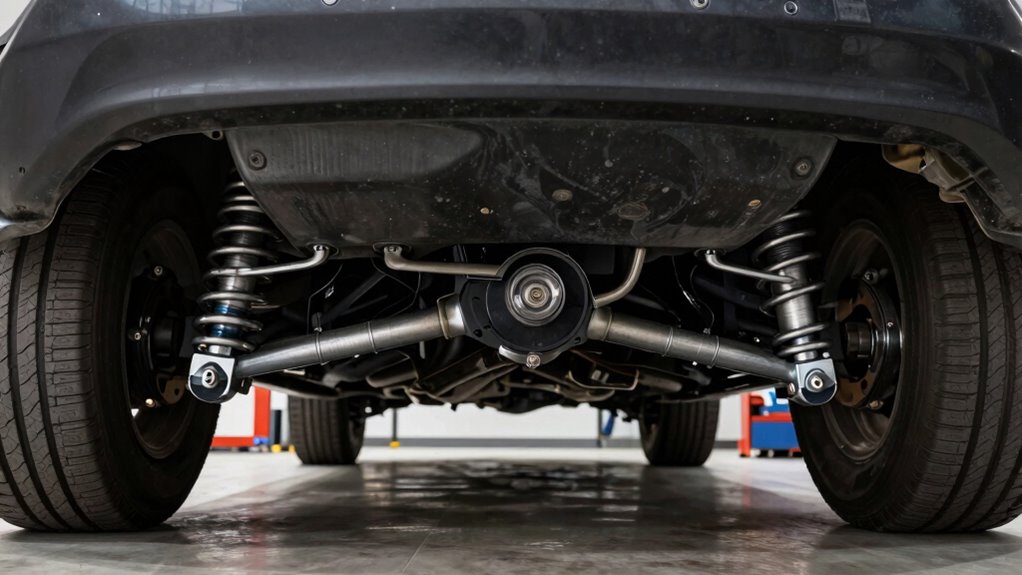

If you notice creaks and clunks underneath your vehicle, it’s likely due to worn suspension components like shocks, bushings, or misaligned wheels. These noises often signal that parts are aging, strained, or damaged, which can affect handling and tire wear. Ignoring these sounds can lead to bigger problems and costly repairs. To diagnose and fix the issue properly, understanding the common causes and signals is essential—keep exploring to learn more about how to keep your suspension in top shape.
Key Takeaways
- Creaks and clunks often indicate worn suspension components like bushings or ball joints.
- Worn shock absorbers cause knocking sounds and reduce ride stability.
- Misaligned wheels can produce squeaking or squealing noises during turns.
- Regular inspections help identify worn control arms, bushings, or damaged parts early.
- Ignoring suspension noises can lead to uneven tire wear and compromised vehicle safety.

Suspension noises can be a clear sign that something’s wrong with your vehicle’s system. When you hear creaks, clunks, or squeaks coming from underneath your car, it’s a signal to pay close attention. These sounds often point to issues with components like your shock absorbers or wheel alignment. Ignoring these noises can lead to further damage and costly repairs, so it’s best to diagnose the problem early.
One common cause of suspension noises is worn-out shock absorbers. Shock absorbers are essential for smooth rides—they dampen the impact from bumps and help maintain tire contact with the road. Over time, shocks wear out and lose their ability to absorb shocks effectively. This wear can lead to knocking or clunking sounds, especially when you go over bumps or turn sharply. When shocks are compromised, you might also notice increased body roll or a feeling that your vehicle is less stable. Replacing worn shock absorbers restores ride comfort and helps prevent uneven tire wear, which is also affected by poor wheel alignment.
Speaking of wheel alignment, improper alignment can cause suspension noises as well. When your wheels are misaligned, your tires don’t make proper contact with the road, leading to uneven tire wear and strange sounds during driving. You might hear squeaking or squealing noises during turns or when driving straight. Misalignment stresses suspension parts, including components like control arms and bushings, which can produce creaks or squeaks as they strain under misaligned loads. Regularly checking your wheel alignment ensures your suspension parts work harmoniously, reducing noise and extending their lifespan. Additionally, issues with ball joints and bushings can also contribute to suspension noises, emphasizing the importance of regular inspections. Many suspension noises are a sign that parts are wearing out or are misaligned, which can lead to uneven tire wear, poor handling, and even unsafe driving conditions. Addressing these issues promptly not only quiets those annoying noises but also keeps your vehicle performing at its best.
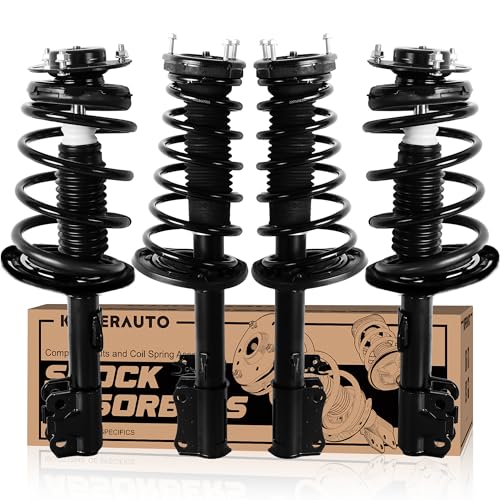
KUIPERAUTO 172307 172308 172309 172310 Front and Rear Complete Strut Assemblies Compatible for 2007 2008 2009 2010 2011 Toyota Camry Shock Absorbers w/Coil Spring(Set of 4)
【Vehicle Fitment】Compatible for 2007-2008 Toyota Camry 2.4L ( CE/LE/XLE/Hybrid ),Compatible for 2009 Camry 2.4L ( LE/XLE/Hybrid/Base ),Compatible for…
As an affiliate, we earn on qualifying purchases.
As an affiliate, we earn on qualifying purchases.
Frequently Asked Questions
How Often Should Suspension Components Be Inspected?
You should inspect your suspension components regularly, ideally every 12,000 to 15,000 miles, or during routine suspension maintenance. Check for signs of wear, leaks, or damage that could cause creaks and clunks. If you notice any noises or changes in handling, get an inspection sooner. Following proper inspection intervals helps catch issues early, ensuring your suspension stays in good condition and your ride remains smooth and safe.
Can Suspension Noises Indicate Brake System Issues?
Suspension noises typically don’t indicate brake system issues, but sometimes a braking noise can be mistaken for suspension trouble. If you hear creaks or clunks when braking, it could signal worn brake pads or calipers, but it’s worth examining your suspension too. Since suspension and brake systems are interconnected, unusual noises warrant a professional inspection to ensure both systems function safely and smoothly. Don’t ignore odd sounds—have them diagnosed promptly.
Are Certain Driving Conditions More Likely to Cause Suspension Noises?
Absolutely, driving conditions and road surfaces can turn your suspension into a symphony of squeaks and clunks. Bumpy, uneven roads drag your suspension through relentless stress, making noises more likely. Potholes, gravel, and rough terrain shake loose components and wear out parts faster. Smooth surfaces are kinder, but even then, frequent driving over harsh conditions can cause those unsettling creaks and clunks to become a regular, unwelcome soundtrack.
What Tools Are Needed to Diagnose Suspension Problems?
To diagnose suspension problems, you’ll need diagnostic tools like a chassis ear or stethoscope to pinpoint noises and inspection techniques such as visual checks for leaks, cracked parts, and worn bushings. Use a pry bar to test for excessive play in components, and a flashlight to examine hard-to-see areas. These tools and techniques help you identify issues like creaks and clunks, ensuring accurate diagnosis and effective repairs.
How Long Does a Typical Suspension Repair Take?
Think of a suspension repair as tuning a delicate instrument; it usually takes about 2 to 4 hours, depending on the issue. During this time, your mechanic will inspect and replace worn components like shock absorbers, which influence shock absorber lifespan, and apply suspension lubricants for smooth operation. Rushing can jeopardize quality, so patience ensures your suspension functions like a finely crafted symphony, providing a comfortable, quiet ride.
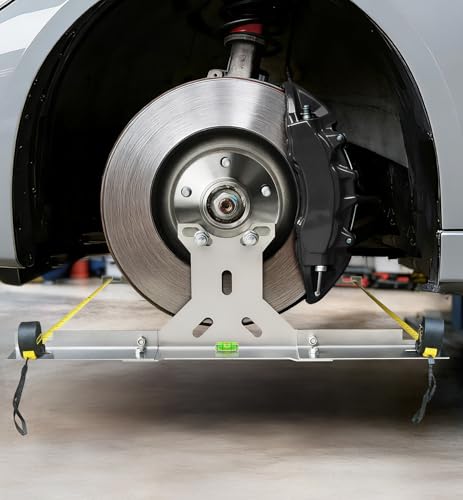
Toplamper Wheel Toe Alignment Tool Kit for at Home DIY Garage Use, Stainless Steel Toe Plates with Dual Tape Measures, Quick Front-End Toe Check for Automotive Cars Trucks SUVs (Patent Design)
DIY front‑end toe adjustment for home garages – Designed for car owners and home garages who want tocheck…
As an affiliate, we earn on qualifying purchases.
As an affiliate, we earn on qualifying purchases.
Conclusion
Think of your suspension as the backbone of your ride, quietly supporting every bump and turn. When creaks and clunks start, it’s like a sign your car’s telling you something’s off—kind of like a sailor feeling a loose mast before a storm. Ignoring these noises can lead to bigger problems down the road. So, stay alert, listen closely, and address suspension issues early—keeping your drive smooth, safe, and sound.
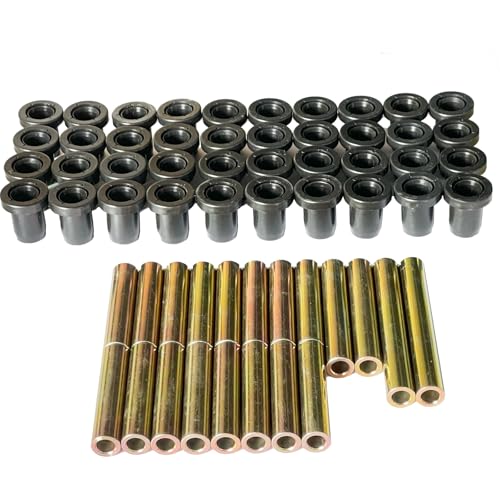
DCOMA Front and Rear Upper Lower A Arm Shaft Bushings for Polaris Ranger 500 700 800 900, Control A-Arm Bushing Kit, Heavy Duty Arm Bushing, Durable Replacement Kit for Enhanced Suspension Performance
【Perfect Fit】This DCOMA front and rear upper lower A-Arm shaft bushings for Polaris Ranger 500 700 800 900,…
As an affiliate, we earn on qualifying purchases.
As an affiliate, we earn on qualifying purchases.

DAYUAN Ball Joint Press & U Joint Removal Tool Kit, Red Case
This Ball Joint Press & U Joint Removal Tool compatible for most 2WD and 4WD cars and light…
As an affiliate, we earn on qualifying purchases.
As an affiliate, we earn on qualifying purchases.